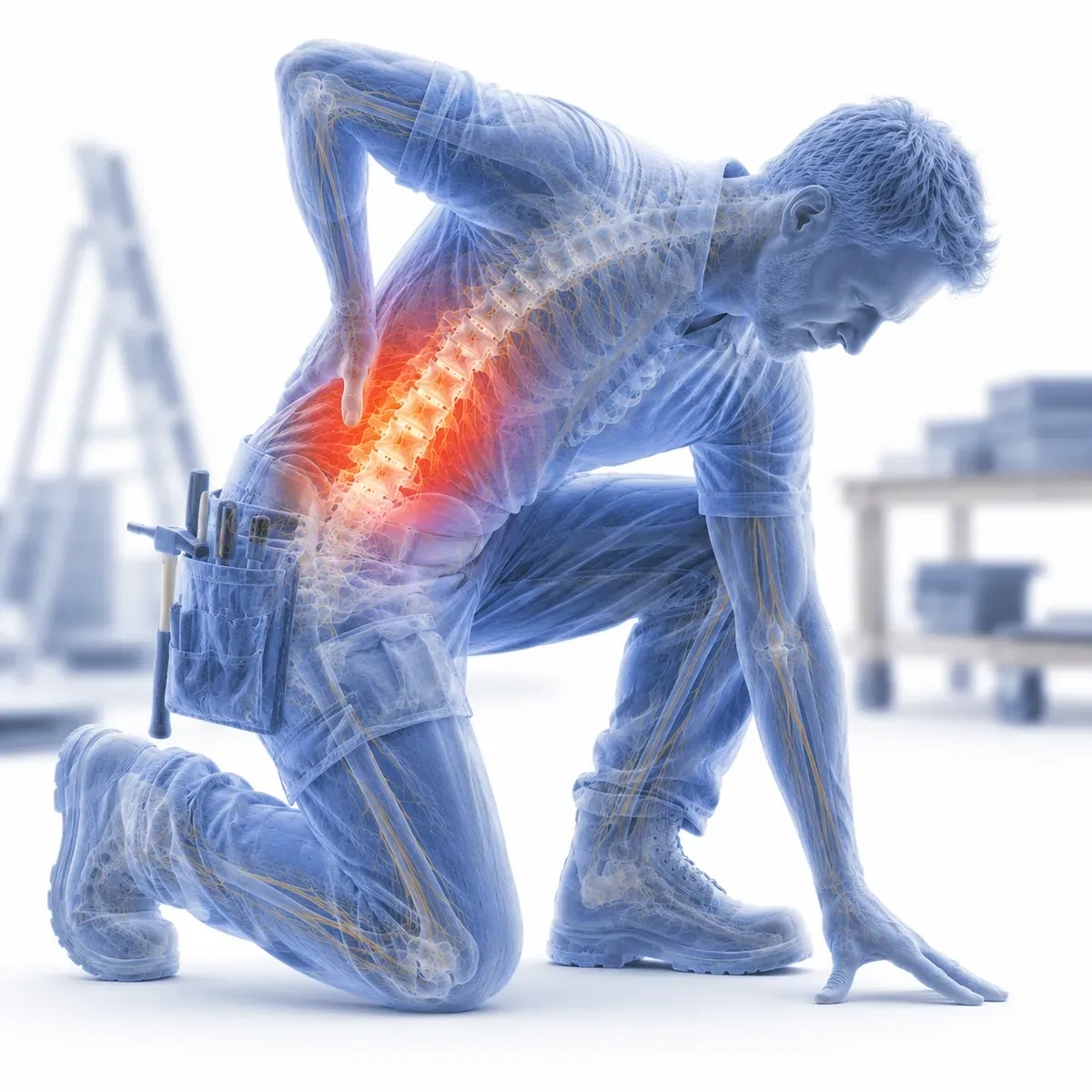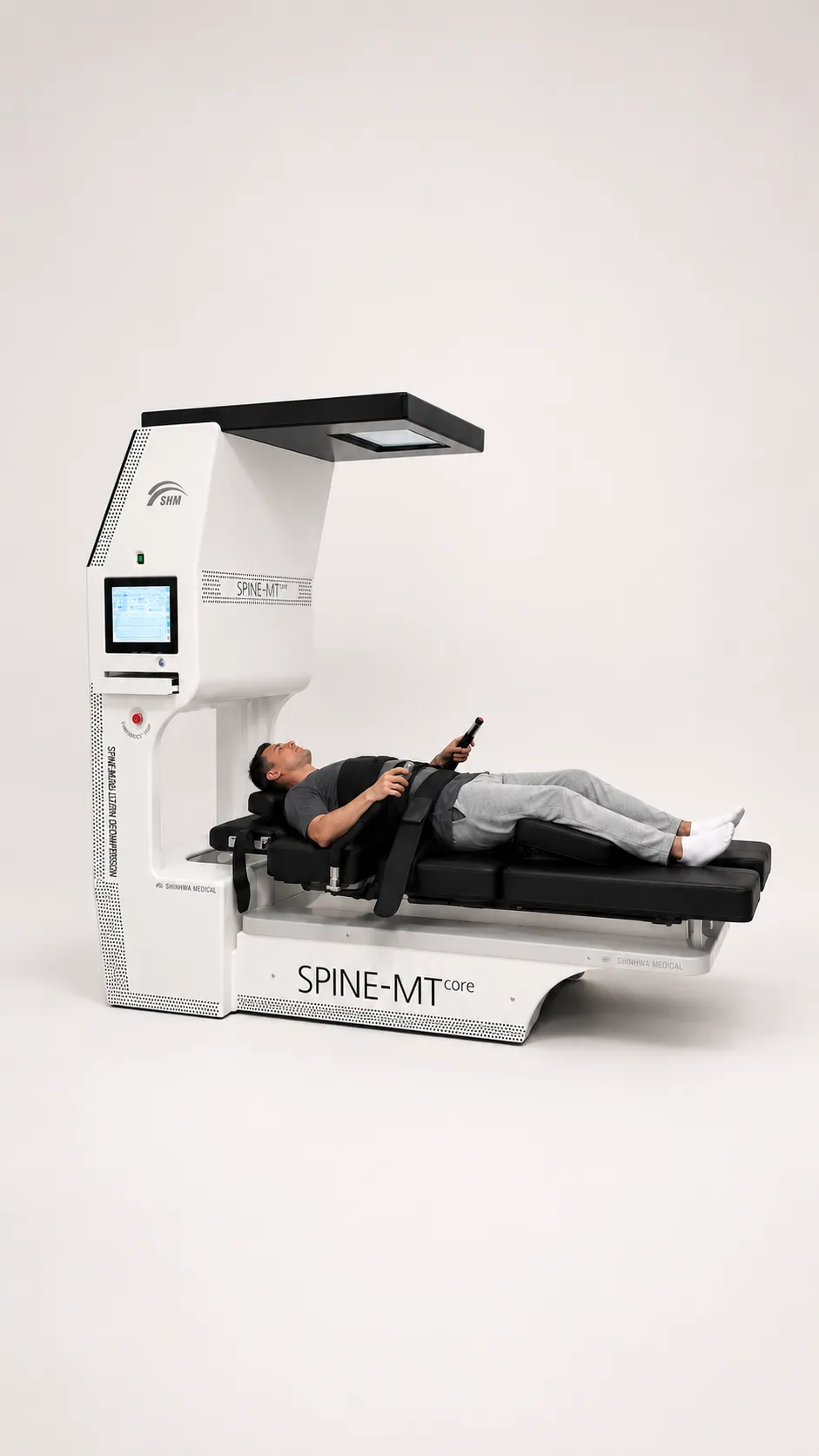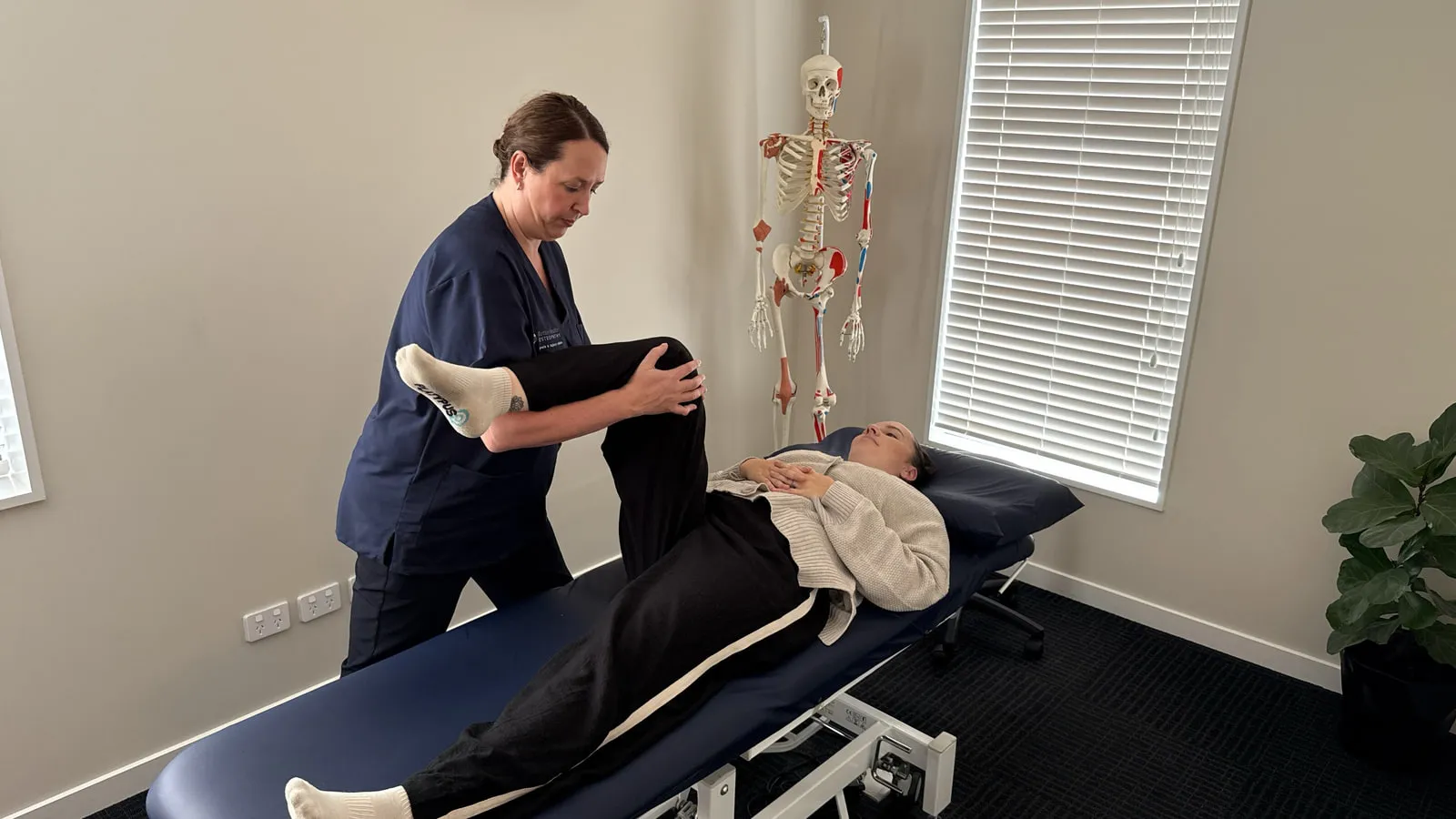

If you’ve ever wondered why one person’s sprained ankle is fine in two weeks and another person’s is still grumpy six months later, or why a lifting injury sometimes settles in days and sometimes lingers, this article is the framework for thinking about it.
The body has well-mapped processes for repairing damaged tissue. Understanding the rough phases (and what each one needs) helps you do the right things at the right time, and avoid doing things that delay recovery without realising it.
The short version
There are four overlapping phases of healing. Each lasts longer than people expect, and each has its own job:
| Phase | When | What’s happening | What helps |
|---|---|---|---|
| 1. Inflammation | Days 0-7 | Damaged tissue triggers the repair cascade. Pain, swelling, warmth. | Relative rest, gentle movement, manage symptoms. Don’t suppress all inflammation. |
| 2. Proliferation | Days 5-21 | New tissue laid down (collagen, blood vessels). Disorganised but rapid. | Graded loading. Movement is medicine. |
| 3. Remodelling | Weeks 3-12 | Tissue reorganises along lines of stress. Strength returns. | Progressive loading. The new tissue learns its job. |
| 4. Maturation | Months 3-12+ | Tissue keeps refining. Late-stage strength and resilience build. | Full activity exposure. Re-injury risk drops. |
These phases overlap. The numbers are typical; individual variation is wide. The most common mistake is assuming each phase is shorter than it is and pushing too hard too soon.
Phase 1: inflammation (days 0-7)
When you injure tissue (a muscle strain, a ligament sprain, a bruise, a disc tweak), the body’s first response is inflammation. This isn’t a problem; it’s the start of repair.
What’s actually happening:
- Damaged cells release signalling molecules.
- Blood vessels dilate, blood flow increases (warmth, redness).
- Immune cells migrate to the area to clear damaged tissue.
- Fluid accumulates (swelling), partly from blood, partly from immune signalling.
- Nerves become more sensitive (the area hurts more easily).
This phase is genuinely useful. It’s why your body knows where to send repair resources, and why the area protects itself with pain.
What helps:
- Relative rest: not bed rest, but easing off the activity that caused the injury. Aim is to avoid making it worse, not to immobilise.
- Gentle movement: pain-free range of motion within the first 24-48 hours, even tiny amounts. Helps drainage and prevents stiffness.
- Symptom management if needed: ice for fresh acute injuries (15-20 min, every 2-3 hours, only the first 24-48 hours); compression; elevation. These don’t speed healing; they manage symptoms while it’s happening.
- Pain medication short-term if function is being lost: paracetamol, possibly ibuprofen (NB: there’s a debate about anti-inflammatories slightly slowing healing in some tissues; the evidence is mixed and the practical advice is “use sparingly and short-term if needed”).
What harms:
- Complete bed rest beyond a day or two: tissues stiffen, deconditioning starts faster than people realise.
- Aggressive stretching of the injured tissue: the new tissue isn’t ready.
- Suppressing all inflammation with high-dose continuous anti-inflammatories: blocks part of the repair signal.
- Pushing through pain: pain at this phase usually means you’re irritating the repair process.
Phase 2: proliferation (days 5-21)
The body starts laying down new tissue. The dominant ingredient is collagen, the protein that gives connective tissue its strength. New blood vessels grow into the area to supply the repair.
What’s actually happening:
- Fibroblasts (the body’s tissue-builders) lay down collagen rapidly.
- The collagen is initially type 3 (weaker, more flexible) and disorganised.
- New blood vessels (angiogenesis) extend into the area.
- The wound contracts as repair progresses.
- Pain typically reduces but isn’t gone; the area feels stiff and “weak”.
What helps:
- Graded loading: gentle controlled use of the injured tissue. Walking on a sprained ankle within tolerance. Light range-of-motion for a strained shoulder. The new tissue is responsive to load; it lays down according to the demands placed on it.
- Movement variety: don’t just do one motion repeatedly; encourage the tissue to handle a range.
- Manual therapy (Osteopathy, physiotherapy): can help maintain joint and surrounding tissue mobility while the injury site heals.
- Sleep: tissue repair happens fastest during deep sleep. Underrated.
- Adequate protein and nutrition: the body needs raw materials.
What harms:
- Too much rest: the new tissue, without load, lays down poorly organised and stays weak.
- Too much load too soon: re-injures the new fragile tissue, restarting the inflammation phase.
- Smoking, heavy alcohol, very poor sleep: all measurably slow connective-tissue repair.
The judgement call in this phase is the dose of load. Too little keeps you weak. Too much re-injures. A clinician’s main job here is calibrating that dose.
Phase 3: remodelling (weeks 3-12)
The tissue laid down in phase 2 is rapid but disorganised: it’s there, but it’s not strong. Phase 3 is where the body reorganises the tissue along the lines of stress it’s experiencing. This is the phase that determines whether the injury heals strong or stays niggly.
What’s actually happening:
- The early type 3 collagen is gradually replaced by stronger type 1 collagen.
- Fibres realign along the directions of mechanical load.
- The tissue’s tensile strength increases substantially: from around 40-50% of normal at week 3 to 70-80% by week 12.
- Pain typically becomes occasional rather than constant.
- The injured area starts to feel “normal” most of the time.
What helps:
- Progressive loading: this is the phase where capacity rebuild matters. Tendons and ligaments respond to slow heavy loading; muscles to a mix of strength and endurance work.
- Specific to the demand: if you’re rehabbing for sport, the late-stage rehab needs to look like sport. If for work, like work.
- Patience with the trend: weekly progress more than daily progress. Day-to-day pain wobbles are normal.
What harms:
- Stopping rehab once pain settles: the most common reason injuries return is people stop the rehab work the moment they feel okay. The tissue is still remodelling, not yet finished.
- Returning to full activity volume too suddenly: a pre-injury training week dropped onto a phase-3 tissue is a recipe for re-injury.
This is the phase where most under-rehabbing happens. Pain feels gone; the tissue isn’t done. Continue the work.
Phase 4: maturation (months 3-12+)
The final phase is the slowest. Tissue continues to refine, strengthen, and become more resilient. Most people aren’t aware of it because they’re back to normal activity by now, but the underlying tissue is still adapting.
What’s actually happening:
- Final collagen alignment and cross-linking.
- Late-stage tensile strength gains: 80% to 95%+ of normal over 6-12 months.
- Sensitisation gradually resolves; the tissue becomes less reactive to load.
- The risk of re-injury keeps dropping as resilience builds.
What helps:
- Full activity exposure: the tissue learns by being used.
- Variety of demand: different sports, different load patterns. Builds robustness.
- Maintained baseline strength work: keeps the rehabilitated tissue strong as it ages.
What harms:
- Rarely much in this phase. Major re-injury can restart the cycle, but the tissue is robust enough at this point that ordinary use is fine.
Why some injuries take so much longer
The “typical” timelines above assume a healthy person, a single clear injury, and reasonable rehab. Many injuries don’t fit those assumptions. Common reasons recovery stretches longer:
- Delayed care: the longer the inflammatory phase persists without management, the more the tissue can become sensitised and the longer recovery takes.
- Poor sleep, ongoing stress, smoking, low protein intake: each measurably slow tissue repair.
- Diabetes or metabolic issues: affect blood supply and repair rate.
- Compensations from old injuries: a previous injury that didn’t fully recover can shift load patterns and slow new repair.
- Inappropriate load profile: too much or too little at each phase. The most common cause of sluggish recovery in otherwise healthy people.
- Underlying inflammatory conditions: rheumatoid arthritis, ankylosing spondylitis, etc. Change the picture.
- Complicated injuries: multiple structures involved, or injuries near nerves or vital structures, or surgical injuries with their own healing curve.
A good clinician’s main job in slow-recovering cases is figuring out which of these is in play and adjusting the plan.
Why pain timelines and tissue timelines aren’t the same thing
Pain often resolves before tissue is fully healed (good thing). Sometimes pain persists after tissue is fully healed (the nerves stay sensitised). Sometimes pain returns weeks after tissue healing because the load you’ve returned to outpaces the strength you’ve rebuilt.
The implication: pain alone is a poor guide to whether you’re healed. Function (range, strength, tolerance for normal activity) is a better one. A good rehab programme uses function as the gate, not just pain.
What hands-on care does at each phase
Osteopathy and other manual therapies have different roles at each phase:
- Phase 1: minimal direct work on the injured tissue. Often more useful elsewhere: calming the surrounding regions, helping the body manage compensations, education on what to expect.
- Phase 2: maintaining mobility of nearby structures, supporting drainage and blood flow, gentle work to prevent secondary stiffness.
- Phase 3: the highest-impact phase for hands-on care. Direct work on the healing tissue, removing barriers to load, calibrating the rehab dose.
- Phase 4: maintenance, addressing residual stiffness or compensations, re-injury prevention.
The structured 4-phase model used at BHO maps onto these recovery phases: pain relief, mobility, strengthening, prevention. Each is matched to where the tissue actually is in healing, not just where the pain is.
ACC and recovery
In New Zealand, ACC funds treatment for injuries through the recovery process. The funding period is generous for genuine injuries, with formal review checkpoints if treatment runs longer than expected. The ACC and Osteopathy guide covers the funded-care side in detail, including the ACC32 review form and what it means.
Booking with us
If you’re recovering from an injury and want a clear plan that matches where you actually are in the healing process, book online or call us on 0800 67 77 00. We’ll work through where you are in the phase model and what the right next step looks like.
Related reading
- ACC and Osteopathy guide for the funded-care side of injury treatment.
- Sudden back pain: what to do for the acute-phase action steps.
- Whiplash recovery for the longer recovery curve typical after car accidents.
- Just rolled my ankle for ankle-specific phase 1 management.