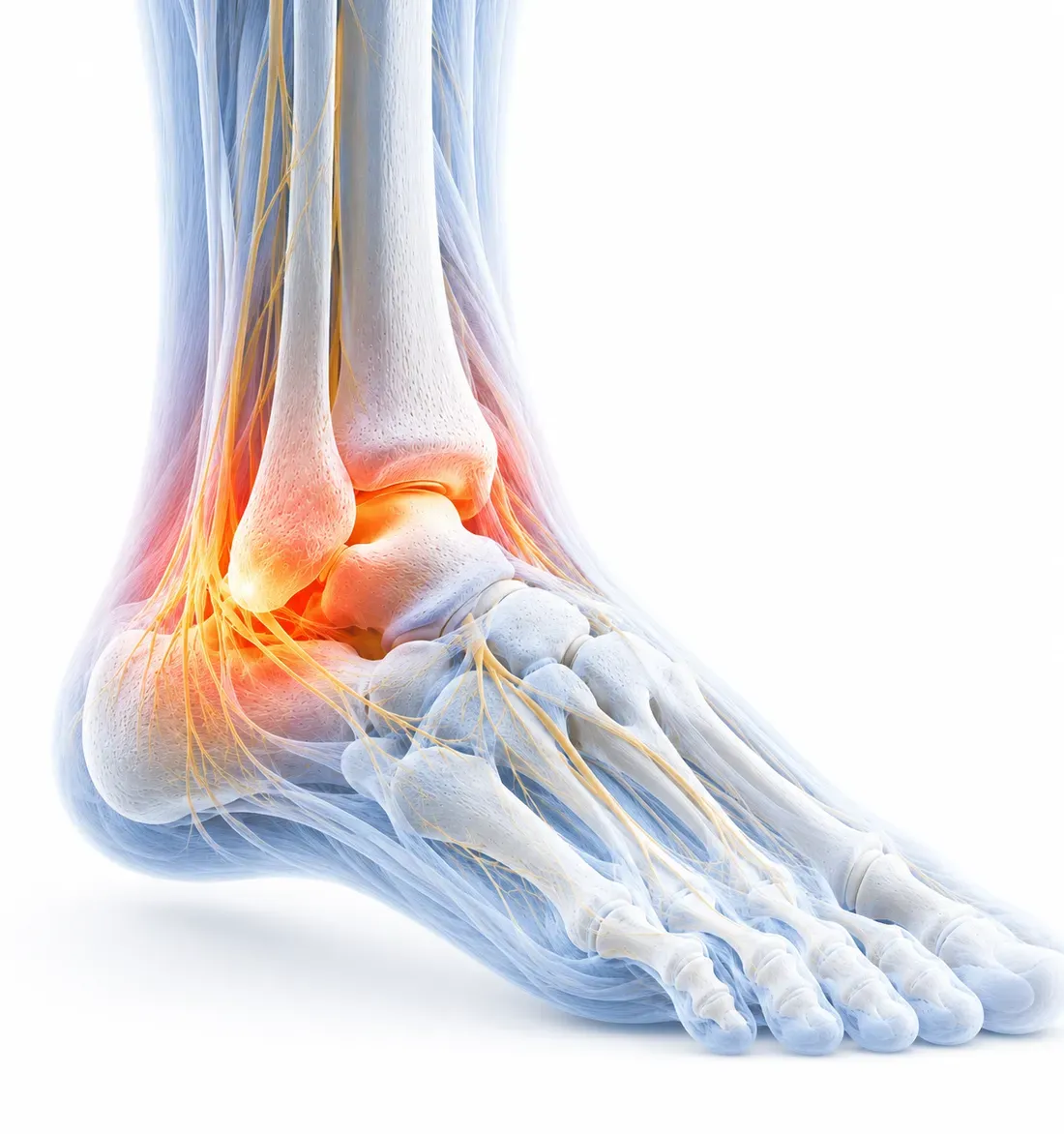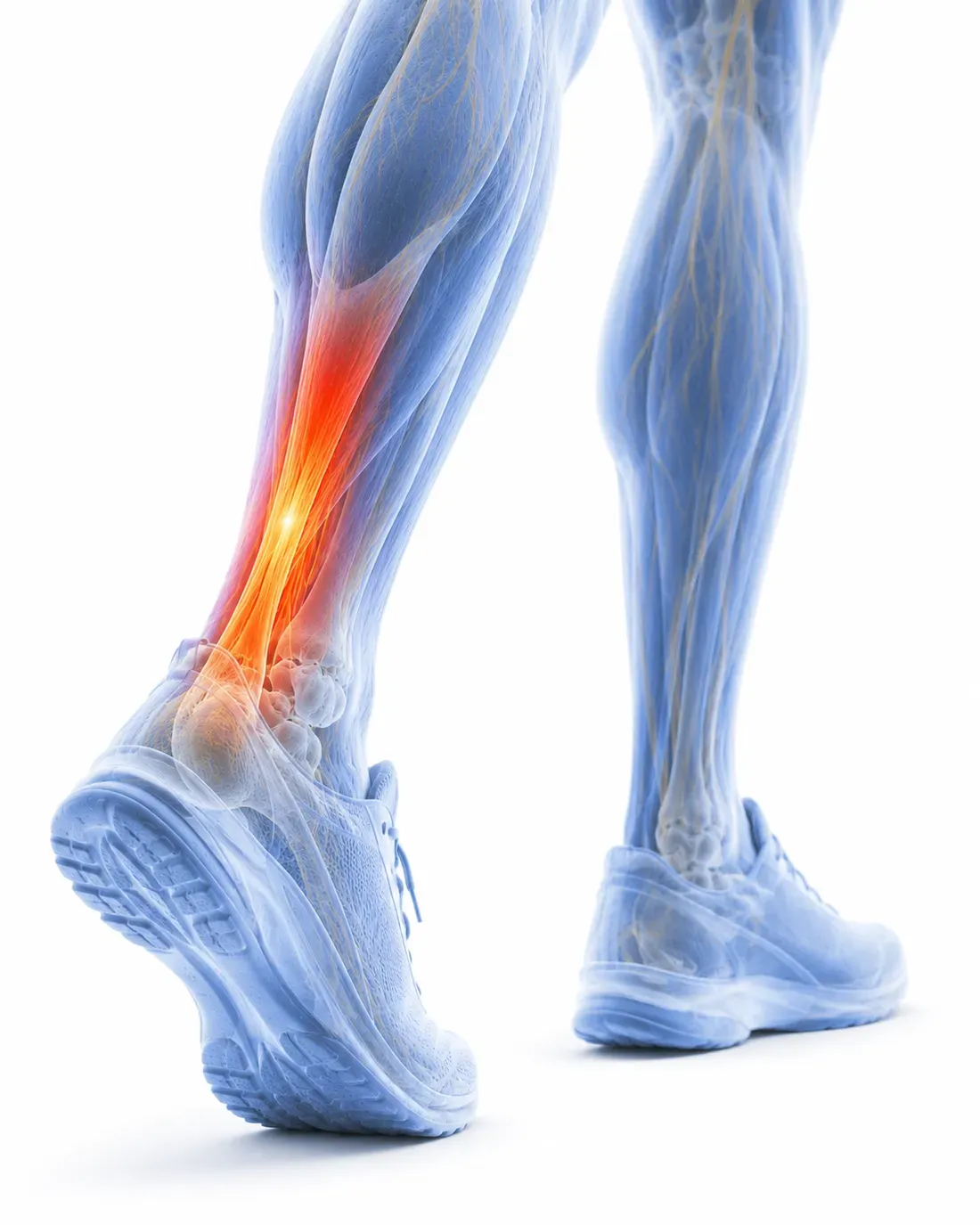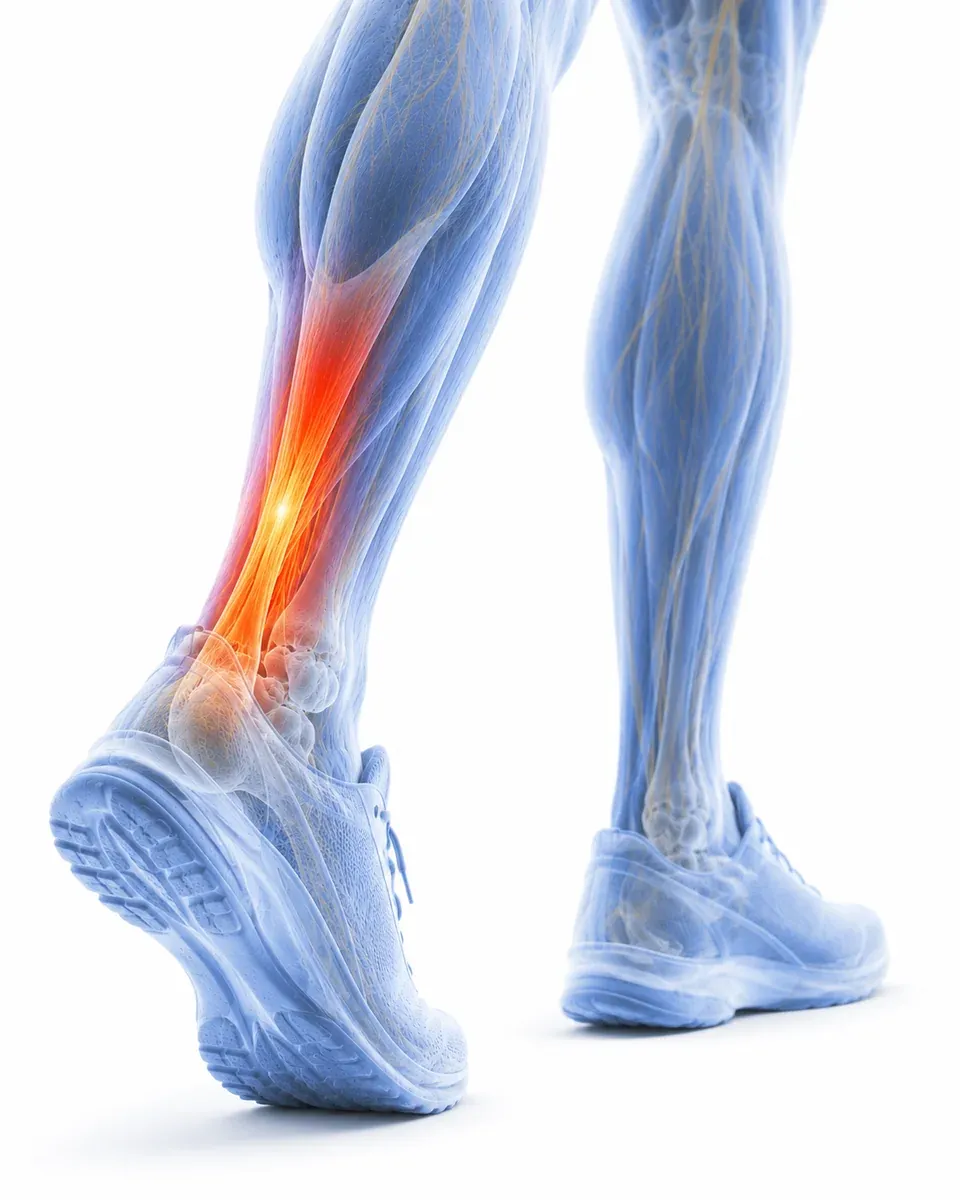

You’ve just rolled your ankle. There’s a sharp pain on the outside of the joint, it’s already starting to swell, and you’re wondering whether you can walk on it, whether it’s broken, and what you should be doing.
Ankle sprains are one of the most common musculoskeletal injuries we see. The first 48 hours matter, and the rehab that follows matters even more. Here’s a clear plan for both.
The short answer
For most ankle sprains:
- Stop, sit down, get the boot off (before swelling makes it harder).
- POLICE the ankle for the first 24 to 72 hours: Protect, Optimal Loading, Ice, Compression, Elevation.
- Test whether you need an X-ray using the Ottawa Ankle Rules (below).
- Start moving the ankle gently within a day or two; total rest is now discouraged.
- Book in for assessment and a rehab plan within the first week, especially if you can’t weight-bear comfortably or symptoms aren’t easing.
- Do the rehab. Skipping rehab is the single biggest reason ankle sprains turn into recurring sprains.
The rest of this article expands each.
POLICE in the first 24 to 72 hours
The old “RICE” protocol (Rest, Ice, Compression, Elevation) is now updated to POLICE, with two important changes: emphasising Protection and replacing strict rest with Optimal Loading.
P, Protection: stop the activity that caused it. Don’t keep playing the game; don’t keep walking on it if it’s properly painful. Protect the ankle from further damage in the first day.
OL, Optimal Loading: a key change from RICE. Recent evidence shows the ankle recovers faster when you load it gently and progressively rather than resting it completely. After the first 24 hours, start moving the ankle through pain-free range and put weight through it as you can tolerate.
I, Ice: 15 to 20 minutes at a time, with at least 30 minutes between applications, for the first 24 to 48 hours. Always wrap the ice pack in a tea towel; never apply directly to skin. Ice helps with pain control more than it speeds healing, but it’s worth doing.
C, Compression: a firm (not tight) elastic bandage around the ankle reduces swelling. Wrap from the toes upward, with even pressure. Loosen if it feels too tight or your toes change colour.
E, Elevation: prop the ankle above heart level when you can. Helps the swelling drain away.
Do you need an X-ray? The Ottawa Ankle Rules
The Ottawa Ankle Rules are a validated clinical screening tool used worldwide to decide whether a fresh ankle injury needs an X-ray. They have ~95% sensitivity for ruling out fractures.
Get an X-ray (urgent care or GP referral) if any of these apply:
- You can’t bear weight for 4 consecutive steps, both immediately after the injury and at the time of assessment.
- There’s bone tenderness at:
- The back edge or tip of the lateral malleolus (outside ankle bone)
- The back edge or tip of the medial malleolus (inside ankle bone)
- The base of the fifth metatarsal (on the outside of the foot, about halfway along)
- The navicular bone (on the inside of the foot, in front of the inside ankle bone)
If none of these apply, an X-ray is unlikely to change management and you can usually treat as a soft-tissue injury (sprain).
If you’re unsure, a pharmacist, GP, urgent-care clinic, or osteopath can help you decide. When in doubt, get checked.
Start moving (gently) within a day or two
The old advice was to rest the ankle until the pain goes. Current evidence reverses this: gentle, pain-tolerable movement in the first few days reduces stiffness, calms the protective response, and speeds recovery.
Day 1: mostly POLICE. Move the ankle gently through pain-free range while sitting (point and flex, small circles).
Day 2 onwards: more movement. Try short, gentle weight-bearing as the pain allows. Use crutches for the first day or two if you can’t weight-bear; transition off them as soon as you can take a few steps comfortably.
Day 3 to 7: start gentle daily walking, even if it’s a limp. Continue ankle range-of-motion work several times a day.
Beyond week 1: this is where rehab starts. See below.
Why rehab matters more than people realise
The biggest mistake people make with ankle sprains is skipping the rehab once the pain settles. The pain ease is misleading; it doesn’t mean the ankle is fully recovered. After a sprain:
- The ligaments are still healing for several weeks.
- The proprioception (your sense of where your foot is in space) is genuinely diminished.
- The peroneal muscles (the small stabilisers on the outside of the ankle) are weaker than before the injury.
Without targeted rehab, all three of those leave the ankle vulnerable to re-spraining. The data is clear: about 70% of ankle sprains recur within 12 months without rehab, and the rate drops to under 30% with proper rehab.
A full rehab plan typically includes:
- Range of motion work: regaining full flexion, extension, and side-to-side movement.
- Balance and proprioception training: standing on one leg, eyes-closed balance, eventually unstable-surface work.
- Strength work: calf raises, resistance band work for the peroneals, progressive loaded movements.
- Sport-specific or work-specific reloading: hopping, change-of-direction work, return-to-running progressions if relevant.
Most plans run 6 to 12 weeks for a moderate sprain. Stubborn cases or repeated sprains can take longer.
ACC, and what to bring to the appointment
Ankle sprains are almost always ACC-eligible. There was a clear injury event (the roll), the mechanism is consistent with the symptoms, and the funding is straightforward.
What to bring to your first visit:
- Details of how it happened: when, where, what you were doing, what you felt afterward. Doesn’t need to be exact.
- Any imaging you’ve had (X-rays, scan reports) if you went to urgent care first.
The clinic lodges the ACC claim at your first visit. Read more in the ACC and Osteopathy guide.
When to book in
A reasonable guide:
- Severe pain or can’t weight-bear at all: get to urgent care first to rule out a fracture. Then book in for treatment and rehab once cleared.
- Moderate sprain, walking with a limp: book in within the first week. Earlier assessment plus rehab planning makes a real difference.
- Mild sprain, walking comfortably within a few days: book in if it isn’t fully recovered after 2 weeks, OR for a rehab consult to prevent re-spraining.
- Recurring sprains: book in regardless. Recurring sprains are usually a sign of incomplete rehab from a previous injury, and the pattern responds well to a structured strengthening plan.
What we do at the first appointment
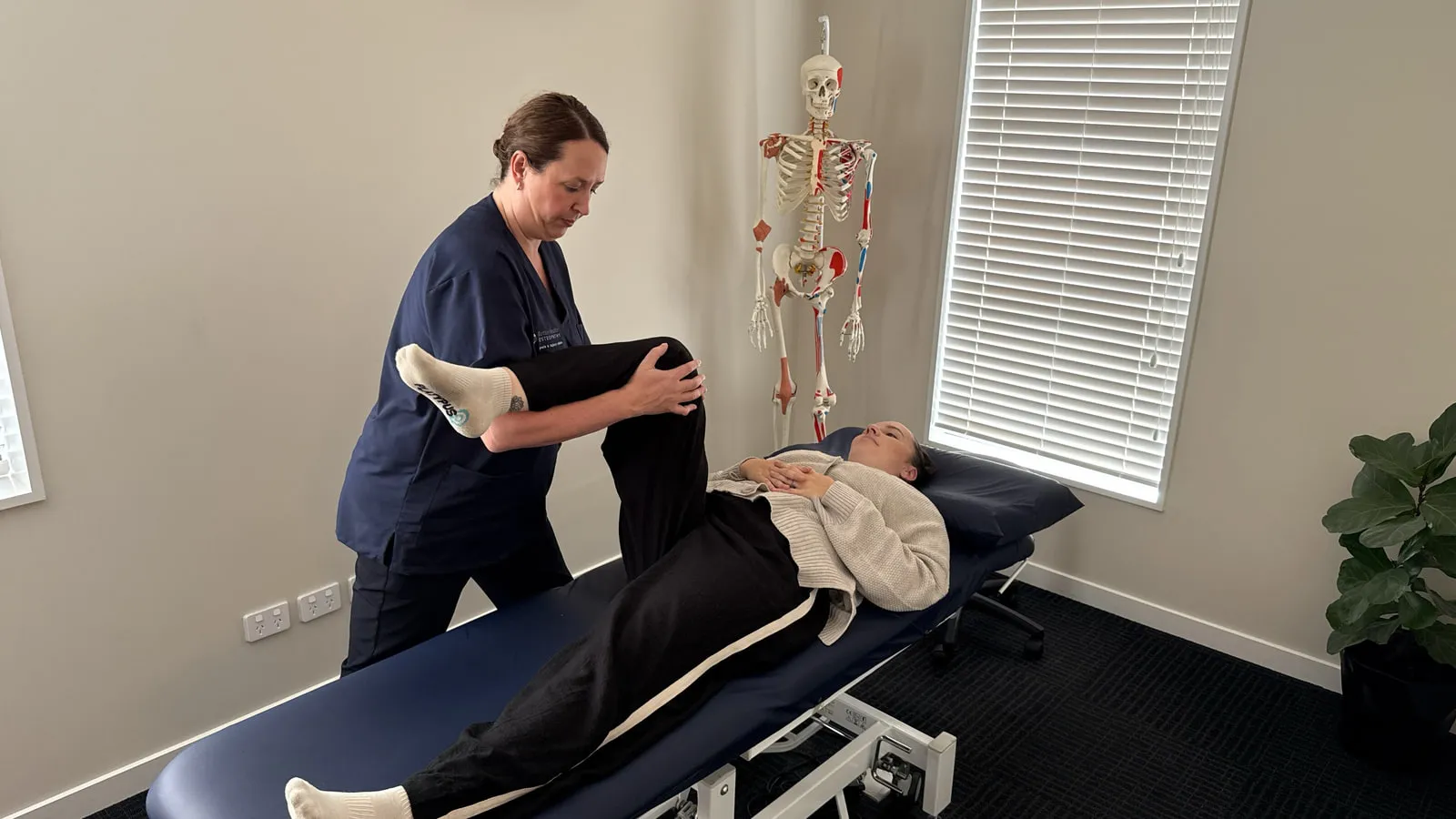
A first visit for an ankle sprain takes 30 minutes. We:
- Confirm the diagnosis with a clinical examination, ruling out the patterns that need imaging or specialist input.
- Assess the wider picture: calf strength, hip control, walking pattern, and whether previous injuries are part of the story.
- Treat with hands-on work to ease swelling, restore joint mobility, and reduce protective muscle guarding.
- Plan the rehab arc: what to do this week, what to add next week, milestones to look for.
Most people leave the first visit with reduced pain, a better-moving ankle, and a clear sense of what comes next.
Booking with us
If you’d like to book in, book online or call 0800 67 77 00. Same-week appointments are usually available; same-day appointments for acute pain are often possible if you call early.
Related reading
- Foot and ankle pain: full condition guide for the longer view on causes and treatment patterns.
- Sports injuries if you sprained the ankle during sport.
- ACC and Osteopathy in NZ for the funded-care side.