
If you’re dealing with back pain right now, you probably don’t want a long lecture on spinal anatomy. You want to know: what’s likely going on, what to do about it, and what’s worth your time. This article is the practical action guide.
For the broader, more theoretical explainer (why scans aren’t always useful, how pain works, the bigger picture), see understanding back pain. This article gets into the day-by-day actions.
The short version
| Problem | First action |
|---|---|
| Sudden back pain in the last 1-3 days | Keep moving gently. Avoid bed rest. See sudden back pain action steps. |
| Pain that’s been around 1-6 weeks | Graduated movement + the exercise progression in this article. Book in if not improving. |
| Pain longer than 6 weeks | Get assessed properly. Self-management has plateaued. |
| Pain with leg symptoms (numbness, weakness, pain past the knee) | Book in soon for assessment. May be nerve-related. |
| Red flags (loss of bladder/bowel control, severe progressive weakness, after major trauma, fever with back pain) | Urgent medical attention, not Osteopathy. |
The rest of this article expands the middle two rows.
Common causes (briefly)
Most back pain is mechanical: pain coming from the muscles, joints, ligaments, or discs of the spine, triggered by movement or load rather than disease. The common drivers:
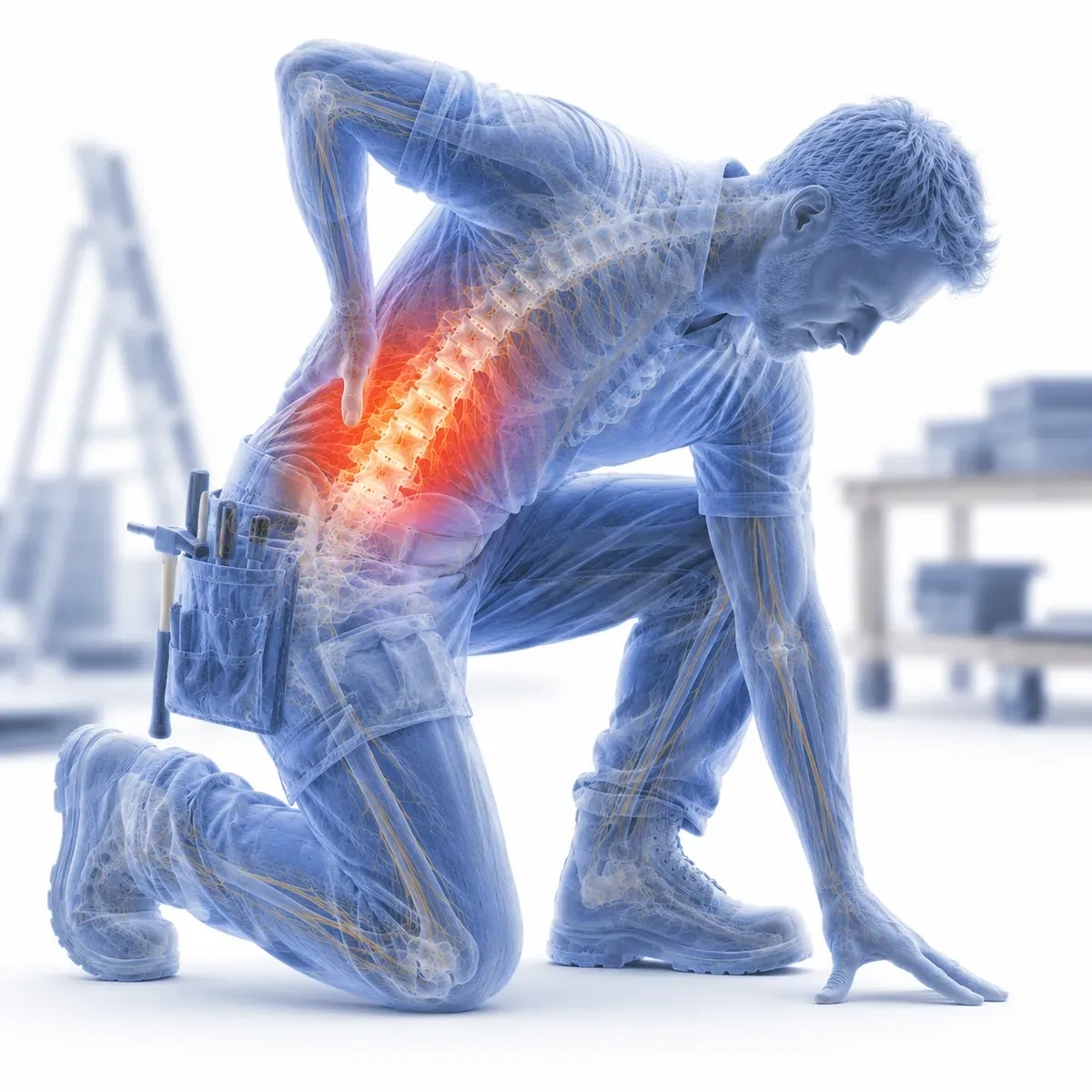
- Load spikes: a heavy lifting day after weeks of sitting, a sudden busy period at work, a new training programme.
- Capacity gaps: muscles weaker than the demands being put on them.
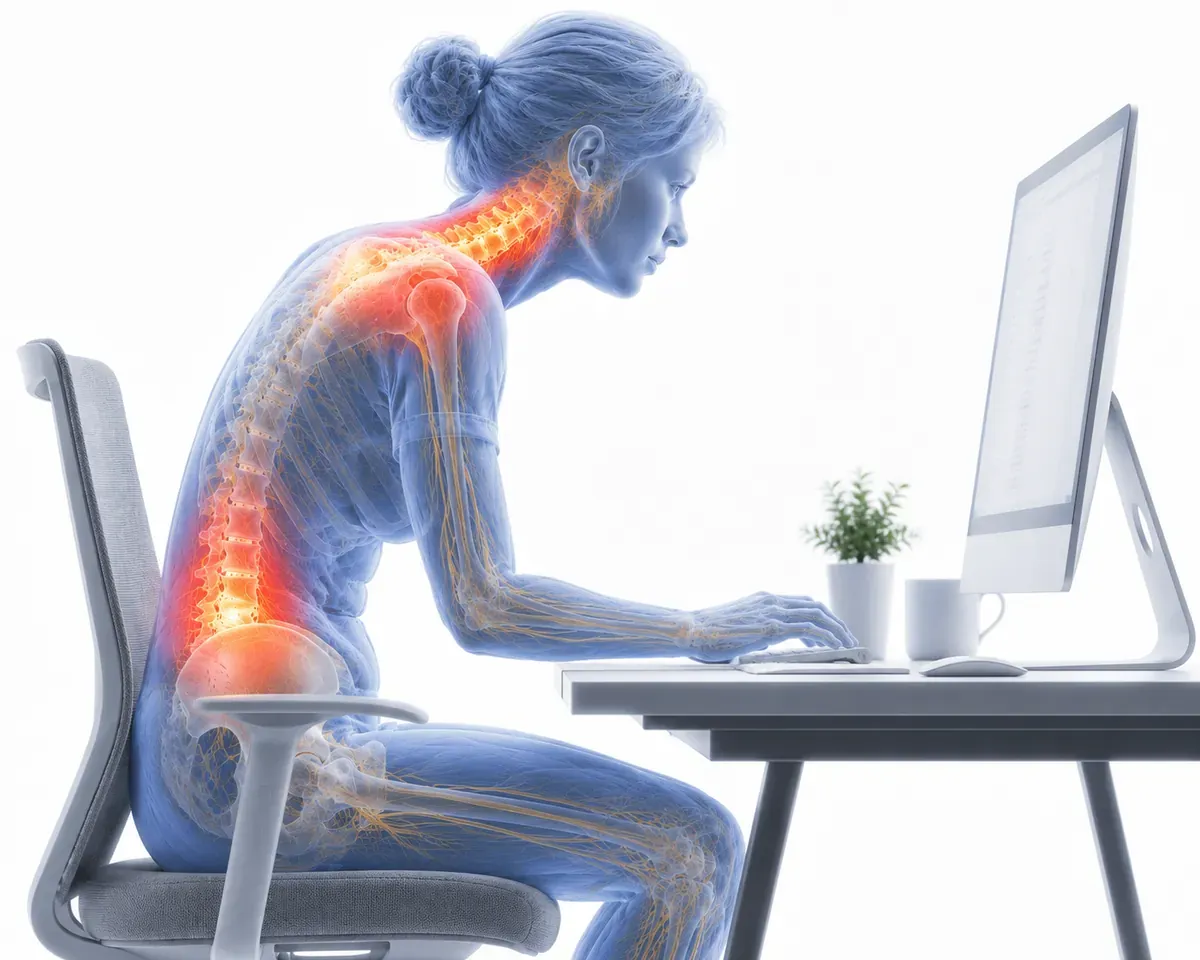
- Sustained postures: long hours sitting, driving, or standing in one position. The duration matters more than the position.
- Stress and sleep: both genuinely modulate pain sensitivity. A stressful month with poor sleep often pushes a back over the edge.
- Old injuries: previous episodes that didn’t fully recover.
For most people there isn’t one cause; there’s a combination that pushed the back over its tolerance threshold. Successful management addresses several at once.
The exercise progression
A specific note before the exercises: there is no universally correct back-pain exercise programme. What works depends on which structures are loaded, what irritates them, and what your starting capacity is. The progression below is a sensible starting point for most mechanical back pain. If anything significantly worsens your symptoms, stop that exercise and reassess.
Phase 1: keep moving (first 1-7 days of a flare)
The single most important early-stage intervention is don’t stop moving. Bed rest beyond a day or two consistently makes back pain worse, not better. The goal is gentle frequent movement that keeps the back from stiffening.
What this looks like:
- Walk for 5 to 10 minutes every couple of hours, even if slowly.
- Avoid prolonged sitting; if your job requires sitting, get up every 20 to 30 minutes.
- Choose positions that feel less painful and use them frequently. Standing for some tasks, lying on your back with knees bent, side-lying with a pillow between knees.
- Avoid the things that sharply spike pain (heavy lifting, deep forward bending under load, sustained twisting).
That’s the whole programme for phase 1. No specific exercises yet. Just movement.
Phase 2: gentle mobility (days 3-14)
Once the acute pain settles below a 6 out of 10 with movement, add gentle mobility work. The aim is not to “stretch the pain out” but to remind the spine and surrounding tissues how to move.
Three exercises, twice a day:
- Cat-cow (10 reps): on hands and knees, slowly arch the back up like an angry cat, then drop the belly and look forward. Slow, controlled, no forcing.
- Knees to chest (10 reps each side): lying on back, gently pull one knee toward the chest, hold for 5 seconds, release. Then the other side.
- Hip hinges (10 reps): stand with feet shoulder-width apart. Push the hips back as if closing a car door behind you, keeping the back relatively neutral. The bend is at the hips, not the back. Return to standing.
Stop any of these if they sharply increase pain. The aim is gentle, not heroic.
Phase 3: capacity rebuild (week 2 onwards)
Once daily activities feel manageable, the focus shifts to building capacity. This is where most patients underdo it and stay stuck in the recurring-flare cycle.
Four exercises, three times a week:
-
Glute bridges (3 sets of 10): lying on back, knees bent, feet flat. Squeeze the glutes and lift the hips off the floor. Pause 2 seconds at the top. Lower slowly. Build to single-leg bridges over weeks.
-
Bird dog (3 sets of 8 each side): on hands and knees, slowly extend the opposite arm and leg until they’re parallel to the floor. Hold 3 seconds. Return slowly. Switch sides. Quality over speed.
-
Dead bug (3 sets of 8 each side): lying on back, arms extended toward the ceiling, knees bent at 90 degrees. Slowly lower one arm overhead while extending the opposite leg. Return. Switch sides.
-
Hip-hinged loaded carry (3 sets of 30 seconds each side): hold a moderate weight (a kettlebell or a heavy bag) in one hand. Stand tall, walk with normal posture for 30 seconds. Switch hands. Builds the deep stabilisers under realistic load.
This is a sensible default. A targeted programme from a clinician who’s actually examined you will outperform this; if you’re not progressing on a generic programme by week 4, that’s a sign to get assessed.
Phase 4: load tolerance (week 4 onwards)
The aim of phase 4 is to rebuild tolerance for the activities that flared the back in the first place: lifting, bending under load, sport. The detail here depends on what you’re trying to do, which is why this phase often benefits from individualised programming.
The general principle: gradually expose the back to the load patterns it needs to tolerate, in a controlled progression that doesn’t trigger flares. Sudden return to previous activity volume after a flare is the most common cause of recurrence.
Treatments worth doing
The evidence-supported list, in rough order of impact:
Active care + movement: the single highest-leverage thing, and the cheapest. Discussed above.
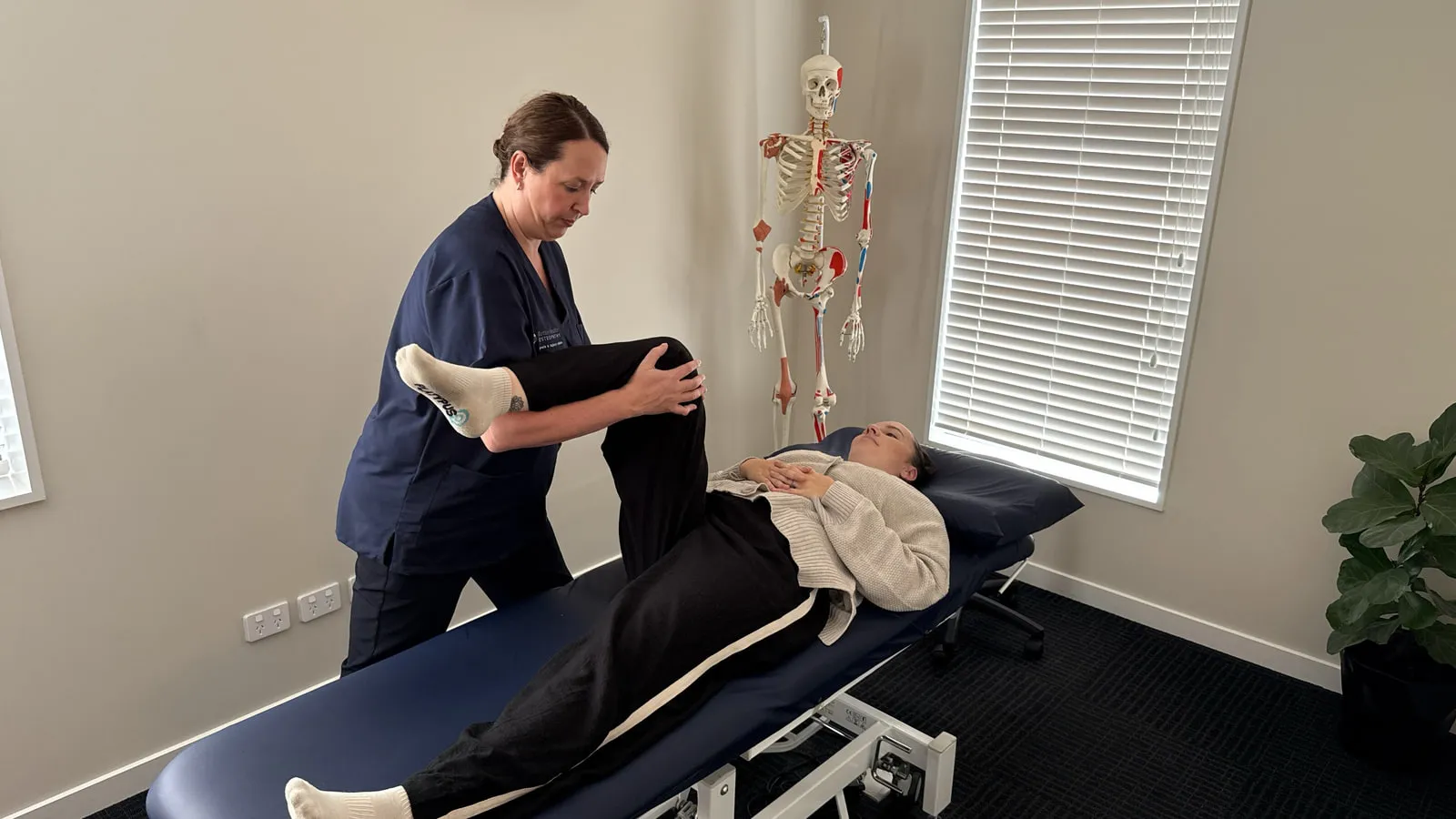
Hands-on osteopathic / manual therapy: targeted release of tight tissues, joint mobilisation, soft-tissue work. Best when paired with the exercise programme, not as a standalone fix. Provides a window of reduced pain and restored movement that you use to do the rehab work.
Education and reassurance: knowing that back pain is usually mechanical and usually not a sign of damage genuinely reduces fear-driven guarding, which reduces pain. Underrated.
Heat (acute) or ice (immediately post-injury): heat for muscle tightness and chronic ache; ice for the first 24 to 48 hours of a fresh injury. Both are short-term symptomatic, not curative, but useful.
Anti-inflammatories (short-term): paracetamol, ibuprofen if appropriate (check with a pharmacist or GP if you’re on other medications). Useful in the first 1-2 weeks of a flare to support function, not a long-term solution.
Treatments worth being cautious about
Bed rest: beyond a day or two, consistently makes things worse. Active recovery beats passive rest.
Long-term opioids or strong pain medications: appropriate for short-term severe pain; not appropriate for ongoing back pain management. The risks compound over time.
Surgery for typical mechanical back pain: reserved for specific surgical indications (severe nerve compression with progressive weakness, structural instability, red-flag pathology). Most back pain is not surgical, despite what some marketing implies.
Routine imaging (X-ray, MRI) for typical back pain: scans often show “findings” (disc bulges, mild degeneration) that are present in pain-free people too. The findings rarely change management. Imaging is appropriate when red flags are present or when the clinical picture suggests a specific diagnosable cause; it’s not a routine first step.
Generic stretching as a sole strategy: stretching can be part of a programme, but isn’t sufficient by itself for most back pain. Capacity matters more than flexibility.
Passive treatments alone (massage, electrical stimulation, ultrasound): feel good in the moment, but rarely change the trajectory. Use them as part of a broader plan, not the plan itself.
When to bring in hands-on care
Worth booking in if:
- The pain hasn’t meaningfully improved after 1-2 weeks of self-management.
- The pain is recurring (third or fourth flare in a year or two).
- You have leg symptoms: numbness, tingling, weakness, or pain past the knee.
- You’re not sure what’s safe to do and want a clear assessment.
- You’re losing confidence in the back, even if the pain is manageable.
The osteopathic assessment is straightforward: a detailed history, examination of how your back and surrounding regions are moving and loading, red-flag screening, and a clear conversation about what’s driving the pain and what the plan looks like. Most mechanical back pain responds well within 4 to 8 sessions paired with a structured exercise programme.
ACC and back pain
If your back pain started with a clear injury event (a lifting incident, a fall, a sport tackle, a car accident), it’s almost certainly ACC-eligible. Many gradual-onset back pain cases also fit ACC if there’s a workplace contribution. The ACC and Osteopathy guide covers the funded-care side in detail.
If you’re unsure, just mention it when you book and we’ll sort it out at the first visit.
Booking with us
If you’d like to bring in hands-on care, book online or call us on 0800 67 77 00. We treat back pain at our Fendalton clinic.
Related reading
- Understanding back pain for the bigger-picture explainer.
- Sudden back pain: what to do if you’re in the first few days of a fresh flare.
- Sciatica explained if your back pain has leg symptoms.
- Back pain condition page for the full clinical picture of how we approach back pain at BHO.