
Back pain is the single most common reason people walk into our clinic. About 80% of adults will experience meaningful back pain at some point in their lives, and between any two given years, around 30% of New Zealanders will have an episode that affects daily life.
Despite how common it is, back pain is often poorly understood and over-treated. The aim of this guide is to give you a clear, honest, evidence-aware picture: what’s actually going on when your back hurts, what the research says about what helps, why scans aren’t always useful, and when osteopathic care fits.
The most important thing to know
Most back pain is not caused by serious structural damage, and most back pain resolves with time and the right care. The instinctive worry (that you’ve done something terrible to your spine) is almost always wrong.
The honest framing: your back is not a pile of fragile blocks held together by string. It’s a robust, well-engineered structure that’s designed to bend, twist, lift, and carry load. When it hurts, it’s usually telling you that something has been overloaded, undertrained, or briefly aggravated, not that something has been broken.
This isn’t to dismiss the pain. The pain is real. But the meaning of the pain is rarely what people fear it is.
What back pain usually is
Back pain in adults usually fits one of these patterns:
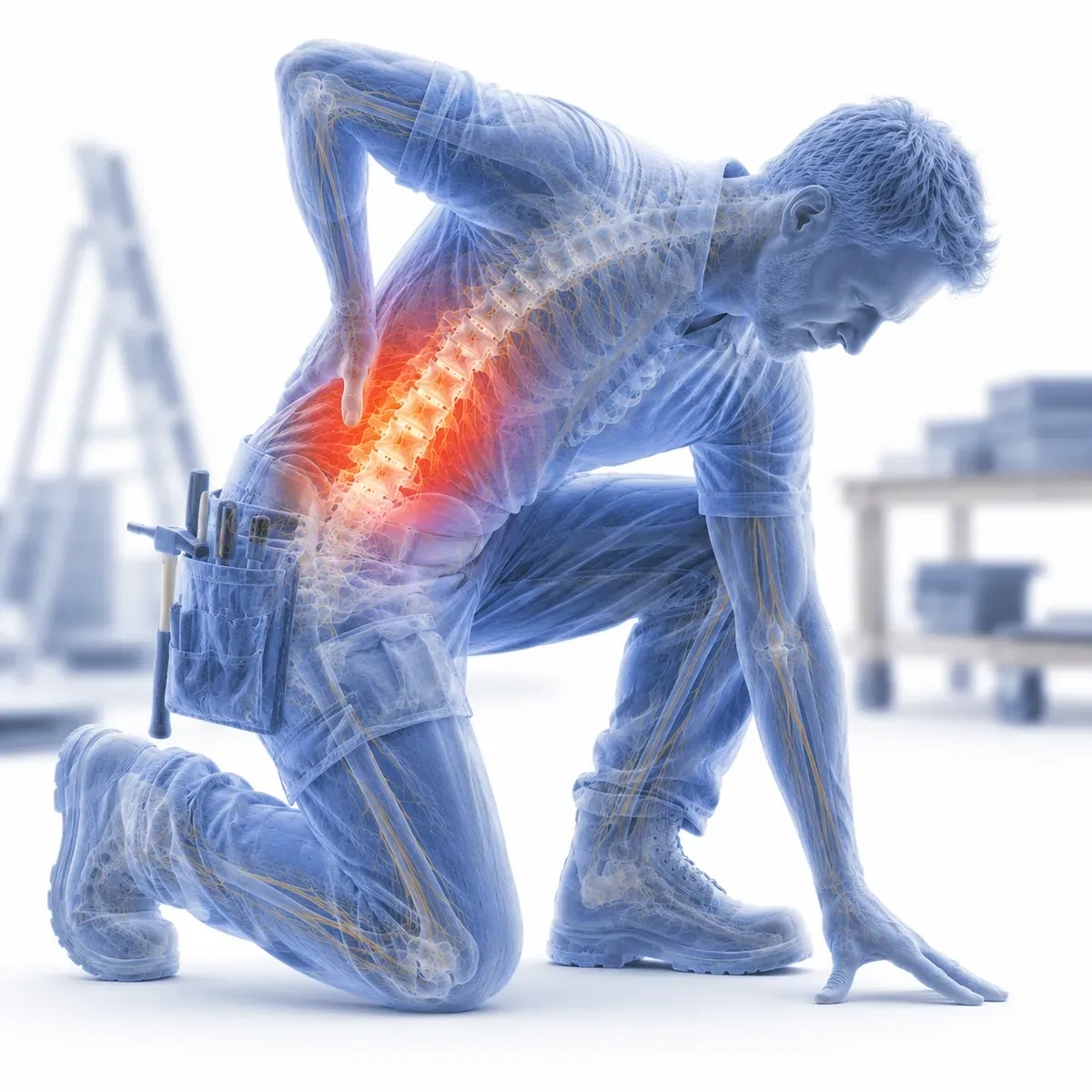
Mechanical back pain (by far the most common). Pain coming from the muscles, joints, ligaments, or discs of the spine, usually triggered by movement, posture, or load. The hallmark is that the pain changes with what you do: better in some positions, worse in others. This category covers something like 90% of all back pain.
Nerve-related back pain. When a nerve coming out of the spine gets irritated, you can get pain, numbness, tingling, or weakness running into the leg (or arm, for neck cases). The classic pattern is sciatica, where pain runs down the back of the leg below the knee. The nerve irritation can be from a disc bulge, a narrowed exit channel for the nerve, or local inflammation.
Inflammatory back pain (less common, often missed). A pattern that’s worse with rest and better with movement, often involves morning stiffness lasting more than 30 to 60 minutes, and tends to start in younger adults (under 40). Conditions like ankylosing spondylitis fit here. Worth flagging because the pattern is different from mechanical pain and the management is different.
Serious causes (rare). Cancer, infection, fracture, or severe nerve compression. Usually accompanied by red-flag features (see below). These are uncommon but matter; they’re why screening every new back pain case for red flags is part of any responsible assessment.
What causes mechanical back pain?
For most people with back pain, there isn’t one single cause; there’s a combination of factors that converged to push the back over its tolerance threshold. Common contributors:
- Load spikes: a heavy lifting day after weeks of sitting, a sudden busy period at work, a new training programme.
- Capacity gaps: muscles and tissues weaker than the demands being put on them. The classic “weekend warrior” pattern.
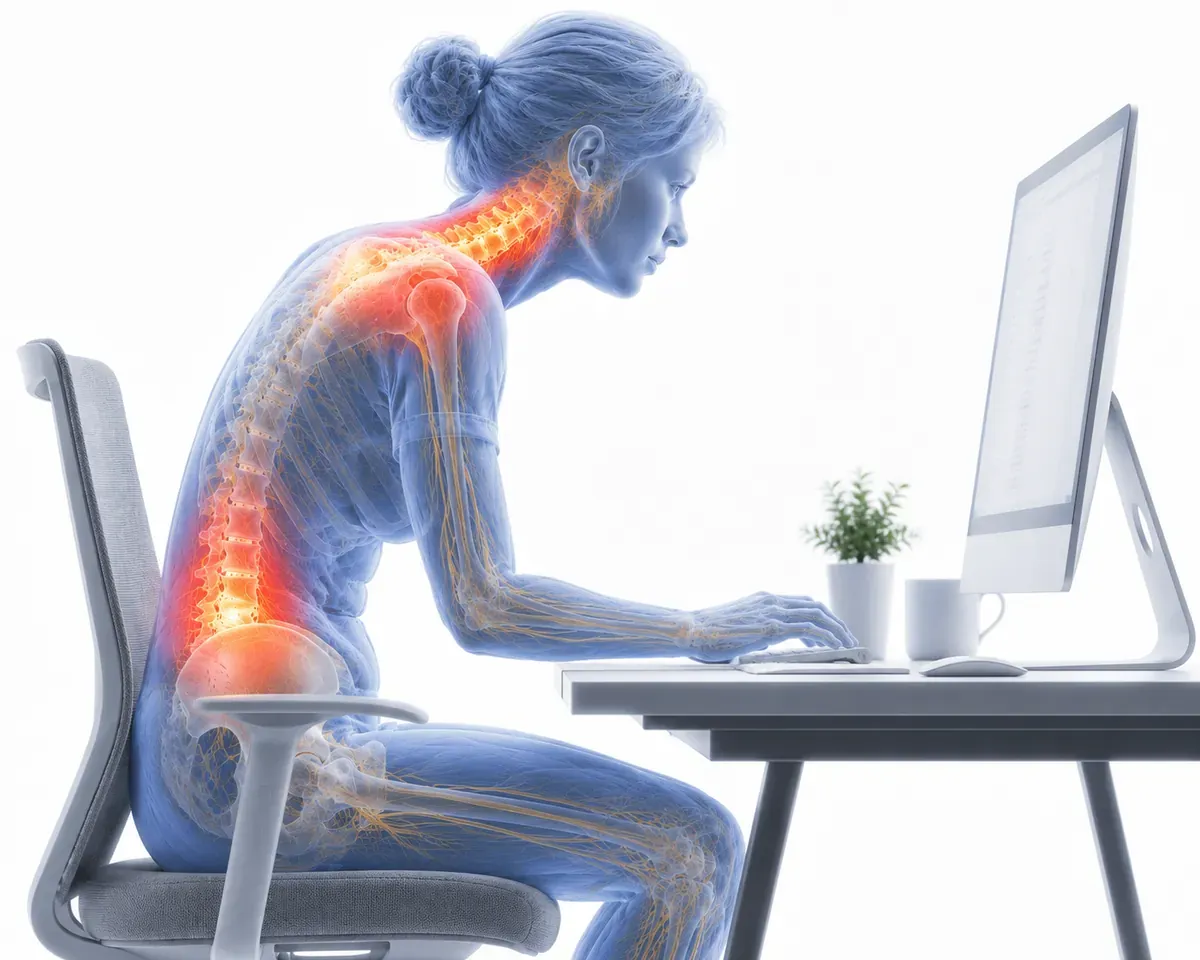
- Sustained postures: long hours sitting, driving, or standing in one position. The issue is the duration, not the position itself.
- Stress and sleep: both genuinely affect pain sensitivity. A stressful month with poor sleep can push a back over its threshold even without a clear physical trigger.
- Old injuries: previous episodes that didn’t fully recover, or compensations developed around them.
- Body changes: pregnancy, weight changes, ageing tissue. None of these are “the cause”; they’re contributors that change how load is shared.
The point of listing these isn’t to identify the one true cause. It’s to show that back pain is usually multi-factorial, which means addressing it well usually involves looking at more than just the painful spot.
What the research says actually helps
The evidence for back pain treatment has matured significantly in the last decade. Some patterns are now well-supported, and some old practices are now actively discouraged. The headlines:
Things with good evidence:
- Staying active. Continued daily activity at a tolerable level outperforms rest.
- Hands-on care plus exercise. Osteopathy, physiotherapy, and chiropractic all show modest-to-moderate short-term benefit when combined with active rehabilitation.
- Education. Understanding what’s going on and what the pain means consistently reduces fear, improves outcomes, and reduces the chance of pain becoming chronic.
- Progressive exercise. Strengthening and mobility work builds the back’s capacity to handle daily load. The pattern matters more than the specific exercise programme.
Things with limited evidence:
- Bed rest beyond 1 to 2 days is now actively discouraged. It slows recovery.
- Routine imaging (X-ray, MRI) for ordinary back pain without red flags. Imaging often finds incidental changes that don’t correlate with pain, leading to unnecessary worry and intervention.
- Strong opioid pain relief for ordinary mechanical pain. Risks outweigh benefits for most cases.
- Long courses of passive-only treatment (treatment with no exercise component). Short-term relief is fine; long-term reliance without rebuilding capacity rarely produces durable outcomes.
Things actively discouraged:
- Surgery for ordinary mechanical back pain without nerve involvement. Outcomes are no better than conservative care for the vast majority.
- Ignoring the psychosocial side. Stress, sleep, fear, and beliefs about the pain affect outcomes. Treating only the physical side leaves part of the picture out.
Why scans aren’t always useful
A common assumption: “If my back hurts, surely I should get a scan to see what’s wrong.”
The honest answer: for most ordinary back pain, scans are not helpful and can be actively counterproductive.
Studies have repeatedly shown that MRIs of pain-free people in their 30s, 40s, and 50s show “abnormalities” (disc bulges, degenerative changes, narrowing) at very high rates. By age 50, around 60% of people without any back pain show disc bulges on MRI. By 60, around 80%.
What this means: an MRI showing a disc bulge in someone with back pain often shows a finding that was there before the pain and would still be there if the pain resolved. Treating the MRI image rather than the patient leads to over-investigation, unnecessary surgery, and worse outcomes.
When scans ARE useful for back pain:
- Red-flag features suggesting a serious cause.
- Significant nerve compression that isn’t responding to conservative care.
- Surgery is being considered.
- The clinical picture doesn’t fit any usual pattern and needs further information.
When scans usually aren’t useful:
- Ordinary mechanical back pain in the first 6 weeks.
- Pain that’s already improving with conservative care.
- “Just to see what’s there”.
The osteopath at your first visit can tell you whether your case fits a pattern that warrants imaging, and if so, what the right pathway is.
Red flags: when back pain needs urgent assessment
Most back pain isn’t urgent. A small minority of presentations need prompt medical assessment. Get medical help promptly if:
- You’ve lost control of your bladder or bowels, or you have new numbness in the genital or saddle area.
- You have significant weakness in the legs (e.g., you can’t lift your foot, your leg buckles).
- The pain follows a significant fall, car accident, or impact, especially if you have osteoporosis.
- You have a fever, unexplained weight loss, or feel acutely unwell alongside the pain.
- You’re on long-term steroids or have a history of cancer with new back pain.
- The pain is steadily worsening over days, especially at night, rather than easing.
If any of these are present, go to urgent care or A&E rather than waiting for an Osteopathy appointment.
When to seek help (and from whom)
Self-care is fine for the first week or two if:
- You can move around and the pain is easing day by day.
- No red flags.
- No significant leg pain or neurological symptoms.
Book in with an osteopath, physio, or chiropractor if:
- The pain isn’t easing after 1 to 2 weeks.
- The pain is significantly limiting you (work, sleep, daily activities).
- Pain runs into the leg (any of the three professions can assess this).
- You’ve had multiple back pain episodes and want to break the recurrence pattern.
See your GP if:
- Red flags (above).
- The pain is part of a broader pattern (multiple joints, fatigue, fever, weight loss).
- You suspect inflammatory back pain (worse with rest, better with movement, morning stiffness >60 min, started under age 40).
- You want to discuss imaging or specialist referral.
A useful pattern in NZ: most people start with their GP for the first assessment if they’re worried, then see an osteopath, physio, or chiro for treatment and rehab. For ordinary mechanical pain, you can self-refer to any of the three (no GP referral needed for ACC).
What an Osteopathy visit for back pain looks like
A first visit takes 30 minutes. We:
- Take a careful history: how it started, what makes it better and worse, what you’ve already tried, what your daily life looks like (work, sleep, exercise, stress).
- Screen for red flags systematically. This is non-negotiable for any new back pain case.
- Examine your back, hips, and the rest of the chain. Look at how you move, what hurts, what doesn’t.
- Identify the pattern: mechanical vs nerve-related vs something needing further input.
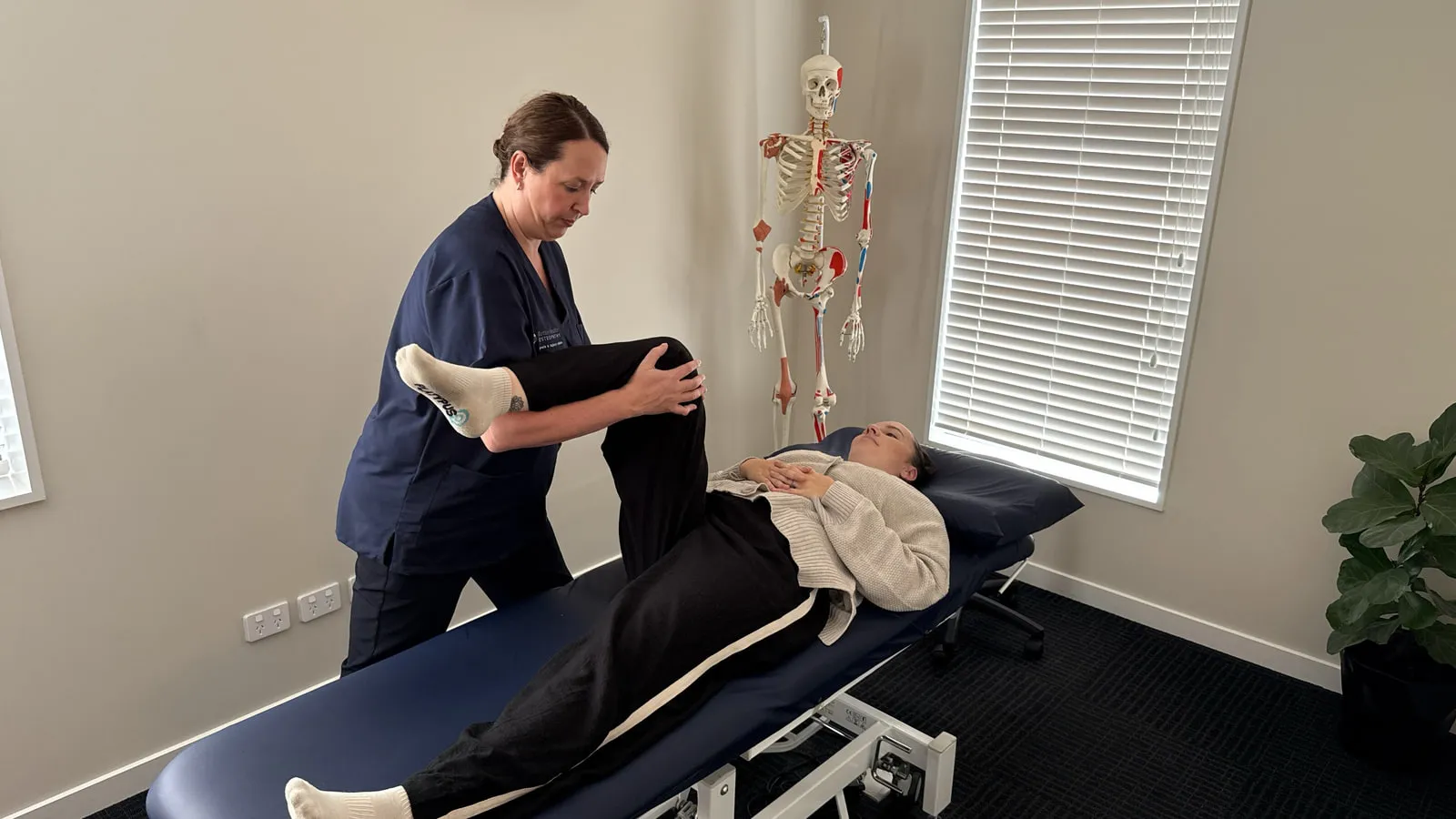
- Treat with hands-on care to ease pain and restore movement.
- Plan: a simple home plan, an outline of what comes next, and a clear sense of the recovery arc.
Treatment usually combines several techniques: soft-tissue work, joint articulation, sometimes higher-velocity adjustment if appropriate, plus exercise prescription and education. The goal is short-term relief plus a path to durable recovery.
How long does back pain take to recover?
Honest numbers, from the research:
- Acute episodes (less than 6 weeks): around 90% improve significantly within 4 to 6 weeks regardless of treatment. Treatment shortens the time and reduces the chance of recurrence.
- Subacute episodes (6 to 12 weeks): recovery is slower. Active rehab plus hands-on care is the strongest evidence-based pattern.
- Chronic back pain (>12 weeks): a different management pattern. The focus shifts toward graded reactivation, progressive strengthening, and addressing the psychosocial drivers (sleep, stress, fear). Outcomes are still good, but the timeline is longer.
For most people booking in within the first few weeks of an episode, expect the bulk of the improvement in 4 to 6 visits over 4 to 8 weeks, followed by ongoing strengthening and maintenance work to prevent recurrence.
How to reduce your chances of recurrence
This is where the durable wins are. The single biggest predictor of having another back pain episode is having had one before. The single biggest mitigator is building capacity: strength, mobility, and load tolerance.
The patterns that consistently reduce recurrence:
- Regular movement: walking, swimming, gym, yoga, gardening, anything that involves daily moderate activity.
- Strength work, especially for the trunk and hips: targeted strengthening 2 to 3 times a week. Doesn’t need to be elaborate. Squats, deadlifts (well-coached), planks, glute work.
- Manage your sitting time: regular breaks every 30 to 45 minutes, varied postures across the day.
- Sleep: consistent 7 to 9 hours, supportive setup, address the snoring/insomnia/etc. side if present.
- Stress and recovery: chronic stress lowers pain thresholds. Whatever your stress-management practice is, do it.
A short course of treatment (3 to 6 visits) plus a sustained habit of strength and movement is the most reliable recipe for staying out of back pain over years.
Booking with us
If you’d like to book in, book online or call 0800 67 77 00. Same-week appointments are usually available; same-day appointments for acute pain are often possible if you call early.
If your back pain started with an event (lifting, twisting, slipping, accident), the ACC and Osteopathy guide covers the funded-care side. If it’s a brand-new episode and you want first-day guidance, Sudden back pain: what to do today is the companion piece.
Related reading
- Back pain: full condition page for the structured deep-dive on causes, signs, and treatment patterns.
- Sciatica if your pain runs into the leg.
- Sudden back pain: what to do today for the first-48-hours plan.
- ACC and Osteopathy in NZ for the funded-care side.