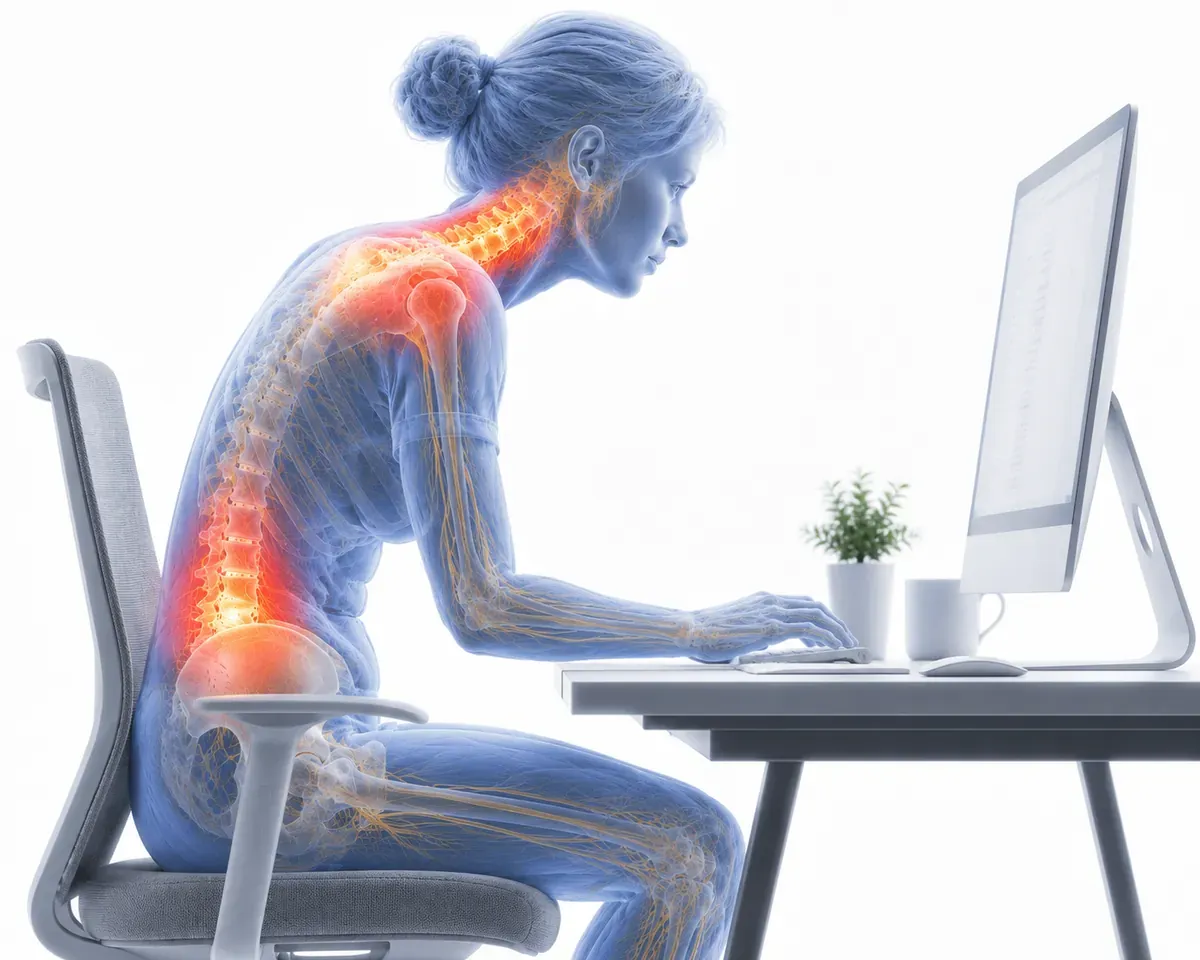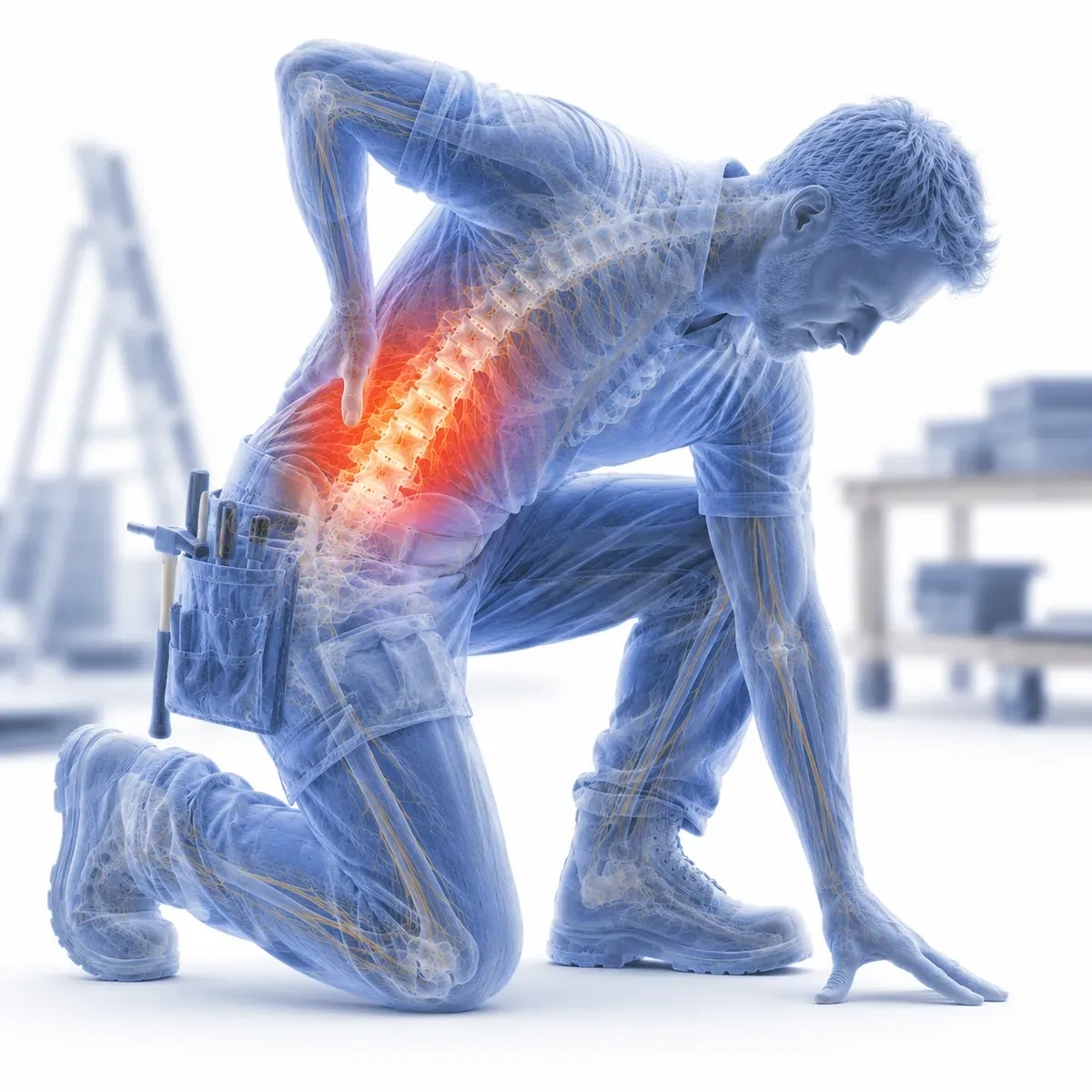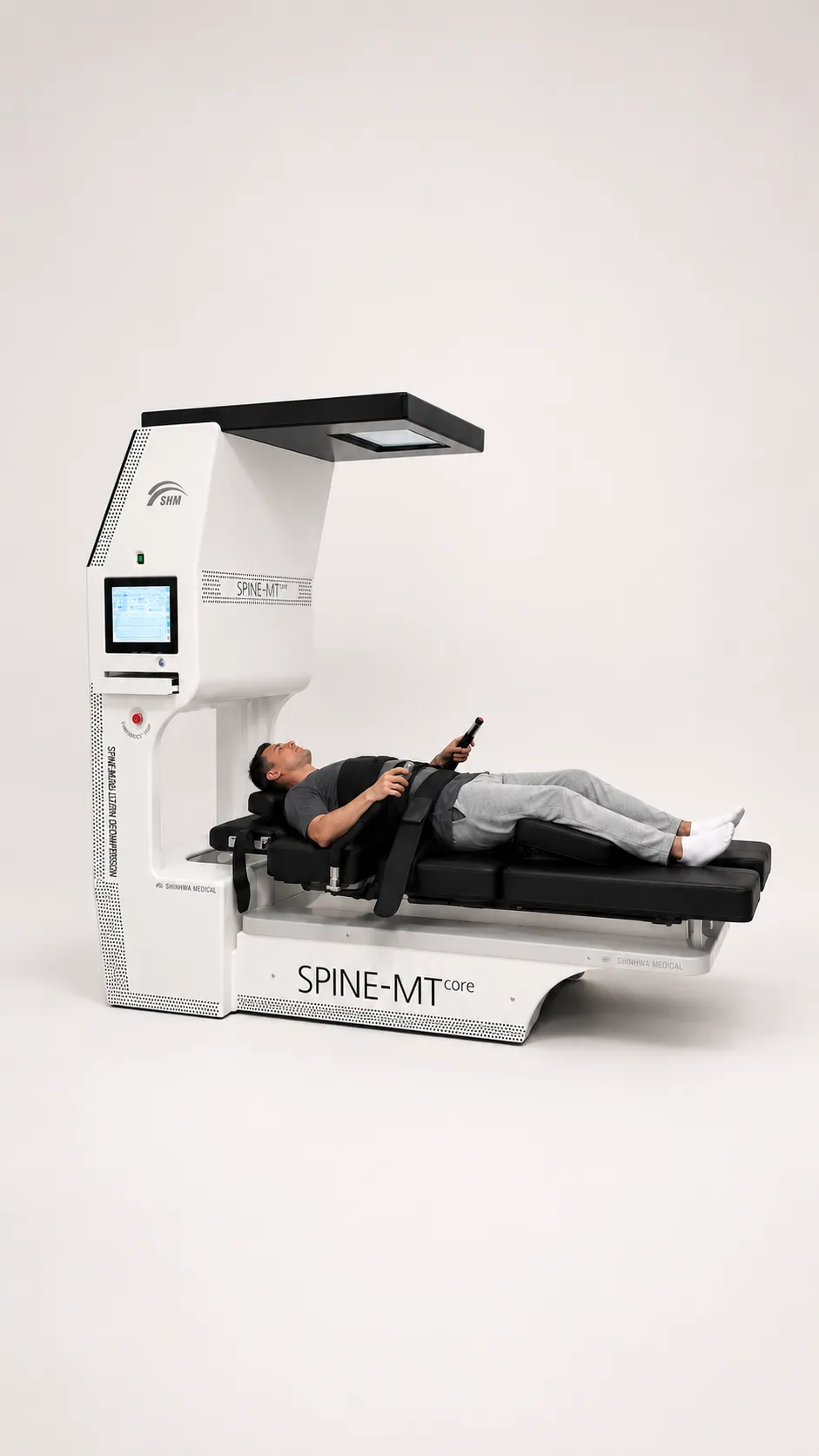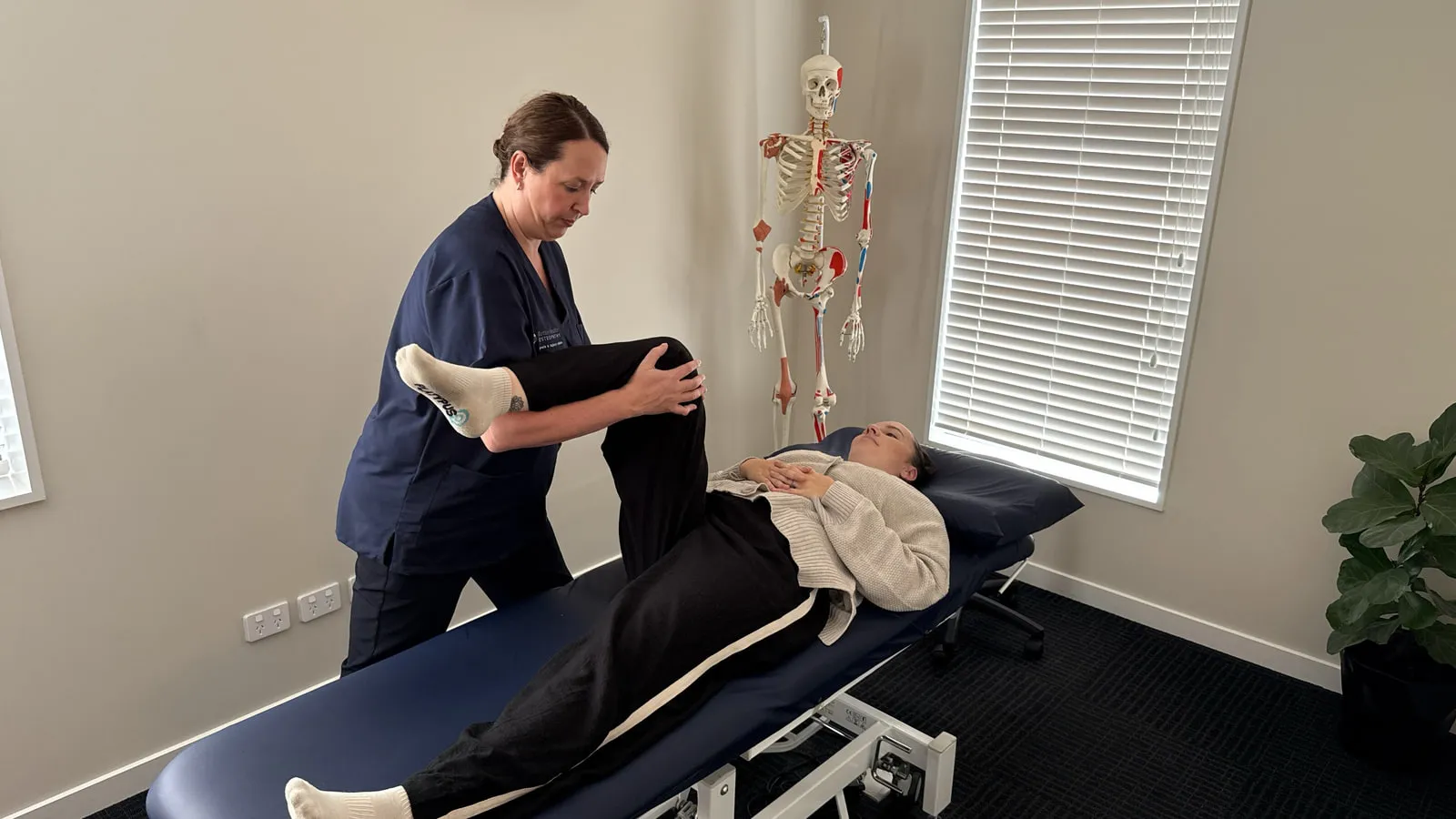

If you’ve been told you have sciatica, you’re probably dealing with sharp pain running down one leg, often combined with low-back pain, sometimes with tingling, numbness, or weakness. The pain can be alarming, the term carries assumptions, and the standard advice you’ll find online is often a confusing mix of “it’ll heal with time” and “you need a scan and probably surgery”. Neither extreme is right for most cases.
This article is a focused deep-dive on sciatica: what’s actually happening, what the evidence says works, why imaging often confuses more than it clarifies, and the myths that keep people stuck.
This article focuses on the sciatica picture in depth. For the broader sciatica overview and how we treat it at BHO, see the sciatica condition page.
What sciatica actually is
“Sciatica” is a symptom description, not a diagnosis. It refers to pain that radiates from the lower back or buttock into the leg, typically along the path of the sciatic nerve (which runs from the lower back, through the buttock, down the back of the thigh, and branches into the lower leg).
The pain can feel:
- Sharp, shooting, or electric
- Burning or hot
- Like a deep ache
- Tingling, numbness, or pins-and-needles
- Weak (the muscle isn’t responding the way it should)
What you’re experiencing is the sciatic nerve being irritated somewhere along its path. The job of figuring out what’s irritating it is the assessment.
What’s actually irritating the nerve
Common drivers, in roughly the order we see them clinically:
Disc-related (most common):
A small bulge or herniation in one of the lower lumbar discs (L4-L5 or L5-S1 most often) presses on or irritates the nerve root that contributes to the sciatic nerve. Important nuance: most disc bulges resolve on their own over weeks to months. The disc material is reabsorbed by the body. Surgery for disc-related sciatica is rarely the first or right move; conservative care resolves most cases.
Foraminal stenosis:
The bony exit channel for the nerve root narrows due to age-related changes, arthritic spurs, or thickened ligaments. The nerve gets compressed in this narrower space, especially in certain positions.
Piriformis syndrome:
The piriformis muscle in the buttock can compress the sciatic nerve as it passes through or under the muscle. This is a real but commonly over-diagnosed cause; true piriformis syndrome is less common than the label is used.
Sacroiliac joint or hip-related referral:
Sometimes the leg pain isn’t true sciatica but referred pain from the SI joint, the hip, or other pelvic structures that mimics the pattern. Differentiating this matters because the treatment differs.
Nerve sensitisation:
In longer-standing cases, the nerve itself becomes sensitised. The original mechanical irritation may have settled but the nerve continues to misfire. Treatment shifts toward gentle exposure and graded reactivation rather than addressing a structural compression.
The recovery curve nobody tells you about
Honest numbers from the research:
- Acute sciatica (first episode, recent onset): 75% to 90% of cases improve significantly within 6 to 12 weeks with conservative care alone.
- Persistent sciatica (>3 months): improvement still happens, just slower. Most cases continue to improve over 6 to 12 months.
- Surgical cases: only about 5% to 10% of sciatica cases ultimately benefit from surgery. The decision is based on persistence, severity, and specific neurological features, not just imaging findings.
The curve is not linear. Most people see flares within an overall downward trend. The path looks like:
- Week 1-2: peak pain, then beginning of improvement
- Week 3-6: noticeable easing, with some flares with provocative activities
- Week 6-12: largely back to function with occasional residual symptoms
- Beyond 3 months: most are fully recovered or significantly improved
Understanding this curve matters because it prevents two common mistakes: panicking when there’s a flare in week 4 (which is normal), and pursuing aggressive intervention in week 6 (when most cases would resolve with another month of patience).
What the evidence says actually works
The strongest evidence is for:
Staying active within tolerable range.
The old advice was bed rest until the pain stops. That advice has been reversed: bed rest beyond a day or two slows recovery and increases the chance of becoming chronic. Gentle daily activity, walking, and graded movement consistently outperform rest.
Hands-on care plus exercise.
Manual therapy (Osteopathy, physiotherapy, chiropractic) combined with progressive exercise consistently outperforms either alone. The hands-on side eases the muscle guarding and joint restrictions that often accompany sciatica; the exercise side rebuilds the capacity that prevents recurrence.
Education and reassurance.
Understanding what’s going on, that most cases recover, and that the pain doesn’t necessarily indicate ongoing damage genuinely helps recovery. This isn’t placebo; it’s the brain’s threat appraisal calibrating correctly, which lowers pain sensitivity.
Specific exercises.
For most sciatica:
- Nerve mobility exercises (slump, slider, glider movements) where appropriate
- Hip and glute strengthening
- Core endurance work
- Position-specific exercises (some people improve with extension-biased work, others with flexion-biased)
The right specific mix depends on your case. We assess and prescribe accordingly.
Pain relief, judiciously used.
NSAIDs (ibuprofen) at standard doses can help in the acute phase. Paracetamol is gentler. Stronger pain medications (gabapentin, codeine) have a role in some severe cases but the side-effect profile and dependence risk mean they’re not first-line.
What the evidence says doesn’t help (or actively hinders)
Routine imaging for first-presentation sciatica.
Studies repeatedly show that MRIs of pain-free people in their 30s, 40s, and 50s often show disc bulges and degenerative changes. By age 50, around 60% of pain-free people have disc bulges visible on MRI. An MRI showing a disc bulge in someone with sciatica may show a finding that was already there before the pain started. Imaging is useful for severe, persistent, or red-flag cases; it rarely changes management for typical first-episode sciatica.
Bed rest beyond 1 to 2 days.
Actively discouraged. Slows recovery, increases chronic-pain risk.
Surgery as the first move.
Reserved for specific severe presentations: cauda equina syndrome (urgent), severe progressive weakness, persistent severe pain unresponsive to 3+ months of good conservative care. For the vast majority of sciatica, non-surgical care produces equivalent long-term outcomes.
Spinal injections as routine.
Epidural steroid injections can help in specific severe cases, but evidence for routine use is mixed at best. They’re a tool for stuck cases, not a first-line treatment.
Long-term opioid pain relief.
Risks (dependence, hyperalgesia, side effects) outweigh benefits for most cases. NZ prescribing guidelines reflect this.
The myths that keep people stuck
“I can’t move because I’ll damage the nerve.”
Movement within tolerable range doesn’t damage the nerve. The nerve heals best when it’s gently used. Stillness sensitises it.
“The disc bulge on my MRI means I need surgery.”
Most disc bulges resolve over weeks to months. Surgery is for specific neurological emergencies and persistent severe cases that haven’t responded to thorough conservative care.
“My back is out of place and needs to be put back.”
Backs don’t go out of place. The “click” you sometimes feel during treatment is gas releasing from a joint capsule, not bones realigning. Therapeutic effect comes from joint mobilisation and tissue release, not realignment.
“I have a weak core, that’s why this happened.”
Core strength is one of many factors. Plenty of people with weak cores never get sciatica; plenty of people with strong cores do. The right framing is that building capacity helps recovery and reduces recurrence, not that weakness “caused” the episode.
“Once you have sciatica, you’ll always have it.”
Most acute episodes fully resolve. Recurrence is more likely in people who don’t address the underlying patterns (load tolerance, movement habits, sleep, stress), but it’s not inevitable.
Red flags: when sciatica is something more
Most sciatica is mechanical and recovers well. A small minority of presentations need urgent assessment. Get medical help promptly if:
- Cauda equina symptoms: numbness in the saddle area (between the legs), loss of bladder or bowel control, severe leg weakness. This is a medical emergency; go to A&E.
- Progressive weakness in the leg over days (not just pain, actual weakness affecting walking).
- Pain after a significant injury (fall, accident, impact), especially with osteoporosis history.
- Fever, weight loss, or feeling acutely unwell alongside the back/leg pain.
- Pain that’s steadily worsening over weeks, especially at night, rather than easing.
These are uncommon but worth knowing.
What recovery looks like in practice
A typical patient journey through sciatica:
Week 1-2 (acute):
- Peak pain, often worst in the leg rather than the back
- Sometimes can’t sit comfortably, sleep poorly
- Hands-on Osteopathy plus heat plus walking plus judicious NSAIDs starts the curve
- Specific exercises introduced once pain isn’t too provocative
Week 3-6 (early recovery):
- Pain easing day to day, with flares from specific aggravations
- Function returning: longer walks, return to most work, fewer “I can’t do that” moments
- Hands-on visits roughly weekly, focused on what’s still tight
- Exercise programme expands; hip and glute strengthening becomes more central
Week 6-12 (rebuild):
- Most pain is occasional rather than constant
- Strengthening builds capacity and prevents recurrence
- Visit frequency drops to fortnightly, then monthly
- Return to sport or higher-demand activities, paced
Beyond 3 months:
- Most cases functionally recovered
- Maintenance work continues for several more months to fully consolidate
- Patient is equipped to recognise early flare signs and respond before they progress
When to book in
For most sciatica:
- Book in within the first 1-2 weeks of an episode if you can. Earlier care shortens the total recovery time.
- Don’t wait for the pain to disappear before booking. Hands-on care during the active phase makes a meaningful difference.
- If the pain has been there months and you’ve tried other things, it’s still worth booking; persistent sciatica responds well to a structured plan.
Booking with us
If you’d like to book in, book online or call 0800 67 77 00. Same-week appointments are usually available; same-day is often possible for acute pain. If your sciatica started with an event (lifting, twist, fall), it’s almost certainly ACC-eligible; we’ll lodge the claim at your first visit. See our ACC and Osteopathy guide for the funded-care details.
Related reading
- Sciatica: full condition guide for the broader picture and how we treat it specifically.
- Sudden back pain: what to do today for the first-day plan if your sciatica is new.
- Understanding back pain for the broader low-back perspective.
- Hip pain if your symptoms could be hip-driven rather than nerve-driven.