
Being told you may need back surgery is unsettling. Alongside the pain you’re already living with, there’s now the worry of an operation, time off work, a recovery you can’t predict, and the question that keeps circling: is there any way to avoid this?
Many people tell us they feel caught between putting up with the pain and taking a step that feels drastic. If that’s where you are, it’s worth knowing the full picture. Surgery is the right answer for some people, and genuinely not needed for many others.
This guide compares the two paths honestly. For the broader picture see our back pain page and sciatica page; it’s also part of our spinal decompression overview.
- For many people with back pain, a disc injury or sciatica, surgery is not the first or only option. Guidelines generally recommend trying conservative care first when there are no red flags.
- Spinal decompression is one non-surgical alternative that may reduce pain and improve movement, as part of a wider plan, before surgery is considered.
- Surgery is the right choice for some people, including certain red-flag situations, and we will tell you clearly and quickly when that's the case.
- The best path is decided by a thorough assessment of your situation, not by a scan or a fear of surgery alone. If you need surgery, we'll help you get to the right person.
What each approach actually does
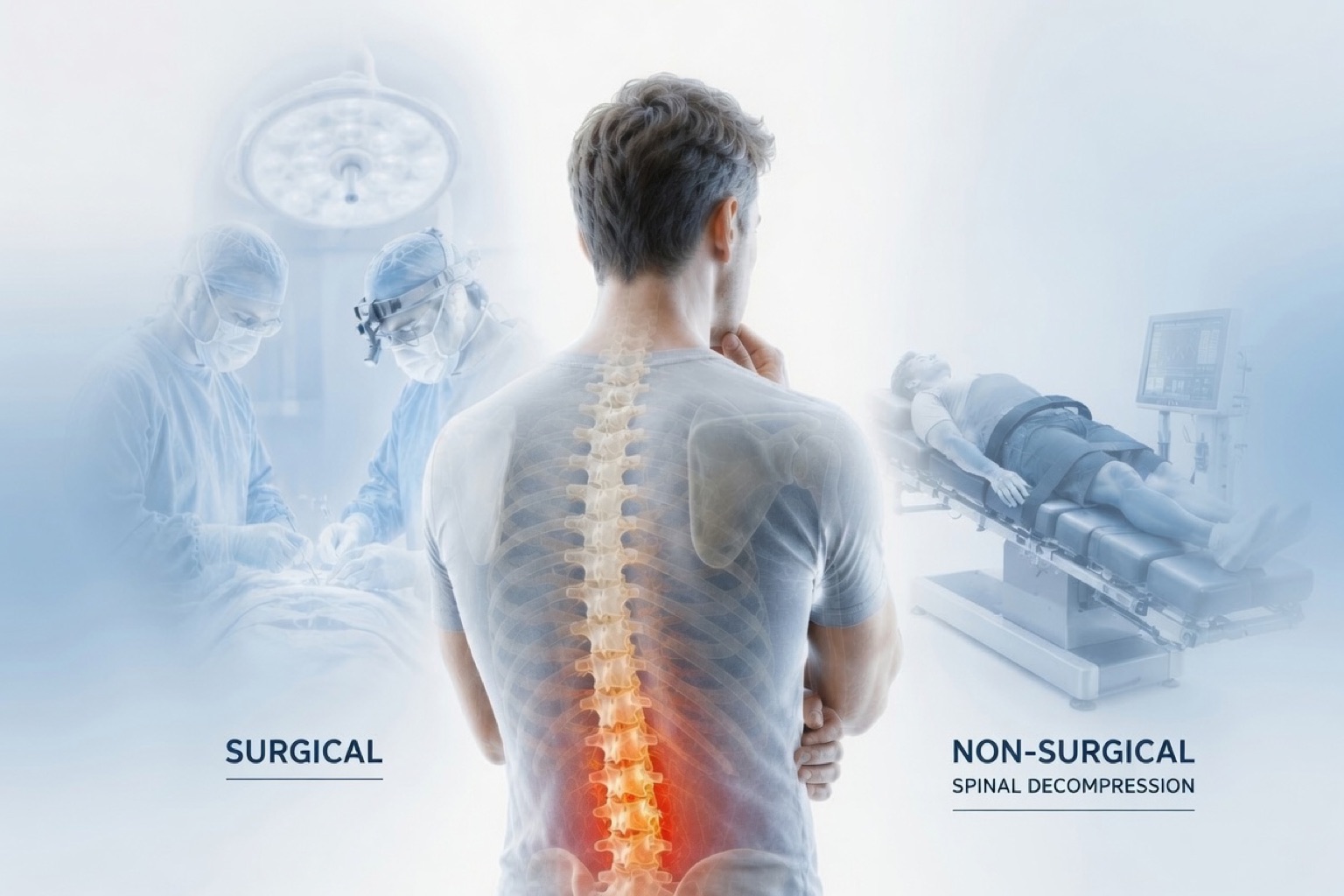
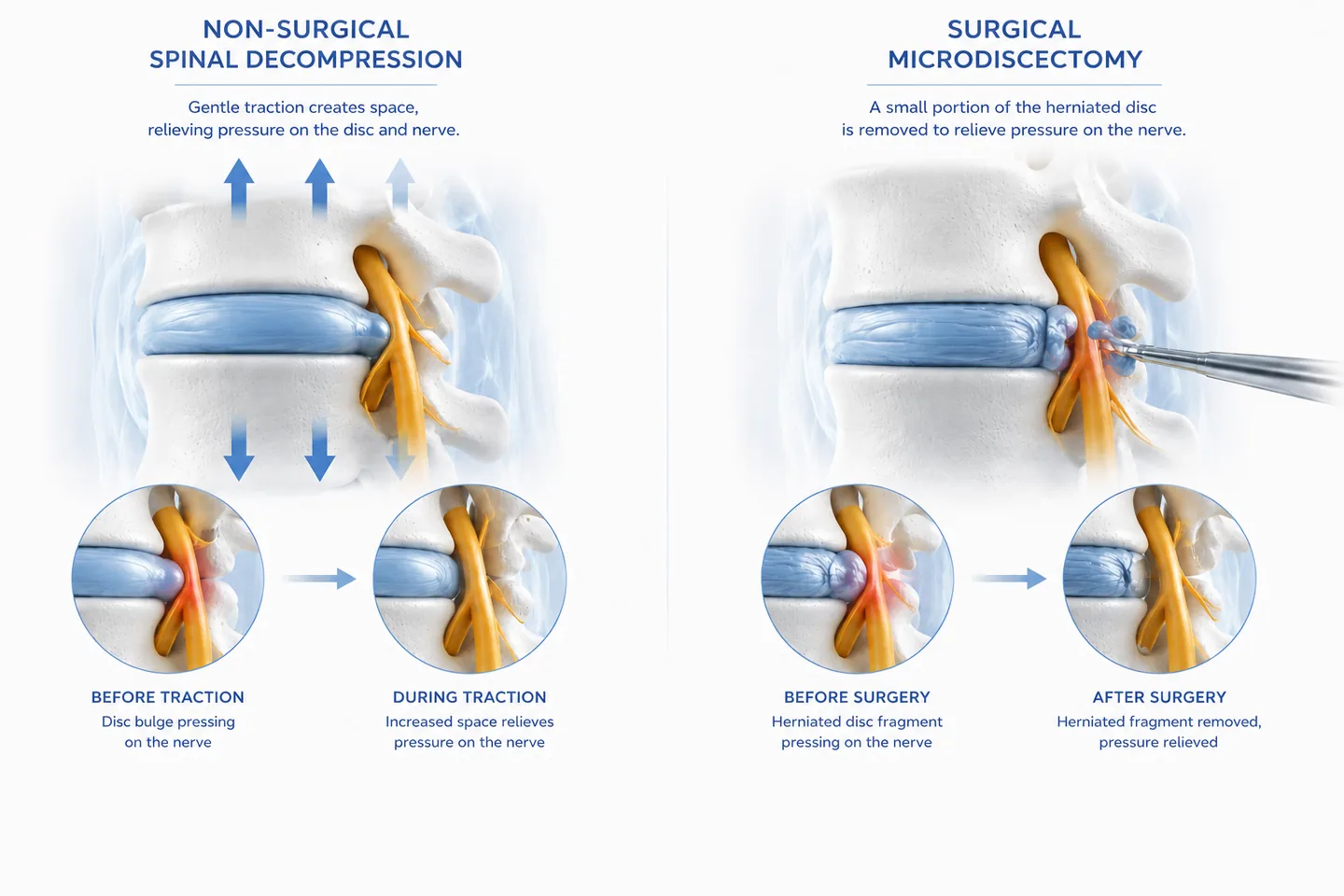
Spinal decompression and surgery aim at the same broad goal, taking pressure off an irritated disc or nerve, but they go about it in very different ways.
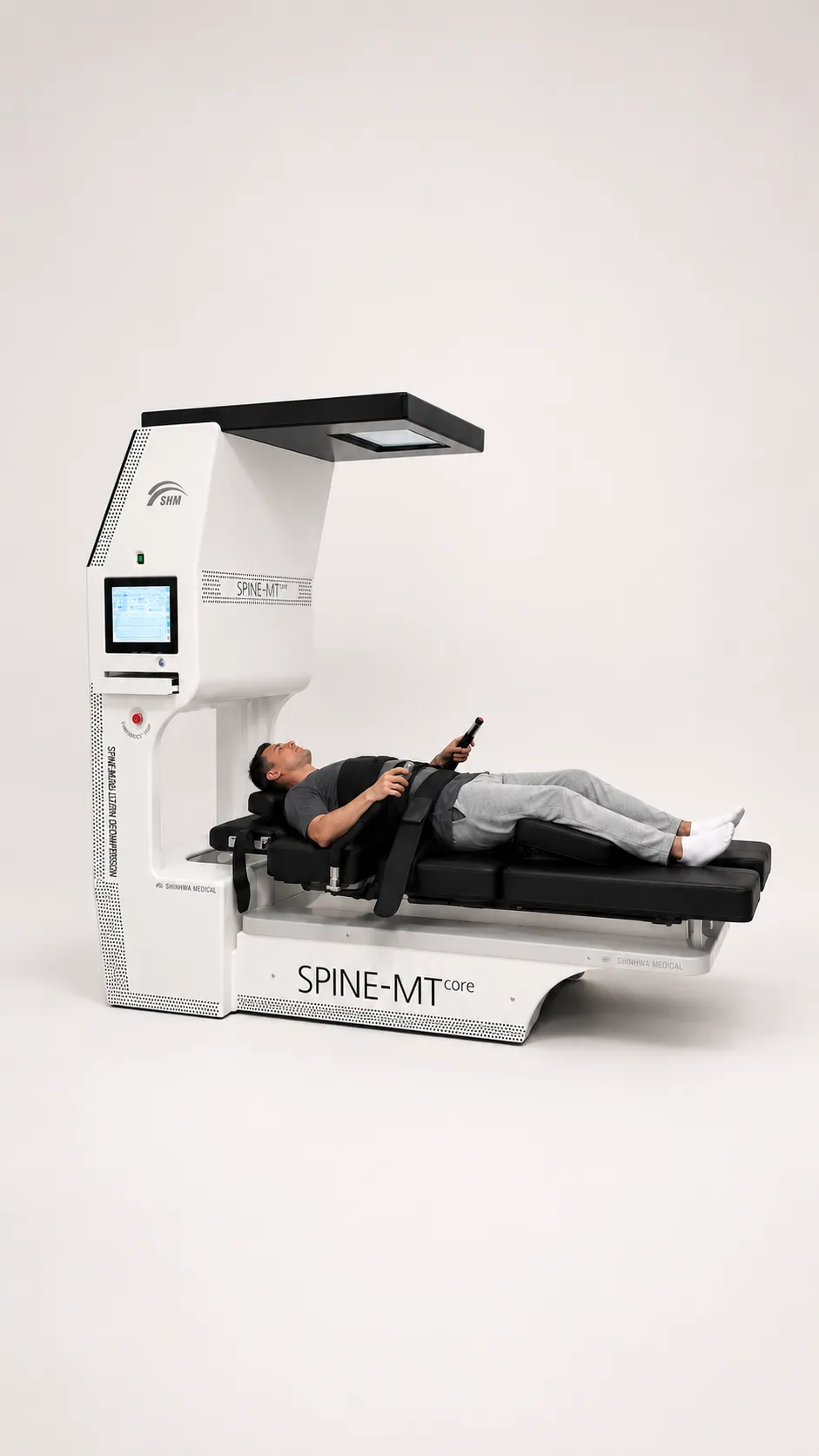
Spinal decompression is non-surgical. A computer-controlled table applies gentle, cyclical stretch and release to a specific level of your spine, easing pressure on the disc and nerve so the area has a chance to settle. There’s no anaesthetic, no incision and no downtime, and it works best as one part of a plan that includes rehabilitation.
Back surgery physically alters the structures causing the problem. Common operations include microdiscectomy, where a surgeon removes the fragment of a herniated disc pressing on a nerve, and laminectomy, where a small amount of bone is removed to create space. These procedures can be very effective and are sometimes necessary, but they involve anaesthetic, a recovery period and the risks that come with any operation.
When surgery is the right choice
Surgery exists for good reasons, and for some people it is clearly the best option. We would recommend prompt surgical review, rather than a trial of conservative care, in situations such as:
Emergency red-flag signs, such as loss of bladder or bowel control or numbness around the saddle area, which can indicate a serious problem (cauda equina syndrome) and need immediate care. Progressive or significant weakness in a leg or foot, where a nerve is under enough pressure to affect the muscles it controls. Symptoms that have not improved despite a fair trial of good conservative care. And certain structural problems, such as marked instability or severe narrowing causing disabling symptoms, that are unlikely to settle without surgical treatment.
For persistent sciatica that has not settled with conservative care, research suggests surgery can provide faster and greater relief than continuing non-surgical treatment alone.3
When decompression may be worth trying first
For a large number of people, though, the picture is less urgent, and this is where a non-surgical alternative becomes worth considering. Most back pain and sciatica improves over time, and clinical guidelines generally recommend a period of conservative care before surgery when there are no red flags.1
It’s also worth knowing that disc bulges, and even moderate herniations, show up in around 30 to 40% of pain-free adults, and become more common with age.4 A finding on a scan doesn’t automatically mean surgery: what matters is whether that finding matches your symptoms and clinical picture, not the image on its own.
The evidence here is genuinely reassuring. While surgery can give faster early relief for some disc problems, studies show that by one to two years, many people who chose conservative care reach similar levels of pain and function.2 In other words, when there’s no urgency, taking time to try a non-surgical approach first is a reasonable, evidence-informed choice, not a gamble.
Decompression may be worth trying first
- Disc-related back or neck pain without red flags
- Sciatica or nerve pain that is stable, not rapidly worsening
- Symptoms present for weeks to months but steady or improving
- You would prefer to explore non-surgical options first
Signs surgery may be needed
- Loss of bladder or bowel control, or saddle numbness (emergency)
- Progressive or significant leg or foot weakness
- Symptoms not improving despite good conservative care
- Certain structural problems that need surgical repair
These are general guides only. During your consultation we screen carefully for anything that points to surgery or urgent care, and we’re honest about which path gives you the best chance.
How we help you decide
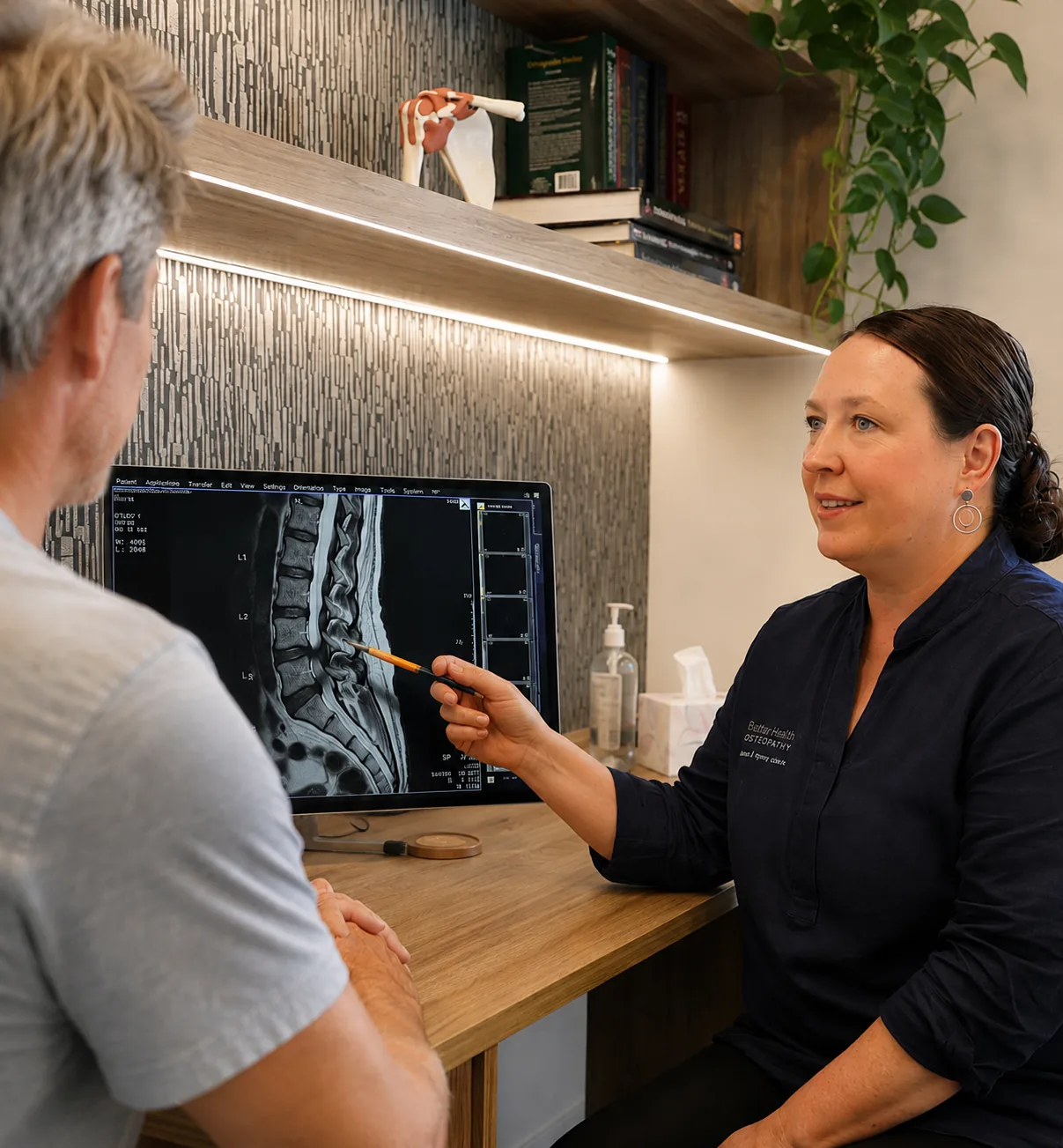
Choosing between surgery and a non-surgical alternative shouldn’t come down to guesswork or fear. It should come from a clear understanding of your problem and an honest conversation about your options.
Your pathway with us
-
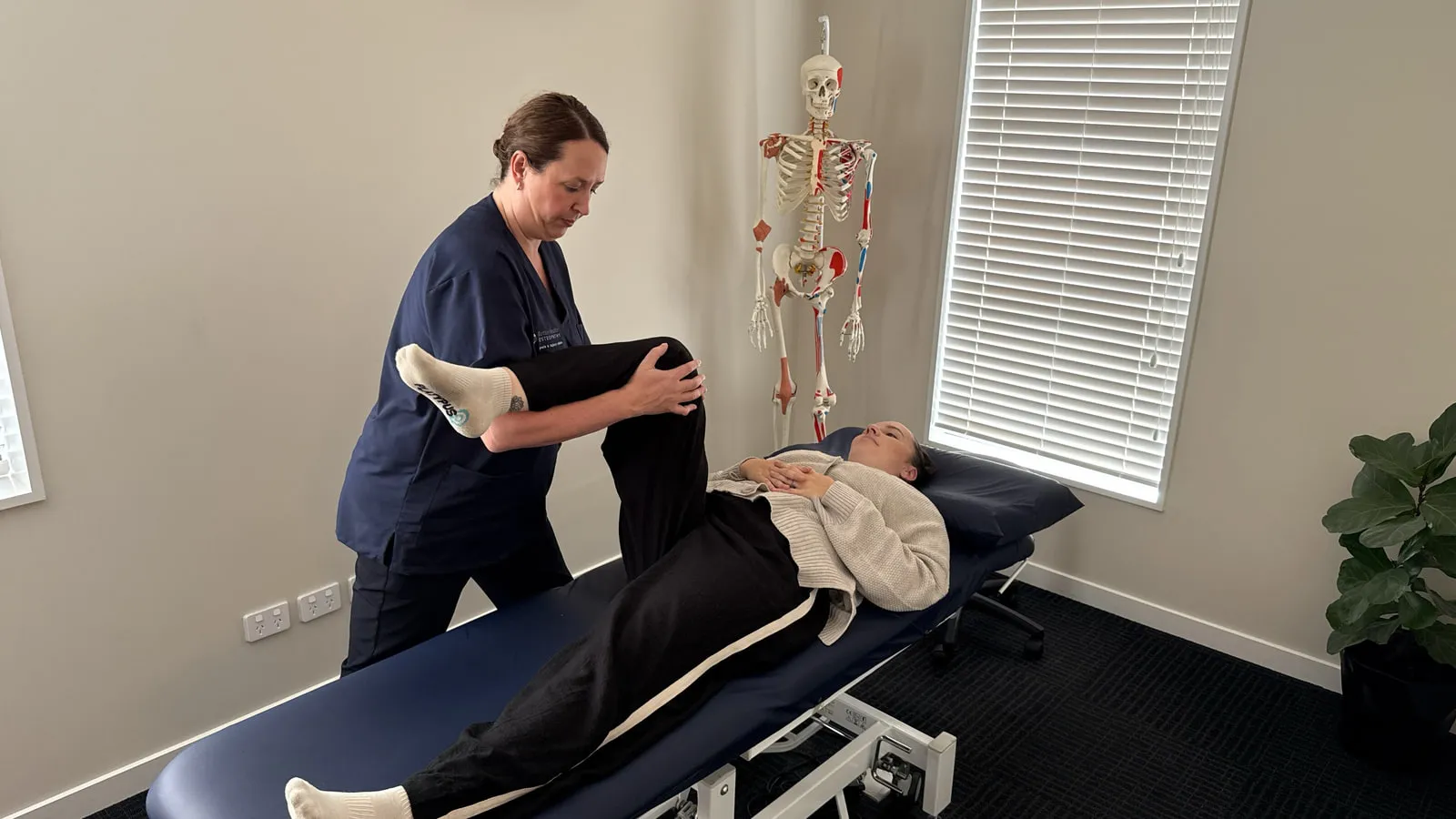
Comprehensive assessment
We take a detailed history, examine your spine and movement, and screen for red flags, so we understand what is actually driving your symptoms.
-
An honest recommendation
We explain your options clearly. That might be a trial of spinal decompression and rehabilitation, another form of conservative care, or a prompt referral for surgical review if that's the better path.
-
Clear review points
If we try a non-surgical approach, we set a realistic timeframe and review it. If it isn't working, we act rather than let you drift, and help you get to the right specialist.
When to seek urgent help
Frequently asked questions
Can spinal decompression help me avoid back surgery?
For some people, yes. Most back pain and sciatica improves without surgery, and decompression is one non-surgical option that may help as part of a plan. It isn't right for everyone, and some problems do need surgery, so it starts with an assessment to see which applies to you.
When is back surgery actually necessary?
Surgery is usually necessary in specific situations: emergency red flags such as loss of bladder or bowel control, progressive or significant nerve-related weakness, or symptoms that don't improve despite a fair trial of good conservative care. For many other people, conservative care is a reasonable first step.
Is spinal decompression better than surgery?
Neither is simply better, they suit different situations. Surgery can give faster relief for some problems, particularly persistent sciatica, while many people recover well without it. The right choice depends on your specific condition, which is what an assessment is for.
What happens if decompression doesn't work?
If a reasonable trial of decompression and rehabilitation isn't helping, we don't keep going regardless. We reassess, and if we think surgical review or another approach is the better path, we'll tell you and help you get to the right specialist promptly.
How long should I try non-surgical treatment before considering surgery?
There's no single answer, but guidelines generally support a period of conservative care first when there are no red flags. We set clear review points so you're never left drifting. If things aren't improving, we act rather than wait indefinitely.
Will surgery fix my back permanently?
Not always. Surgery helps many people, but no treatment guarantees a permanent fix, and some people have ongoing symptoms afterwards. Whichever path you take, rebuilding strength and looking after your spine long term gives you the best chance of a lasting result.
How much does spinal decompression cost?
The cost depends on your individual plan, since the number of sessions and whether decompression is combined with other treatment varies from person to person. We work this out at your assessment, once we understand what's driving your pain and whether decompression is likely to help.