
Sciatica has a way of taking over. The pain travelling down your leg makes sitting at a desk, sleeping through the night, driving, or standing for any length of time genuinely hard. Simple things, from putting on socks to picking up a bag, can trigger it, so you start bracing against your own body.
Many people tell us the hardest part is the uncertainty: not knowing what’s causing it, or whether it will ever fully settle. If that’s you, it’s natural to want to understand your options, and to know whether there’s a non-surgical way forward.
This guide focuses on where spinal decompression fits for sciatica and disc pain. For the broader sciatica picture (causes, recovery, and everything else that helps) see our sciatica page and the sciatica deep-dive; it’s also part of our spinal decompression overview.
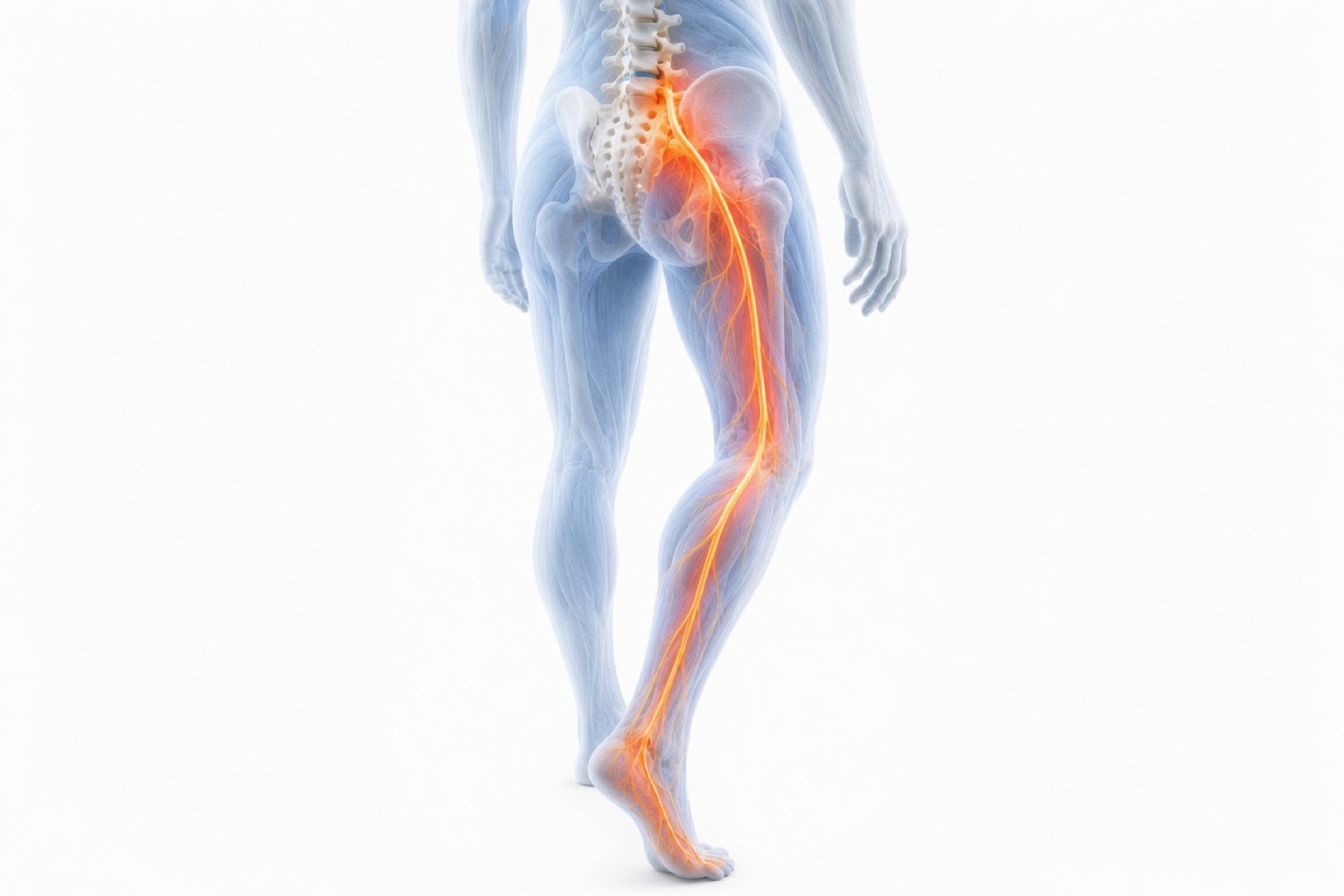
Sciatica has a recognisable pattern. You might notice some of these:
- Pain that travels from your lower back or buttock down into the leg
- Sharp, shooting or burning pain, rather than a dull ache
- Tingling, pins and needles or numbness in the leg or foot
- Pain that worsens with sitting, driving, bending or coughing
- Weakness or a heavy feeling in one leg
- Sciatica and disc-related pain are often caused by an irritated or compressed nerve in the lower back, commonly due to a bulging or herniated disc.
- Spinal decompression can help reduce pressure on the affected nerve and ease back and sciatic leg pain when appropriate, especially as part of a treatment plan that includes rehabilitation.
- Many people recover well with the right conservative care, and spinal decompression can be an important part of that recovery.
- The only way to know whether spinal decompression is right for you is through a thorough osteopathic assessment. If it's likely to help, we'll explain why; if another approach is more appropriate, we'll tell you that too.
What causes sciatica and disc pain
Sciatica is a symptom, not a diagnosis. The word describes nerve pain that travels along the path of the sciatic nerve, which runs from your lower back through the buttock and down the leg. When something irritates or compresses that nerve, or the nerve roots it comes from, you feel it down the leg rather than only in your back.
The most common cause is a disc problem. A bulging or herniated disc in the lower back can press on a nearby nerve root, triggering the shooting pain, tingling or numbness that people recognise as sciatica. Other causes include age-related changes and narrowing of the space around the nerves (stenosis), so not all leg pain is the same, and getting the diagnosis right matters. For the full walkthrough of causes and recovery, see our sciatica page.
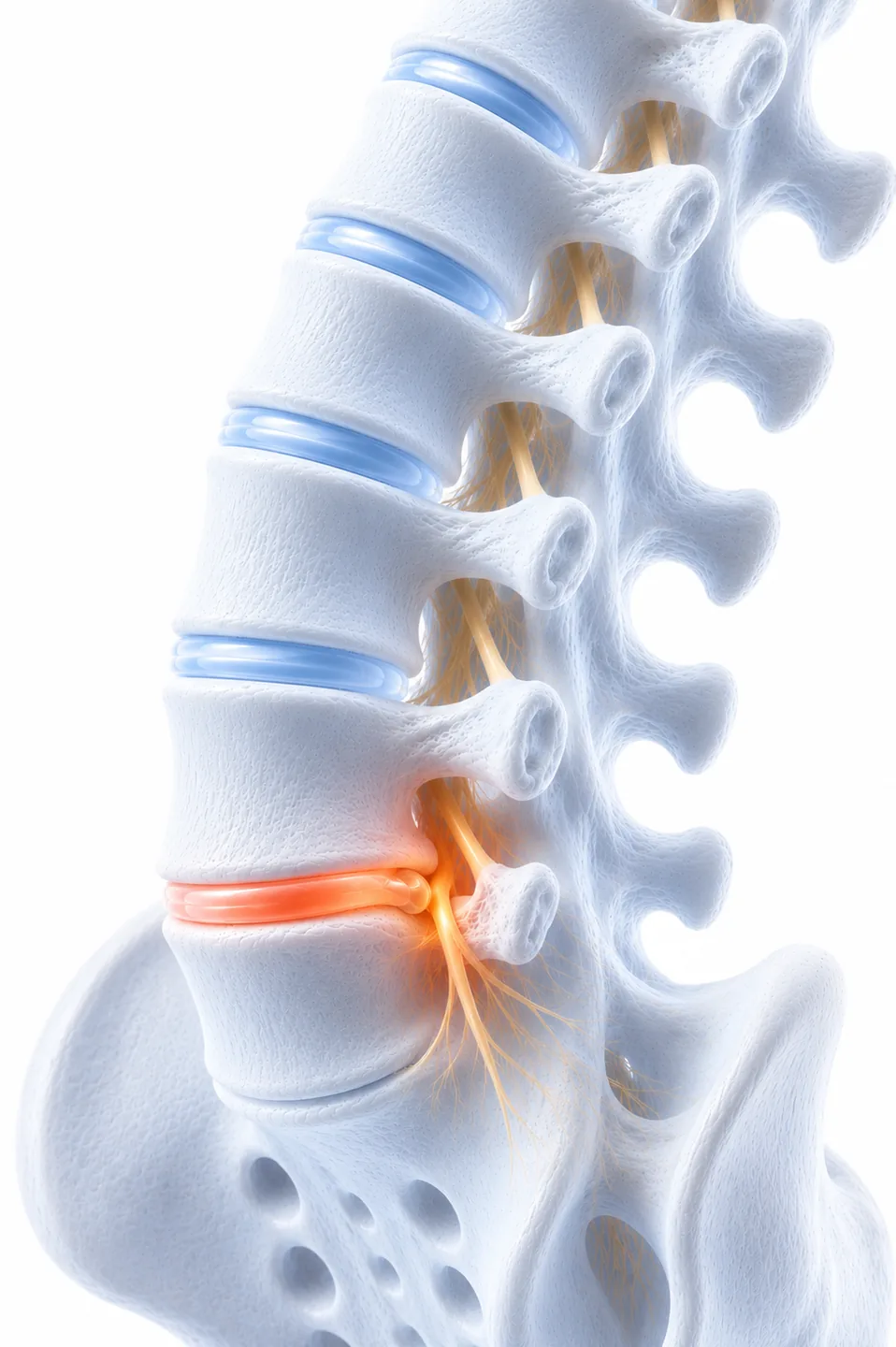
Because the pain is driven by pressure on the nerve, treatment aims to reduce that pressure and calm the irritation, so the nerve can settle.
How decompression helps sciatica
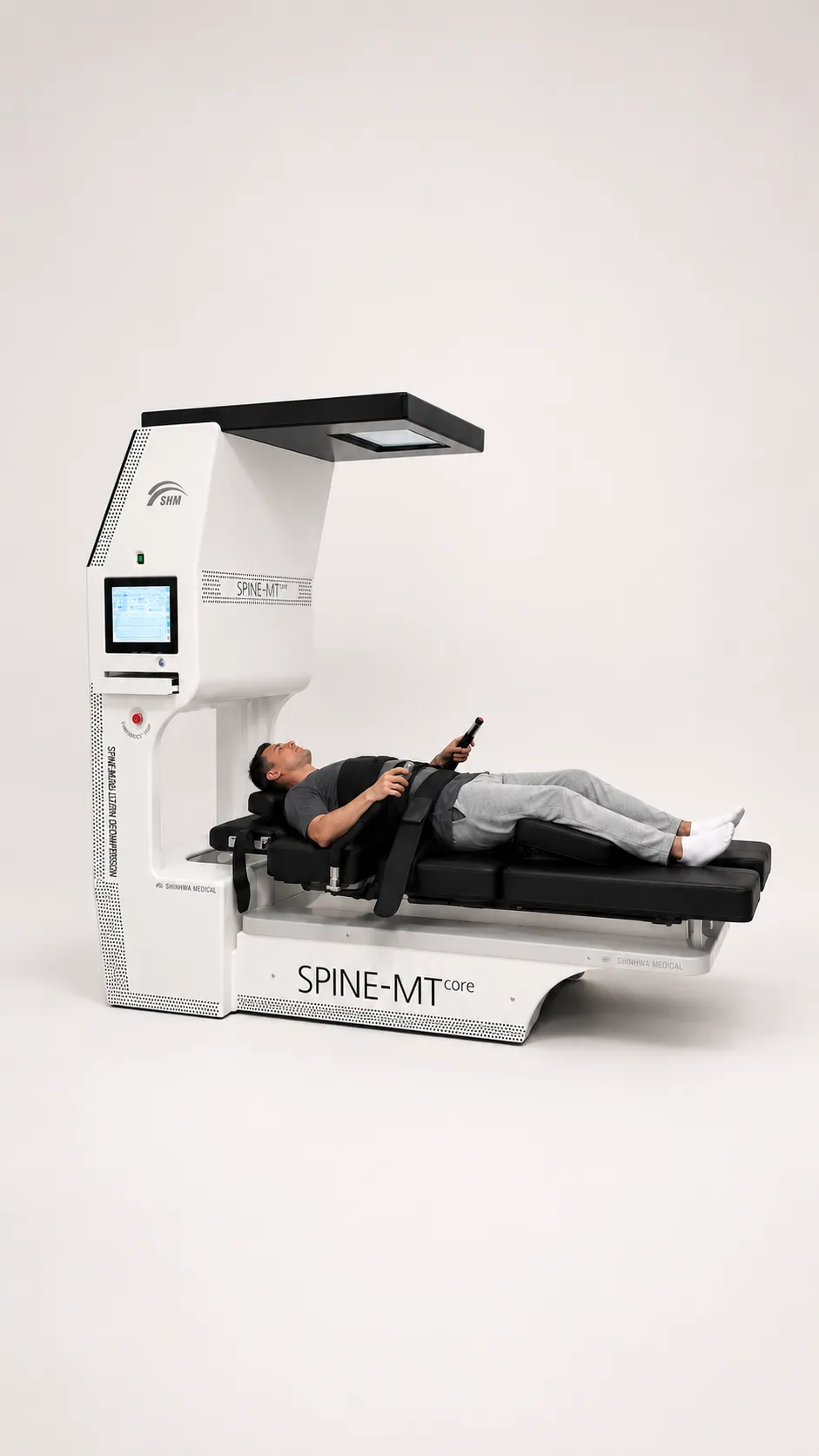
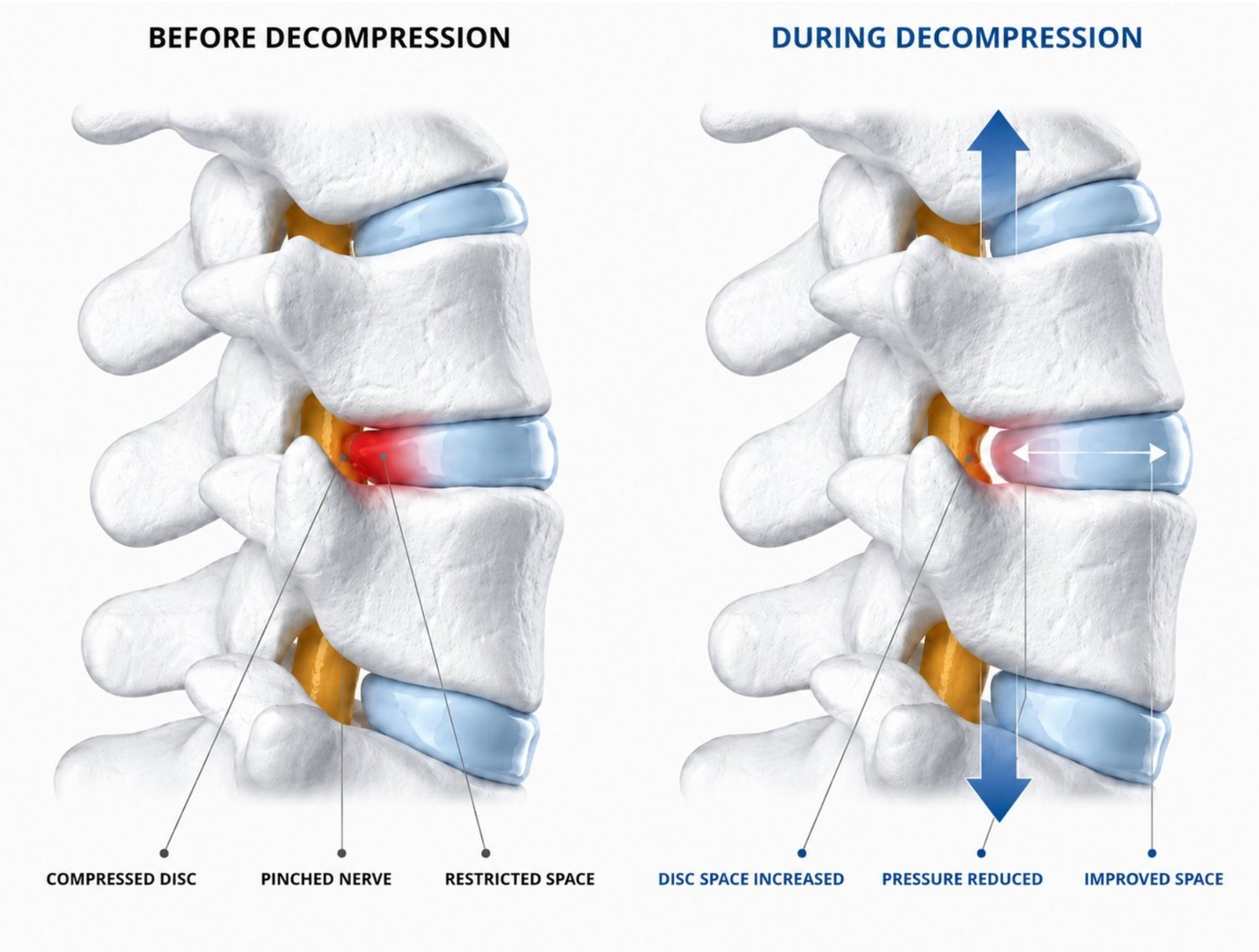
Spinal decompression uses gentle, computer-controlled cycles of stretch and release to ease pressure at a specific level of the spine. For sciatica, the aim is simple: take pressure off the irritated disc and the nerve beside it, creating a little more space so the nerve is less compressed and less inflamed. Less pressure on the nerve root can mean less pain travelling down the leg.
One study found that adding non-surgical decompression to physiotherapy improved pain, movement and function in people with nerve-related leg pain (lumbar radiculopathy) more than physiotherapy alone.1
Who it may help
Spinal decompression is most likely to help people whose sciatica or disc-related pain is caused by pressure on an irritated spinal disc or nerve. A thorough assessment helps determine whether you’re likely to benefit.
May suit
- Sciatica from a bulging or herniated disc
- Disc-related back pain with leg symptoms
- A pinched nerve causing shooting pain, tingling or numbness
- Symptoms that are stable, not rapidly worsening
- Wanting to explore a non-surgical option
May not suit
- Loss of bladder or bowel control, or saddle numbness (emergency)
- Progressive or significant leg weakness
- An active or recent spinal fracture, or severe osteoporosis
- Cancer affecting the area, or an active infection
- Pregnancy
These are general guides only. During your consultation we carefully screen for anything that makes decompression unsuitable, or that points to another treatment being a better fit.
Not sure what’s driving your sciatica? A consultation is the fastest way to find out.
How we decide
Assessment first, treatment second. Everyone begins with a comprehensive osteopathic assessment, so we understand what is actually driving your sciatica before recommending anything. If decompression isn’t the right fit, we’ll point you towards the pathway that gives you the best chance of recovery.
Your pathway with us
-
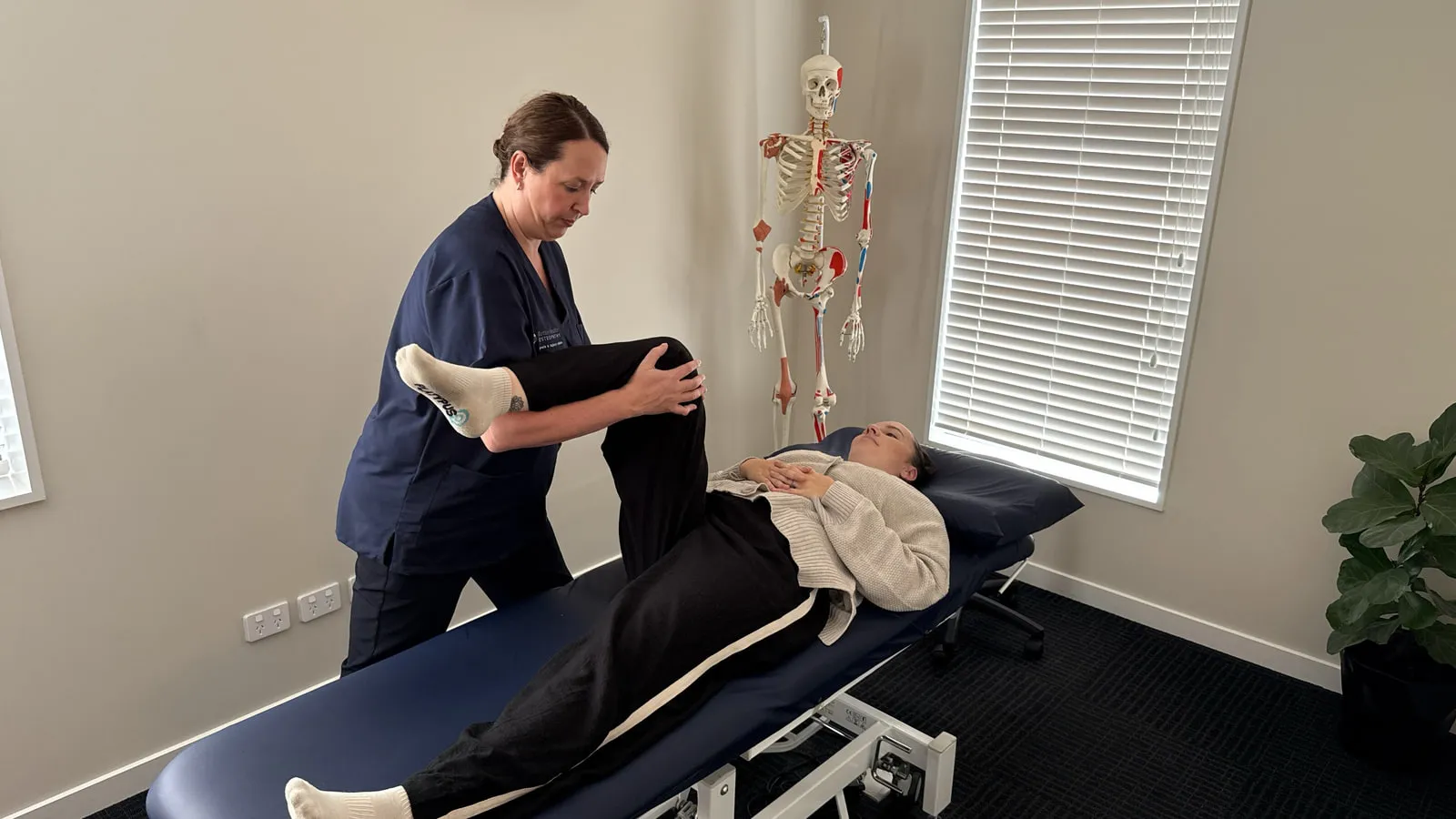
Osteopathic consultation
We take a detailed history, examine your spine, movement and nerve function, and screen for red flags, then tell you honestly whether decompression is likely to help.
-
Spinal decompression
Where it's the right fit, gentle, computer-controlled sessions ease pressure off the affected disc and nerve so the sciatic pain can settle.
-
Rehabilitation
We rebuild strength and control so the nerve stays calm. This is what helps stop sciatica returning, and it is an essential part of recovery, not an add-on.

When to seek urgent help
Frequently asked questions
Does spinal decompression work for sciatica?
For some people, yes. Spinal decompression may help reduce the nerve pressure behind sciatica and improve movement, as part of a plan that includes rehabilitation. It doesn't help everyone, and it isn't a cure, so it starts with an assessment to see whether it's likely to help you.
How many sessions before I notice a difference with sciatica?
It varies. Some people notice a change within the first few weeks, others take longer, and some don't respond, in which case we change course. After your assessment, and only if decompression is appropriate, we'll set out a realistic plan with clear review points.
Can spinal decompression treat a herniated or bulging disc?
It may help disc-related sciatica where a bulging or herniated disc is pressing on a nerve. It doesn't force a disc back into place like a mechanical fix, but by easing pressure it can create better conditions for the disc and nerve to settle. Whether it's suitable depends on your assessment.
Is spinal decompression safe for sciatica?
For most people, yes. It's non-invasive and non-surgical, you stay fully clothed, and treatment is gently computer-controlled and monitored throughout. It's only recommended when it's considered safe and appropriate for you, which is why we screen carefully first.
How long does sciatica take to settle?
Most sciatica improves over weeks to a few months, and many cases settle without surgery. Recovery isn't always linear, and some people take longer. Persistent or worsening symptoms should be reassessed rather than simply waited out.
Will my sciatica come back?
It can, especially if the underlying causes aren't addressed. That's why rehabilitation matters. Rebuilding strength and changing how your spine is loaded lowers the chance of sciatica returning far more than passive treatment alone.
How much does spinal decompression cost?
The cost depends on your individual plan, since the number of sessions and whether decompression is combined with other treatment varies from person to person. We work this out at your assessment, once we understand what's driving your pain and whether decompression is likely to help.