
If you’ve ever felt a headache that seemed to start at the back of your head or base of your skull, or noticed your headaches getting worse on long-laptop days or after a stiff sleep, you’ve experienced something that’s clinically well-recognised: the upper neck and the head are functionally and anatomically connected, and neck issues can cause headaches.
This is one of the most under-recognised causes of recurring headaches we see at the clinic. The aim of this article is to give you a plain-English picture of the connection, the patterns to look for, and what actually helps.
If you want the deeper clinical picture, the cervicogenic headache article goes into the specific diagnostic patterns and management. This article is the broader entry point.
The short version
- Yes, the neck can cause headaches. It’s well-documented in the medical literature.
- The most common pattern is pain that starts at the base of the skull or back of the head, often one-sided, often triggered by neck movement or sustained postures.
- Around 15 to 20% of recurring headaches are partly or wholly driven by the neck, depending on which study you read.
- A neck-driven headache is treatable: it usually responds well to addressing the upper-neck mechanics, posture, and the things keeping the neck irritated.
The anatomy in 60 seconds
Three bits of anatomy explain most of the link:
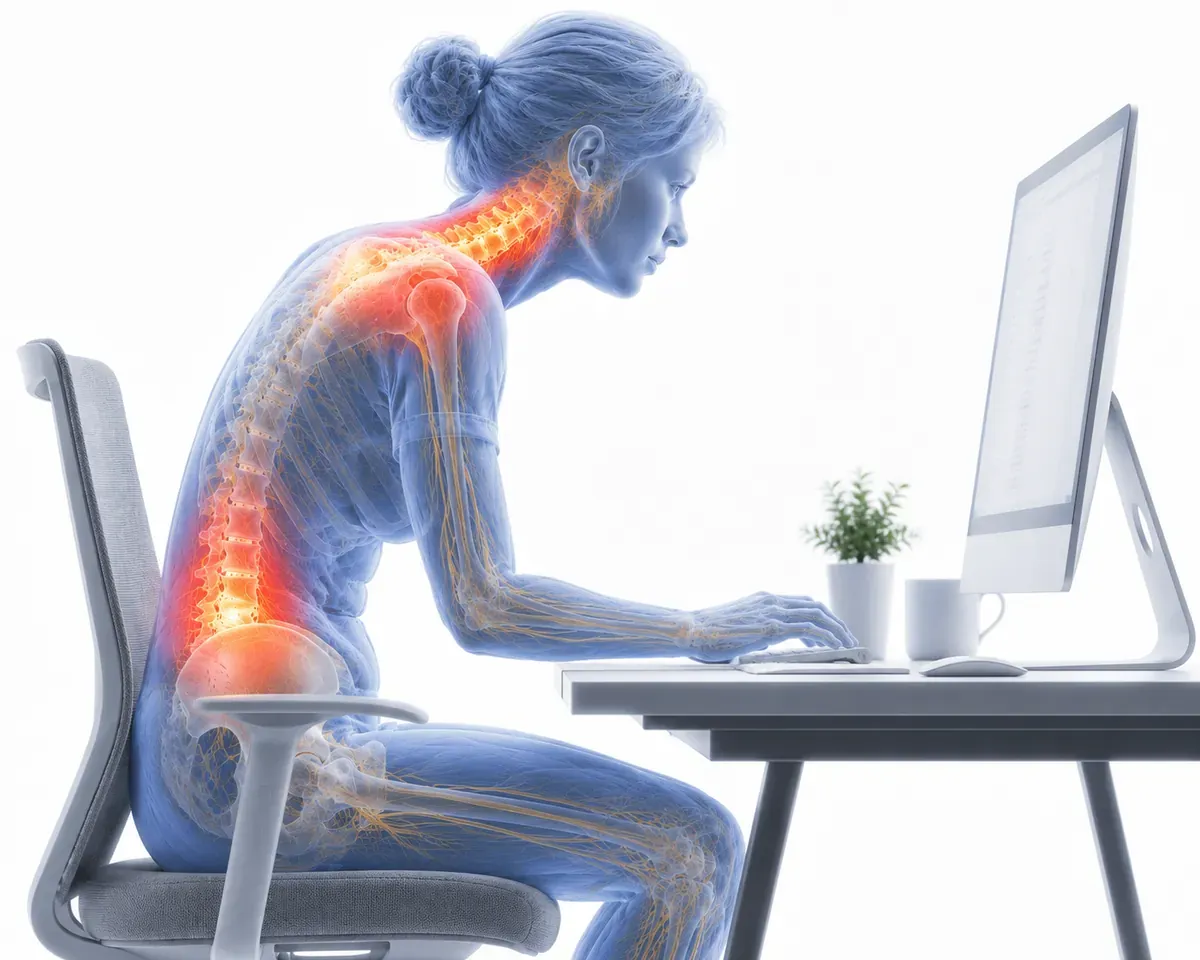
The upper cervical spine (the top three vertebrae, C1 to C3) sits directly under the skull. The joints, muscles, and nerves at this level have a direct functional relationship with the head.
The trigeminocervical nucleus is a structure in the brainstem where nerves from the upper neck and nerves from the head and face converge onto the same group of pain-processing neurons. Translation: pain signals from the upper neck and pain signals from the head are interpreted by the same neural real estate. The brain can’t always tell them apart.
The suboccipital muscles (the small deep muscles at the base of the skull) are densely innervated, work hard during sustained postures, and have direct mechanical and neural connections to the dura around the brain. Tension or dysfunction here is a common headache driver.
That’s why a problem in the upper neck can produce pain that’s felt entirely in the head, and why “headache” without obvious neck pain can still be neck-driven.
What a neck-driven headache feels like
The classic patterns:
- Pain often starts at the base of the skull or back of the head, then spreads forward over the top, sometimes settling around an eye or temple.
- Often one-sided, though it can switch sides between episodes.
- The pain is often described as a deep, dull ache rather than a throbbing pulse, but exceptions are common.
- Triggered or worsened by neck movement: looking up, looking over your shoulder, holding your head still in one position for a long time.
- Worse on long-laptop days, long-driving days, or after poor sleep posture.
- Often accompanied by stiffness or restricted motion in the neck, even if the neck itself doesn’t hurt.
- May come with light sensitivity, sound sensitivity, or nausea (which can make it look like a migraine, and sometimes the two coexist).
If three or more of those describe your headaches, the neck is worth assessing.
What it’s not
Important to be honest about the boundaries:
- Migraine has its own neurological mechanism (a wave of cortical change, vascular phenomena) and isn’t usually caused by the neck. But migraine and neck issues frequently coexist, and addressing the neck side often reduces migraine frequency or intensity even when the migraine mechanism itself is the dominant problem.
- Tension-type headache has overlap with neck-driven headache; the patterns can be hard to tell apart. The clinical assessment is what separates them.
- Cluster headache is its own beast: severe, one-sided, often around the eye, with a distinct timing pattern. Not neck-driven.
- Red-flag headaches (sudden, severe, “worst headache of my life”, with neurological symptoms, fever, vision changes, or after head injury) need urgent medical attention, not Osteopathy.
If you’re not sure what category your headaches fit, that’s exactly what an assessment is for.
What’s usually keeping the neck irritated
In most patients with neck-driven headaches, it’s not one thing; it’s a combination:
- Sustained postures: long hours at a screen, particularly with the head forward of the shoulders. The issue is usually the duration, not the posture itself.
- Sleep posture: pillow too high, pillow too low, sleeping on the front with the head turned. The wrong pillow setup compounds nightly.
- Stress: genuinely tightens the suboccipital muscles. The “tension headache” name has a real basis.
- Old neck injuries: whiplash from a years-old car accident, a sport hit, a fall. Even when “healed”, these can leave a region that’s stiffer or more reactive.
- Jaw issues: clenching or grinding, often stress-driven, transmits force directly into the upper neck and skull.
- Eye strain or new prescription: shifts how you hold your head and how often you compensate.
Addressing the headache usually means addressing several of these together, not just the most obvious one.
What helps
The headlines, in rough order of impact for most patients:
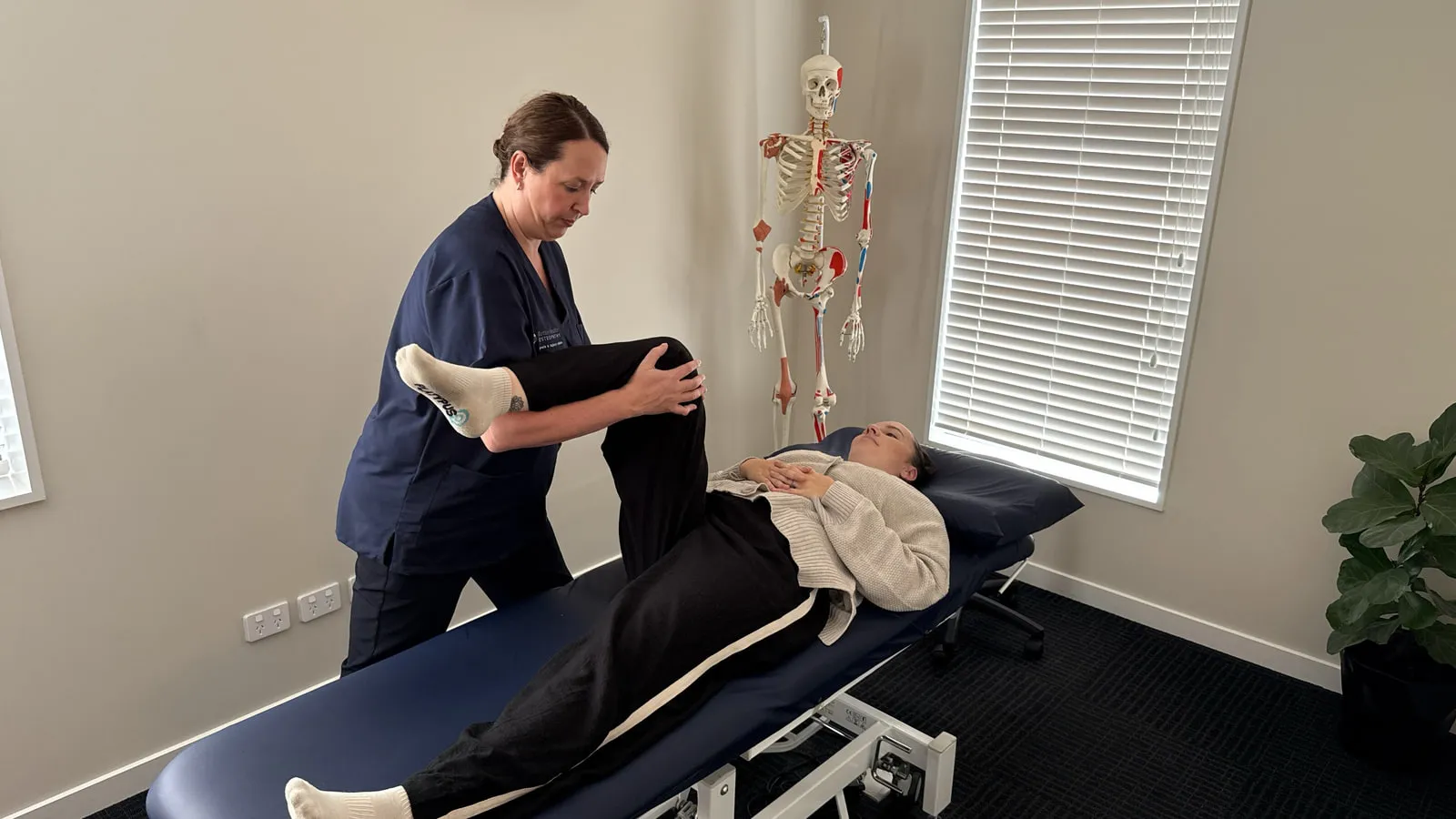
1. Hands-on treatment to release the upper neck and suboccipital muscles. Direct work on the joints and soft tissues of the upper cervical region is the single most reliable intervention for neck-driven headaches. Most patients notice a meaningful difference within one to three sessions.
2. Posture and workstation review. Not the moralising “sit up straight!” kind. The practical kind: monitor at eye level so the head isn’t tilted down, screen at arm’s length, breaks every 30 to 45 minutes, sustained postures alternated with short movement.
3. Pillow review. Most people have the wrong pillow for their sleep position. A good rule: side sleepers need a thicker pillow that fills the gap between the shoulder and ear; back sleepers need a thinner pillow that supports the neck without pushing the head forward. The pillow article covers this in more depth.
4. Targeted neck mobility and strength work. Specific exercises chosen for the patient (not generic “neck stretches” off YouTube). The deep neck flexors are often the under-trained piece.
5. Stress and sleep. Both directly modulate pain sensitivity. A stressful month with poor sleep can push a previously-managed neck back into headache territory.
6. Address contributors. Jaw issues, eye strain, an old whiplash that didn’t fully recover. Each one identified and managed is one less load on the system.
When to bring in hands-on care
Worth booking in if:
- You’re getting headaches more than once a week.
- Your headaches are getting worse, or starting earlier in the day.
- You’re using over-the-counter painkillers more than two to three times a week.
- The neck-related patterns above describe what you’re experiencing.
- You’ve been told it’s “just tension” or “just posture” without anyone actually examining your neck.
- Migraines are a known issue but you suspect the neck is making them more frequent or severe.
The osteopathic assessment is straightforward: a detailed history of your headache pattern, an examination of upper-neck mobility and tissue tension, screening for red flags, and a clear conversation about what we’re seeing and what the plan looks like. Most patients with neck-driven headaches respond well within three to six visits.
ACC and headaches
Headaches caused by an injury (whiplash from a car accident, a sport hit, a fall) usually fit the ACC pathway. Headaches that have crept in from posture, stress, or sustained desk work usually don’t. We can sort out which side your case sits on at your first visit. The ACC and Osteopathy guide covers the funded-care side in detail.
Booking with us
If you’d like to have your neck assessed as a contributor to your headaches, book online or call us on 0800 67 77 00. Bring along: roughly when the headaches started, what tends to trigger them, where the pain sits, and any old neck injuries worth knowing about.
Related reading
- Cervicogenic headache deep-dive if you want the specific clinical patterns.
- Slept funny on my neck for the acute one-off neck pain that often comes with a flare.
- Headaches and migraines condition page for the broader picture of how we approach headache care.
- Neck pain condition page for the related neck content.