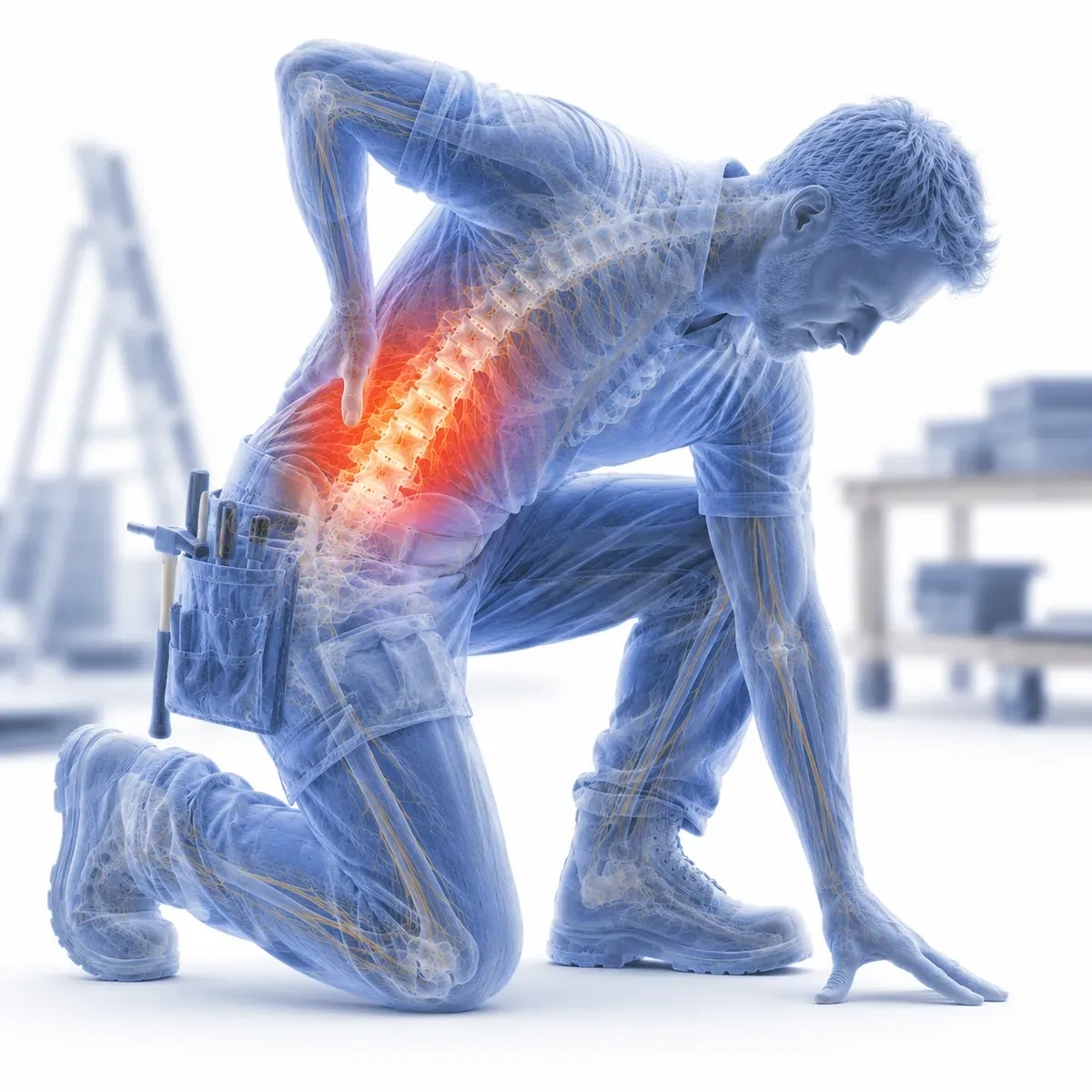

If you’ve got pain on the outside of your elbow that flares with gripping, lifting, or repetitive arm use, you’re probably dealing with tennis elbow. Despite the name, most patients we see with it have never picked up a racquet. The condition is common, frustrating, and (importantly) treatable, with the right combination of load management and care.
This article is a focused clinical guide. What tennis elbow actually is, why it lingers, what the evidence supports, and where Osteopathy fits.
For the broader elbow picture, see our elbow pain page.
What tennis elbow actually is
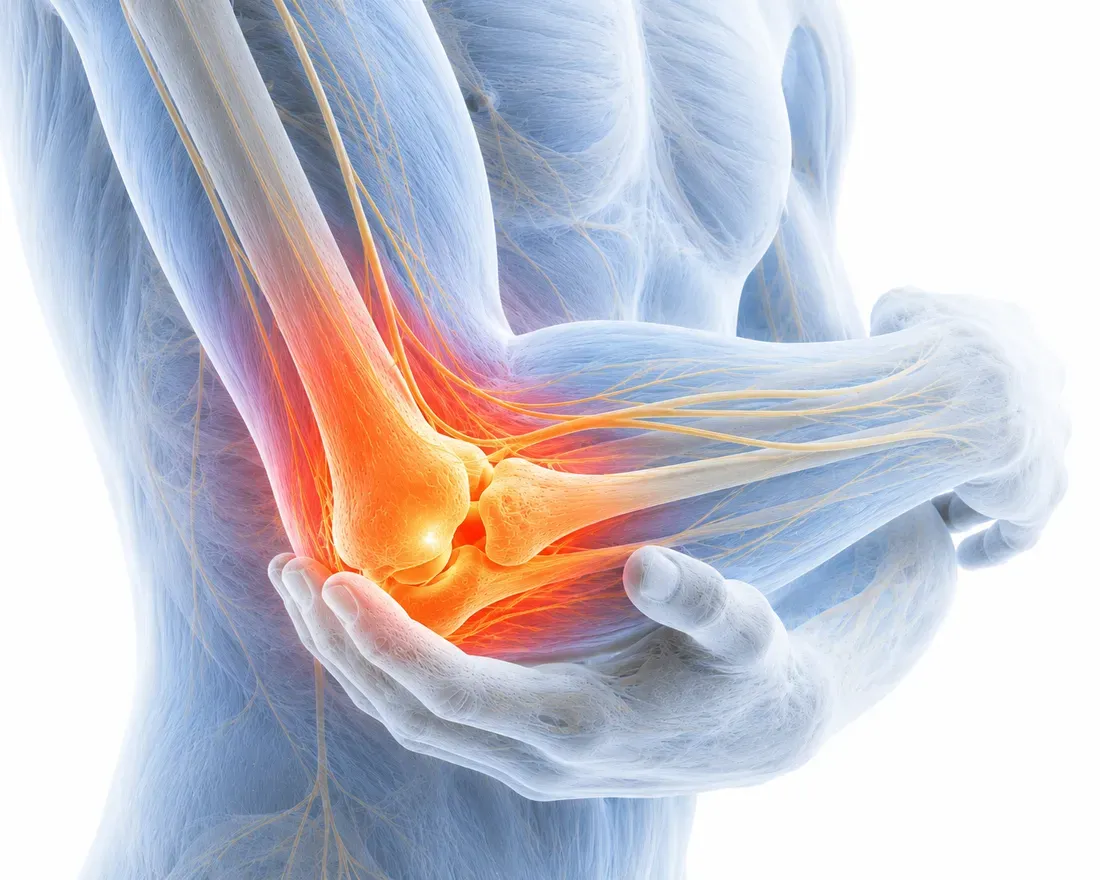
Tennis elbow (clinically: lateral epicondylitis, more accurately lateral epicondylalgia or lateral elbow tendinopathy) is a load-related condition affecting the wrist extensor tendons, specifically where they attach to the bony bump on the outside of the elbow (the lateral epicondyle).
The tendons that attach there control wrist extension and finger extension. Activities that repeatedly load these tendons (gripping, lifting, twisting, computer mouse use, manual work, sport with grip demands) can overload the tendons and create a pattern of irritation, weakening, and impaired remodelling.
The “-itis” suffix is misleading. Like most chronic tendinopathies, the dominant pattern is degenerative tendon change rather than acute inflammation. The tissue is overloaded and slow to recover, not actively inflamed in the classical sense.
This distinction matters because the treatment is different. Acute inflammation responds to rest and anti-inflammatories; tendinopathy responds to graduated load and tissue stimulation.
Who gets it and why
Tennis elbow most commonly affects adults 30-55 years old, often:
- Manual workers: tradies, gardeners, painters, mechanics.
- Office workers: especially with high mouse/keyboard volumes.
- People doing unaccustomed manual tasks: a weekend of painting, a renovation project.
- Racquet sport players: tennis, badminton, squash. (Hence the name; only ~5% of cases are actually from tennis.)
- Anyone with a grip-heavy hobby: gardening, woodworking, climbing.
The common thread: load on the wrist extensor tendons that exceeds the tissue’s tolerance. Often a combination of a sustained baseline load (work) plus an acute spike (a busy week or new activity).
What it actually feels like
Classic patterns:
- Pain on the outside of the elbow, often pinpointable to the bony bump.
- Worse with gripping, especially with the elbow extended (shaking hands, lifting a kettle, opening a jar).
- Worse with wrist extension under load: typing for prolonged periods, using a mouse, manual tasks.
- Better with rest, worse with activity: classic mechanical pattern.
- Sometimes pain radiating down the forearm.
- Tenderness when pressing the bony bump on the outside of the elbow.
- Often gradual onset (over weeks to months) rather than a single event, though sometimes a specific incident triggers it.
What the evidence says works
The tennis elbow evidence is reasonably mature. The headlines:
1. Graded loading exercise. The single highest-leverage intervention. Specifically eccentric and heavy-slow loading of the wrist extensors. Exercises that load the tendon under tension while it lengthens. Usually starts with low loads (a 0.5-1 kg dumbbell, a resistance band) and progresses.
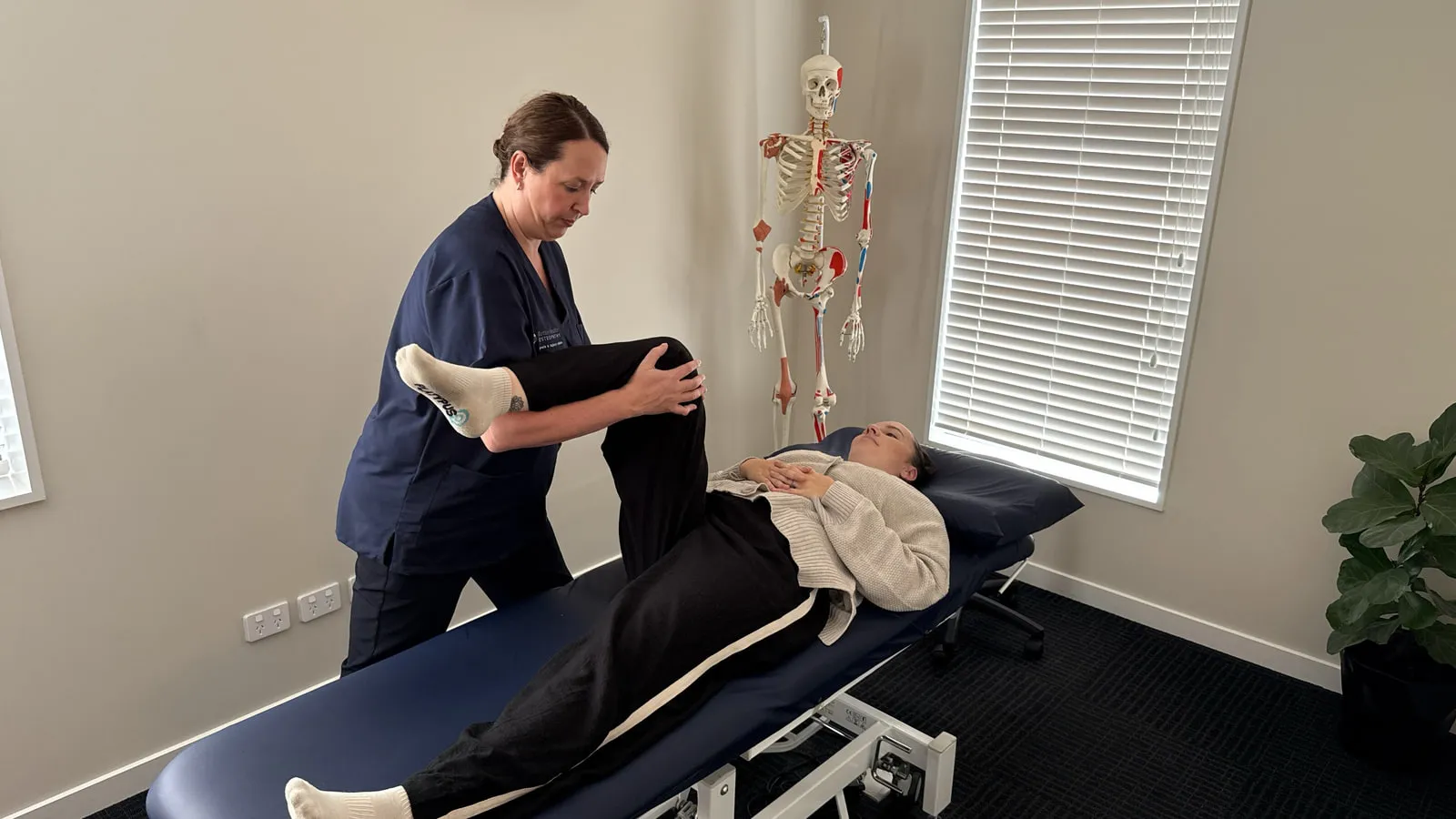
2. Manual therapy (Osteopathy / physiotherapy). Hands-on work targeting the muscles and tendons of the forearm, the joints of the elbow and wrist, and the surrounding kinetic chain (shoulder, neck, upper back). Best paired with the loading programme.
3. Load management. Modifying activities that aggravate while the tendon recovers. Adjusting work setup, using a mouse less or differently, splitting gripping tasks across two hands, taking microbreaks.
4. Education. Understanding that hurt does not equal harm, that the tendon needs load to heal, and that recovery takes longer than people expect.
What’s less helpful
- Long-term anti-inflammatories alone: dampen symptoms without addressing the load issue.
- Complete rest: often makes the tendon weaker without helping recovery.
- Generic stretching alone: addresses some symptoms but doesn’t drive tissue adaptation.
- Cortisone injection: provides short-term pain relief but worsens medium-term outcomes in many studies. Reserved for specific cases where short-term function recovery is critical (an upcoming event, professional demands), not as a default.
- Tennis elbow braces alone: offer some symptomatic relief during activity; not a treatment in themselves.
What treatment looks like
A typical course at BHO:
Phase 1 (weeks 1-3): settle and assess. Hands-on work to release tight forearm muscles, mobilise the elbow and wrist joints, address upper-back and shoulder tightness that contributes to forearm load. Activity modification advice.
Phase 2 (weeks 3-8): rebuild tendon capacity. Graduated wrist-extensor strength programme, starting low-load and progressing. Continued hands-on work as needed.
Phase 3 (weeks 8-16): return to function. Loading toward the patient’s specific demands (work, sport, hobby). Continued progression and load-monitoring.
Throughout: education on managing flares, the role of rest vs activity, and recognising when something else is happening.
Most cases that have responded to a combined approach show meaningful improvement within 6-8 weeks; full recovery often takes 3-6 months.
Recovery timelines
The honest picture:
- Mild cases caught early: 4-8 weeks for substantial improvement.
- Moderate established cases: 8-16 weeks.
- Long-standing cases (12+ months of symptoms): longer, sometimes 4-6 months for substantial change. The longer it’s been around, the longer it usually takes to reverse.
These are typical. Individual variation is wide, and consistency of the loading programme is the biggest predictor of speed.
When to think about specialist input
Most tennis elbow responds to conservative care over 12-16 weeks of structured management. If the trend hasn’t moved after 16+ weeks of good care, or if there are unusual features (severe night pain, neurological symptoms, swelling, locking), worth a sports physician or orthopaedic opinion.
Surgical options for refractory tennis elbow exist but are reserved for the small minority of cases that don’t respond to thorough conservative care over 6-12 months.
ACC and tennis elbow
Tennis elbow is sometimes ACC-eligible if there’s a clear injury event or a workplace contribution. Many cases are gradual-onset without a clear event and become private-pay. The ACC and Osteopathy guide covers the funded-care side, including how the workplace-injury pathway and Accredited Employer Programme work.
Booking with us
If you’ve got tennis-elbow-pattern pain that’s affecting your work, sport, or daily life, book online or call us on 0800 67 77 00.
Related reading
- Elbow pain condition page for the broader elbow picture.
- How do injuries heal for the tendinopathy recovery framework.