
The rotator cuff is one of the most-injured structures in the human body, and one of the most over-investigated and over-surgicalised. Most rotator cuff issues respond well to a combination of hands-on care, graded loading, and patience. The aim of this article is a clear clinical picture: what’s actually going on, what the evidence supports, and when each treatment option is the right call.
For the broader shoulder picture, see our shoulder pain page. This article focuses specifically on the rotator cuff group.
What the rotator cuff actually is
The rotator cuff is a group of four muscles (and their tendons) that wrap around the shoulder joint:
- Supraspinatus (top): lifts the arm out to the side, the most commonly injured.
- Infraspinatus (back-top): rotates the arm outward.
- Teres minor (back-bottom): also rotates the arm outward.
- Subscapularis (front): rotates the arm inward.
Their job is two-fold: they generate movement, and (more importantly) they keep the ball of the upper arm centred in the socket of the shoulder while the larger muscles do the heavy lifting. Without functioning rotator cuff muscles, the shoulder’s larger muscles (deltoid, lats, pecs) pull the joint into impingement and dysfunction within a few movements.
That’s why rotator cuff issues affect everything: lifting an arm overhead, reaching behind your back, sleeping on the affected side, even carrying a bag.
Common patterns we see
Rotator cuff problems aren’t usually “the rotator cuff tore today”. They sit on a spectrum:
Rotator cuff tendinopathy (irritation/overuse). The most common pattern. The tendon (usually supraspinatus) is overloaded, painful with specific movements (overhead reach, lifting from awkward angles), and sometimes wakes you at night. No major structural failure; the tissue is irritated and weakened. This is what most “rotator cuff injuries” actually are.
Partial-thickness rotator cuff tear. Some of the tendon fibres have given way under load. Usually overlapping symptoms with tendinopathy. May or may not need different treatment from non-tear tendinopathy depending on severity and function.
Full-thickness rotator cuff tear. The tendon has fully torn through. Two flavours: traumatic (from a single event, often a fall onto the shoulder) and degenerative (gradual wearing through, common after age 50). Traumatic full-thickness tears in younger active patients are often surgical candidates; degenerative tears in older patients often respond well to conservative care.
Rotator cuff arthropathy. The end-stage picture: a long-standing tear has changed how the joint works, leading to cartilage wear and shoulder dysfunction. This category may need surgical input.
Calcific tendinopathy. A specific subtype where calcium deposits form in the tendon. Painful, sometimes severely so. Often resolves with the deposit being absorbed naturally; some cases need targeted intervention.
The clinical assessment separates these. The treatment plan follows from which one you actually have.
What causes rotator cuff problems
Three contributing patterns, almost always in combination:
Load mismatch. Your activities ask the rotator cuff to do more than its current capacity. Common in: weekend warriors returning to a sport, someone who painted a ceiling for the first time in years, a tradie who’s been doing more overhead work than usual.
Movement patterns that crowd the joint. Stiffness in the upper back (thoracic spine), forward shoulder posture, weak shoulder-blade muscles. All shrink the space the rotator cuff lives in, making impingement more likely.
Age-related tendon changes. Tendons get less elastic and less vascular with age. From the 40s onward, this is a real factor; from the 60s onward, dominant in many cases.
Most rotator cuff problems we see in clinic are a combination of someone in their 40s-60s with mildly age-changed tendons doing an unusual load with imperfect mechanics. Address two of the three and recovery is usually clean.
What the evidence says works
The shoulder evidence is reasonably mature. The headlines:
Graded loading exercise is the single highest-leverage intervention for rotator cuff tendinopathy. Multiple randomised trials show structured loading programmes work as well as surgery for many partial-thickness tears, with lower risk and cost.
Manual therapy (Osteopathy, physiotherapy) helps in the short to medium term: reduces pain, restores mobility, allows the rehab to progress. Best paired with the loading programme, not as a standalone fix.
Education and reassurance matters more than people think. Patients who understand they don’t have a “torn shoulder” they need to protect from movement do dramatically better than those who think they’re fragile.
Subacromial corticosteroid injection can settle a flare, but evidence for medium-term outcomes is mixed; repeated injections can weaken tendon further.
Surgery (rotator cuff repair) is the right call for: traumatic full-thickness tears in active patients, large degenerative tears with significant functional loss, cases where 12+ weeks of structured conservative care hasn’t moved the trend.
What the evidence says is less helpful
- Long-term anti-inflammatories as a standalone strategy: dampen symptoms without addressing the load issue.
- Complete rest / sling immobilisation beyond the acute phase: deconditions the cuff faster than the rest helps.
- Generic stretching alone: addresses flexibility but not capacity.
- Routine MRI for typical tendinopathy: scans usually show “findings” that are also present in pain-free shoulders.
- Surgery for asymptomatic age-related tears found incidentally on a scan: the asymptomatic tear isn’t the problem; treating it doesn’t reliably help.
What treatment looks like at BHO
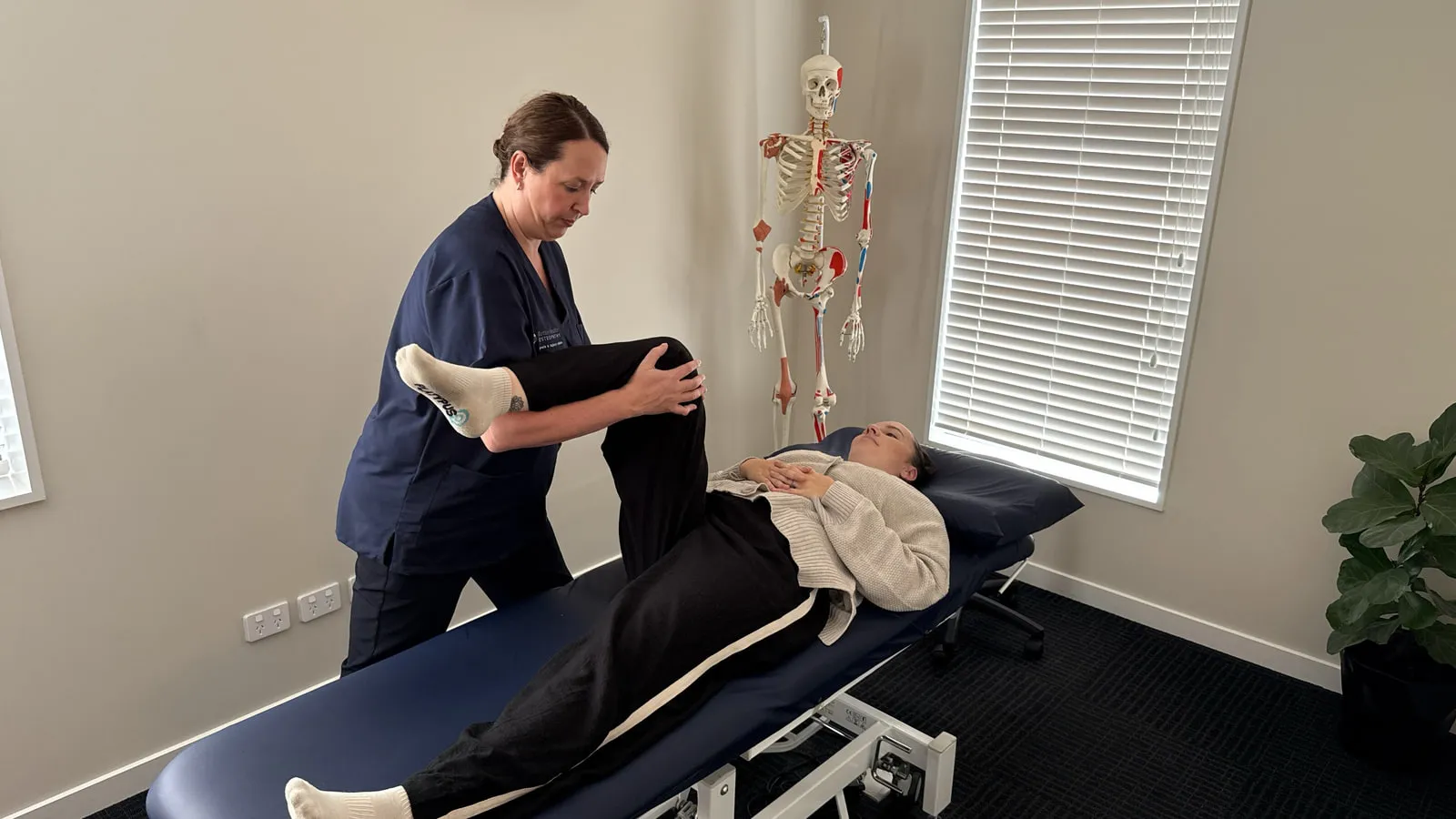
Phase 1 (weeks 1-2): settle and assess. Hands-on work to release tight surrounding tissues (upper back, neck, shoulder blade musculature), reduce shoulder joint irritation, and create space for the cuff to work. Education on what’s going on. Graded mobility and pain-free movement.
Phase 2 (weeks 2-6): rebuild capacity. Targeted rotator cuff exercises, starting low-load and progressing. Address shoulder-blade control. Continue hands-on work as needed. The rehab dose is calibrated to the patient: too little and you stay weak; too much and you re-irritate.
Phase 3 (weeks 6-12+): return to function. Progressive loading toward the patient’s specific demands. For an athlete, sport-specific patterns. For a tradie, overhead loaded work. For a desk worker, sustained-position tolerance.
The structure varies by case. The principle doesn’t: get the cuff out of an irritated state, build it back to capacity that exceeds the demand, address the contributors that drove it the first time.
Recovery timelines
Mild tendinopathy: 4-8 weeks for substantial improvement; 3-4 months to full strength.
Moderate tendinopathy / partial tear: 8-16 weeks for substantial improvement; 4-6 months to full strength and confidence.
Calcific tendinopathy: highly variable. Acute flares can be severe and last 2-6 weeks; the underlying calcific change may persist longer or resolve with the deposit being reabsorbed.
Post-surgical (rotator cuff repair): 6 months to full activity is typical; some patients longer. Surgical timelines are surgeon-driven.
These are typical. Individual variation is wide, and the “trend over weeks” matters more than any single day.
When to think about surgery
Worth a surgical opinion if:
- Sudden complete loss of arm-lifting power (full-thickness tear suspected, traumatic).
- Persistent severe pain despite 12+ weeks of structured conservative care.
- Significant functional loss that doesn’t recover (can’t lift arm to 90 degrees actively after appropriate rehab).
- Imaging confirms a large tear in a patient whose function and goals justify surgical repair.
Most rotator cuff issues never need surgery. A surgical referral is the right call for the cases where the evidence supports it; not as a default.
ACC and rotator cuff injuries
In New Zealand, rotator cuff injuries are commonly ACC-eligible if there’s a clear injury event (fall, lifting incident, sport contact, workplace incident). Gradual-onset cases sometimes also fit ACC where there’s a workplace mechanism (years of overhead work, for example).
The ACC and Osteopathy guide covers the funded-care side, including how surgery, imaging, and specialist referral work under ACC if your case heads that direction.
Booking with us
If you’ve got shoulder pain that’s affecting your sleep, your work, or your training, book online or call us on 0800 67 77 00. We’ll work through what’s actually going on, what category your case fits, and what the right next step looks like.
Related reading
- Shoulder pain condition page for the broader shoulder picture and our overall approach.
- How do injuries heal for the recovery framework underlying the timelines above.
- ACC and Osteopathy guide if your shoulder pain followed an injury or workplace event.