
If you’ve got back pain, a niggle that won’t settle, or a recent injury, you’ve probably wondered which professional to see. In New Zealand, three regulated, ACC-funded options dominate musculoskeletal care: osteopaths, chiropractors, and physiotherapists.
The honest answer is that they overlap more than the marketing of any one profession suggests. All three are evidence-informed, all three can lodge ACC claims directly, and all three see large numbers of people with back pain, neck pain, headaches, and sports injuries.
The differences sit in emphasis: how they think about the problem, the techniques they reach for first, and the kinds of cases where each tends to shine. This guide is the overview pillar comparing all three. If you’ve already narrowed your decision to a specific pair, you may want the deep-dive instead:
- Osteopath vs physiotherapist (NZ), the direct pairwise comparison (NZ-specific, where physio is the cultural default)
- Osteopath vs chiropractor (NZ), the direct pairwise comparison (including the cracking-and-clicking question)
Otherwise, read on for the full three-way picture. (New to Osteopathy itself? Start with our pillar guide to what Osteopathy is.)
Quick decision-helper
If you want the short version:
| Your situation | Strongest first-call |
|---|---|
| Recent injury you want assessed and treated hands-on | Osteopath or physiotherapist |
| Recurring stiffness, posture-driven pain, or whole-body pattern | Osteopath |
| Surgery rehab, sport-specific reloading, or measurable strength gaps | Physiotherapist |
| Spinal pain you want addressed with adjustment-style technique | Chiropractor |
| ACC injury you want claim-lodged at the first visit | Any of the three |
| Persistent pain that hasn’t responded to one approach | Try a different approach |
Below, the same comparison in detail.
What each profession actually trains in
Osteopaths in New Zealand complete a five-year masters-level qualification (typically a Bachelor of Applied Science followed by a Master of Osteopathy, or an equivalent integrated degree). The curriculum covers anatomy, physiology, pathology, clinical assessment, hands-on technique, exercise rehabilitation, and clinical reasoning. Osteopaths are registered with the Osteopathic Council of New Zealand (OCNZ), which sets professional standards and CPD requirements.
The training emphasises whole-body assessment: an osteopath looking at a sore knee is also looking at the hip, the foot, and how you move through your stride. The reasoning is that pain often shows up in one place because of compensations elsewhere, and treating only the symptom misses the driver.
Chiropractors in New Zealand complete a five-year masters-level qualification at the New Zealand College of Chiropractic. The curriculum centres on the spine and the nervous system, with a strong emphasis on biomechanical assessment and adjustment techniques (the more rapid, often audible “manipulation” you may associate with the profession). Chiropractors are registered with the Chiropractic Board of New Zealand.
Modern chiropractic practice in NZ varies. Some chiropractors work in a way close to Osteopathy: broad assessment, mixed techniques, exercise prescription. Others practise in a more focused spinal-adjustment model. The training base is similar; the clinic-by-clinic style varies.
Physiotherapists in New Zealand complete a four-year bachelor’s degree (Bachelor of Physiotherapy) at the University of Otago or AUT. Many physios then specialise: musculoskeletal, sports, women’s health, paediatrics, neurological rehab, cardiopulmonary. Physiotherapists are registered with the Physiotherapy Board of New Zealand.
The training emphasises assessment and rehabilitation: measuring strength, range, and function precisely, then prescribing graded exercise to restore them. Hands-on treatment is part of the toolkit but tends to be a smaller part of a typical session compared with Osteopathy or chiropractic.
All three are regulated health professions under the Health Practitioners Competence Assurance Act 2003. All three carry annual practising certificates and are bound by codes of conduct. None of them are alternative or unregulated.
How a first appointment typically feels
This is where the differences become visible.
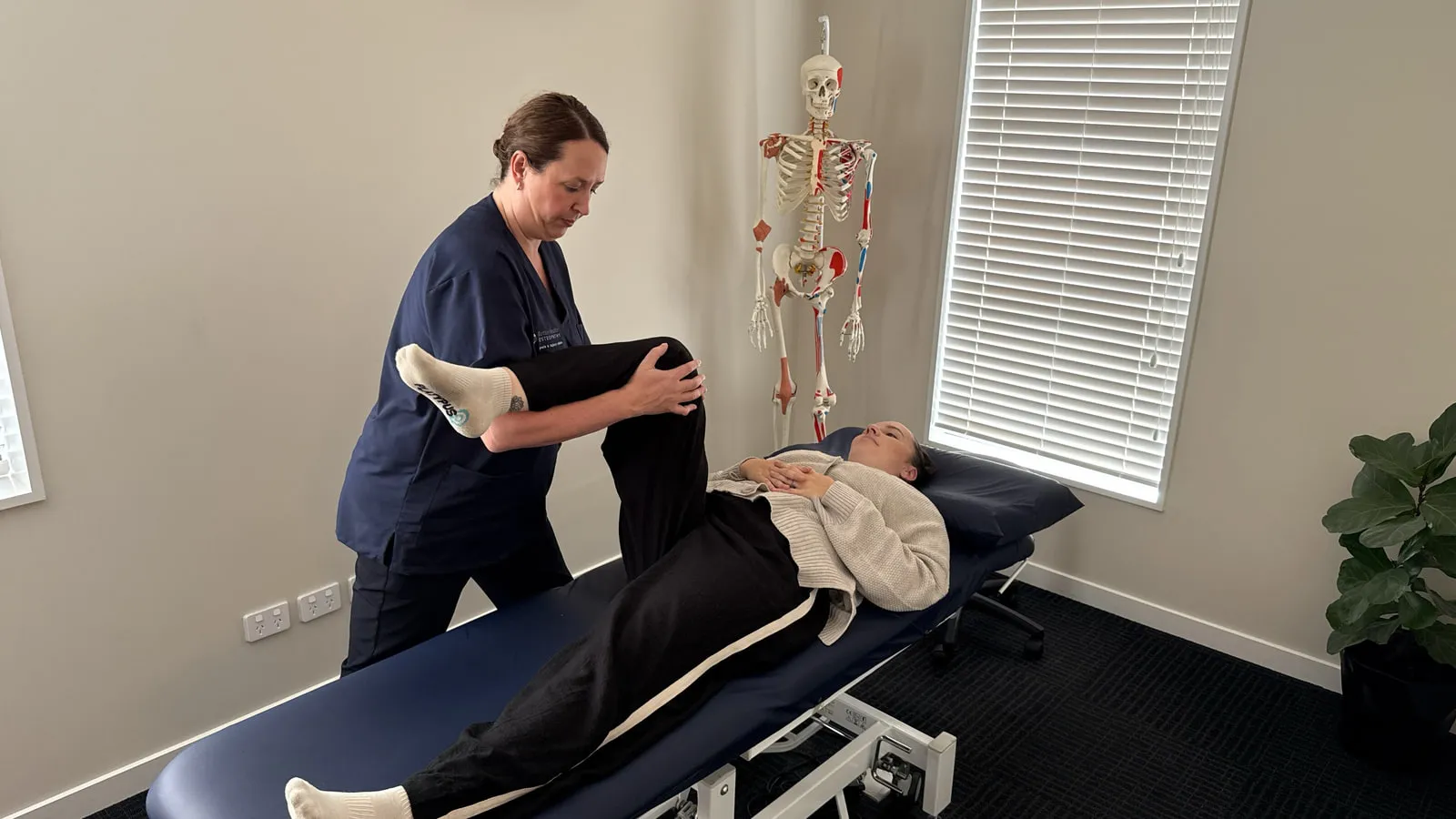
At an osteopath, expect a 30 minute first appointment. Roughly half of that is conversation: how the pain started, what makes it better or worse, what you’ve tried, what you need your body to handle in your work and life. The physical assessment looks at posture, movement patterns, the painful area, and often connecting regions (the hip on a back-pain patient, the neck on a headache patient). Treatment usually happens at the first visit and combines several hands-on techniques: soft-tissue work, articulation, gentle stretches, sometimes higher-velocity adjustments where appropriate. You leave with a working diagnosis, an explanation of what’s driving it, and usually one or two things to try at home.
At a chiropractor, the first visit can range from 15 to 45 minutes depending on the practitioner’s style. Expect a focused musculoskeletal and neurological assessment with particular attention to the spine. Treatment often centres on adjustment-style techniques (the rapid “thrust” with an audible click), though many chiropractors also use soft-tissue work, mobilisation, and exercise prescription. The reasoning behind treatment tends to focus on spinal joint motion and its effect on surrounding structures.
At a physiotherapist, the first visit typically runs 30 to 45 minutes. Expect detailed measurement: range of motion in degrees, specific strength tests, functional movement screens, sometimes outcome measures repeated each session. Hands-on treatment tends to be a portion of the session rather than the whole; the rest is exercise prescription, education, and progressive loading. For ACC-funded treatment, the physio is required to keep clinical notes and can refer or report into the wider rehab system (occupational therapy, return-to-work coordinators) when relevant.
None of these patterns are absolute. Individual practitioners within each profession vary widely, and modern practice has moved closer together than the textbooks suggest.
What each tends to be best at
Consider this a heuristic, not a hard rule.
Osteopathy is often the strongest first call when:
- You’ve got a complaint that doesn’t fit a single body region (back pain that connects to a stiff hip, headaches with neck and jaw involvement)
- The pattern is recurring rather than acute (the same shoulder flares up every six weeks)
- You want treatment that combines hands-on with explanation and a take-home plan, in roughly equal measure
- You’re working through pregnancy-related pain, postnatal recovery, or paediatric issues (newborn feeding difficulty, infant torticollis), where gentle, whole-body technique fits the population
- The previous approach was very localised and didn’t resolve
Chiropractic is often the strongest first call when:
- Spinal pain is the dominant feature and you want adjustment-style technique
- A previous chiropractor has helped you with a similar pattern
- You prefer a treatment style that emphasises the spinal column specifically
Physiotherapy is often the strongest first call when:
- You’ve had surgery and need structured rehab to a specific milestone (returning to running after an ACL repair, regaining shoulder function after rotator-cuff repair)
- You’re recovering from a defined sports injury where graded loading is the path forward (hamstring strain, ankle sprain, tendinopathy)
- A measurable strength or range deficit is the clear barrier to recovery
- A specialty fits: women’s health physio for pelvic-floor issues, vestibular physio for dizziness, cardiopulmonary for post-surgical breathing rehab
For many patients, the best answer is try one for three to four sessions and reassess. If you’re not seeing a clear direction of travel, switching approach is information.
Want a deeper take on a specific pair? The pairwise comparisons go further on the questions that come up between two professions: see osteopath vs physiotherapist (NZ) and osteopath vs chiropractor (NZ).
ACC and how it works
All three professions are ACC providers. That means:
- For an injury (acute or gradual-process work injury), you can usually go directly to your chosen practitioner. A GP referral is not needed for the vast majority of musculoskeletal injuries.
- Lodging is done at the first visit, in clinic, on your behalf. You’ll need the details of how the injury happened.
- ACC covers a portion of the visit cost. The patient pays a surcharge, which varies by clinic.
- Treatment is reviewed periodically, and ACC may request an update or extension request if treatment runs long.
Where the three professions sometimes diverge under ACC:
- Number of visits before a review: typically 8 to 16 visits before ACC requests a treatment update, similar across all three.
- Documentation requirements: physiotherapy is more often integrated into formal rehab pathways (with occupational therapists, ACC case managers) for complex injuries. Osteopathy and chiropractic tend to operate within the visit-block structure rather than wider rehab coordination.
- Surgical post-op: physiotherapy is the usual default; some surgeons specifically request a physio for post-op care.
Whichever you pick, the practitioner can tell you on day one whether your injury fits the ACC pathway and what the surcharge will be.
What about cost and access
All three professions have similar typical fee structures in Christchurch. Expect:
- A first-appointment fee around $120 (private), with the ACC surcharge $95.
- Follow-ups around $120 (private), with the ACC surcharge $90.
- Most clinics offer same-week or next-day appointments for new patients with acute pain.
If cost is the deciding factor, the practical advice is to call two or three clinics and ask their first-visit fee directly. Don’t assume. Fees vary more between clinics within one profession than they do between professions.
When more than one approach is the right answer
Some patterns benefit from sequential care:
- Surgical rehab often goes physiotherapy first, with hands-on care from an osteopath layered in once the post-op constraints are over.
- Persistent pain that hasn’t responded to one approach is a good signal to try a different style of care, not to keep going harder with the same one.
- Sports performance sometimes combines physiotherapy (rehab plus reloading) with osteopathic assessment for movement quality and strength-based work for capacity.
Most practitioners across all three professions are happy to recommend a colleague in a different field if your case fits theirs better. If they’re not, that’s a sign to ask a second opinion.
A word on cracking, clicking, and “putting things back in place”
You may have heard one or another of these professions described as “the one that cracks you” or “the one that puts things back”. Both characterisations are oversimplified.
The audible click during some hands-on techniques is the release of gas from a joint capsule. It is not “bones going back into place”. Bones are not out of place. The click correlates with a moment of joint movement and a small post-treatment window of reduced muscle tone. It’s neither the source of the benefit nor evidence of any structural change, despite how it sometimes gets described.
All three professions can produce clicking sounds during treatment. None of them depend on it. A skilled practitioner can deliver exactly the same therapeutic effect with quieter techniques where appropriate.
If you specifically want or specifically dislike the higher-velocity adjustment style, say so at your first visit. A good practitioner will adjust technique to match what works for your body and your preferences.
So which one should you book?
For most New Zealanders, the practical default looks like this:
- Recent injury you want assessed and treated: osteopath or physiotherapist, depending on whether you want hands-on care (osteopath) or rehab-led care (physio). Both are excellent.
- Recurring pain or whole-body pattern: osteopath as a first call.
- Specific surgery rehab: physiotherapist, ideally one your surgeon has worked with before.
- Spinal pain you want addressed with adjustment: chiropractor.
If you’ve tried one and not made progress in three to four visits, switching is a reasonable, evidence-aligned move. None of these professions hold a monopoly on getting people better.
Going deeper
If you’ve narrowed your decision to a specific pair, the pairwise comparisons cover them in more depth than this overview can:
- Osteopath vs physiotherapist (NZ) goes further on the cultural-default question (physio is the NZ norm), specialty fits (women’s health, vestibular, post-surgical), and when each one breaks the cycle on persistent patterns.
- Osteopath vs chiropractor (NZ) goes further on the technique-mix question, the cracking-and-clicking myth, and how clinical reasoning differs between the two.
What we do at Better Health Osteopathy
We’re an Osteopathy clinic at our core. Our practitioners use a mix of hands-on techniques (soft-tissue, articulation, gentle adjustment where appropriate), exercise rehabilitation, and clear, plain-English explanation. We see a high volume of ACC injury work alongside private musculoskeletal care, and we treat babies, children, pregnant patients, and the full adult population.
If you’d like to book in, you can book online or call us on 0800 67 77 00. We’ll happily tell you on the phone or at your first visit if your situation might be better served by a physiotherapist or chiropractor. That’s part of doing this honestly.