
If you’ve been told you have a “frozen shoulder”, you’re probably dealing with one of the most genuinely frustrating musculoskeletal conditions: pain that wakes you at night, a shoulder that’s getting more restricted by the week despite gentle use, and an unclear picture of when it’s going to end.
This article is a clear guide. What’s actually happening, the predictable phases, what helps at each, and where Osteopathy fits.
For the broader shoulder picture, see our shoulder pain page.
What frozen shoulder actually is
Frozen shoulder (clinically: adhesive capsulitis) is a specific condition where the capsule around the shoulder joint becomes inflamed, then thickened, then progressively stiffer. The capsule is the bag of connective tissue around the joint; in frozen shoulder, it shrinks and tightens, restricting movement in all directions.
The defining features:
- Pain, usually severe in the early phases, often worse at night and with specific positions.
- Progressive loss of movement in all directions, but especially when lifting the arm overhead and rotating it outward (reaching behind your back).
- Stiffness that doesn’t respond to ordinary stretching the way other shoulder issues do.
- A predictable course lasting roughly 12-24 months from onset to full recovery.
It’s important to distinguish frozen shoulder from rotator cuff injuries: both can cause shoulder pain and movement loss, but the patterns and treatment are different. A clinical assessment separates them.
Who gets it and why
Frozen shoulder typically affects people in the 40-60 age range, more commonly women than men, more commonly the non-dominant shoulder. About 2-5% of the general population is affected at some point.
Risk factors include:
- Diabetes: people with diabetes are several times more likely to develop frozen shoulder; they often have more severe and longer-lasting episodes.
- Thyroid conditions (both hyperthyroid and hypothyroid).
- Previous shoulder injury or surgery (sometimes triggers a frozen-shoulder response).
- Periods of reduced shoulder use, especially after another shoulder problem caused you to protect the joint for weeks.
- A previous episode of frozen shoulder in either shoulder; the other shoulder has higher risk.
The underlying mechanism isn’t fully understood. Likely a combination of inflammatory changes in the capsule, fibrotic remodelling, and altered pain processing. It’s not caused by an injury in the typical sense; it’s an inflammatory/fibrotic process that develops in the joint.
The three phases
Frozen shoulder follows a remarkably predictable pattern through three overlapping phases:
Phase 1: Freezing (months 0-9)
Pain dominates. Often severe, often worse at night, often without a clear trigger. The shoulder gradually stiffens but pain is the main story.
What’s happening: the capsule is inflamed and developing the early changes that lead to thickening.
What helps:
- Pain management: short-term analgesics, sometimes corticosteroid injections (which can meaningfully reduce pain and may shorten this phase).
- Sleep adjustments: pillows positioned to support the affected arm; sometimes side-sleeping on the unaffected side with the affected arm forward on a pillow.
- Gentle pain-free movement: maintaining what range you have without forcing it.
What doesn’t help:
- Aggressive stretching: increases pain without helping. The capsule is too irritated.
- Heavy work or attempting to push through: usually makes the pain worse.
Phase 2: Frozen (months 4-15)
Pain typically reduces. Stiffness becomes the main story. The shoulder is at its most restricted: lifting the arm above shoulder height is hard or impossible, reaching behind the back is severely limited.
What’s happening: the inflammation has settled but the capsule has thickened and shortened. Pain is reduced because the inflamed tissue has remodelled, but the resulting stiffness limits motion.
What helps:
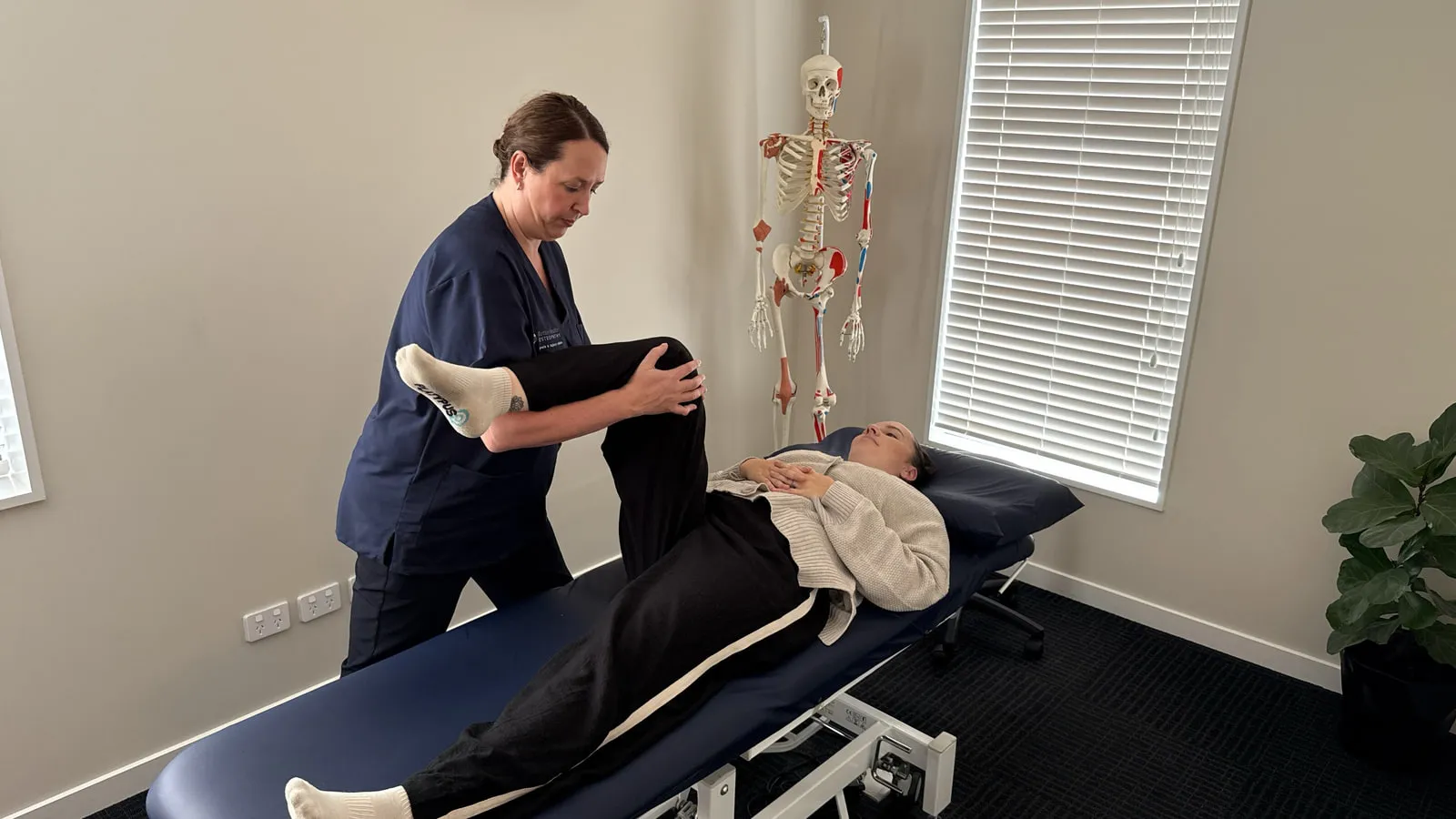
- Hands-on mobilisation: this is where Osteopathy contributes most directly. Specific joint mobilisation techniques can help maintain or slowly improve range during this phase.
- Gentle stretching: now the capsule tolerates more range work. Targeted stretching (especially external rotation and overhead) becomes useful.
- Heat before activity: warms the tissue, makes movement easier.
- Daily consistent movement: maintaining what range you have.
This phase is often where patients benefit most from regular Osteopathy or physiotherapy: the work directly addresses the capsule and surrounding structures.
Phase 3: Thawing (months 12-24)
Range gradually returns. Pain typically minimal. The shoulder progressively moves more freely, week by week.
What’s happening: the capsule remodels and lengthens; normal motion gradually returns.
What helps:
- Progressive loading: rebuilding strength in patterns that were lost during the frozen phase.
- Continued mobility work: keep pushing the range as it returns.
- Return to normal activities: as range and strength allow.
Most patients return to substantial or full normal function. A small percentage are left with some residual limitation, especially if the case was severe or untreated.
What treatment options actually achieve
Hands-on care (Osteopathy / physiotherapy): doesn’t shorten the overall timeline dramatically, but substantially improves how each phase is experienced: less severe pain, less function loss, less night-time disruption. Patients with regular treatment generally do better than those without.
Corticosteroid injection: meaningful evidence for pain reduction in the freezing phase. May modestly shorten that phase. Doesn’t change the natural history significantly but helps the patient through the worst of it.
Hydrodilatation (a procedure where saline is injected into the capsule to expand it): sometimes used in stubborn cases. Mixed evidence; sometimes helpful.
Manipulation under anaesthetic: the surgical option for cases that don’t respond to conservative care. Forced range-of-motion under general anaesthetic. Effective in selected cases; carries risks, including the rare possibility of fracture or further capsule damage.
Surgical capsular release: arthroscopic surgery to release the contracted capsule. Reserved for severe non-resolving cases.
Time alone: most cases will eventually resolve with time, with or without treatment. The range of “eventually” is long (12-24 months), and the experience along the way is materially worse without active management.
Where Osteopathy fits
For frozen shoulder, Osteopathy contributes most in the frozen and thawing phases (months 4 onwards), with specific value in the freezing phase too:
During freezing: gentle work to support pain management, address the secondary stiffness that develops in the upper back, neck, and surrounding shoulder structures (which work harder when the affected shoulder is restricted).
During frozen: targeted joint mobilisation of the shoulder, work on the surrounding structures to maintain function, education on safe stretching to do at home.
During thawing: progressive mobility and strength work to rebuild range and function. This phase often benefits from a graduated rehab programme.
Throughout: the shoulder doesn’t operate in isolation. The thoracic spine, neck, opposite shoulder, and surrounding tissues all compensate and need attention. Osteopathy’s whole-body framing fits well here.
A typical frozen-shoulder case at BHO involves regular sessions through the worst of the phases (every 1-2 weeks during freezing/frozen), tapering as the shoulder thaws. Total course often 12-24 sessions across 12-18 months, alongside daily home work.
What to expect timeline-wise
The honest picture: most cases run 12-24 months from onset to full recovery, with or without treatment. Treatment doesn’t shrink that timeline dramatically, but materially improves how each month feels.
The trajectory isn’t linear. There are weeks of feeling stuck, then a noticeable shift, then another plateau, then more progress. This is normal.
ACC and frozen shoulder
Frozen shoulder is not usually ACC-eligible because it’s not an injury in the strict sense; it’s an inflammatory/fibrotic process. There are exceptions where a clear injury event triggered the frozen shoulder onset (e.g. post-surgical, post-fall), in which case ACC may apply.
For the typical gradual-onset case, treatment is private. Some private health insurance policies (Southern Cross, nib, etc.) cover Osteopathy partially; check your policy. The insurance page covers the broader picture.
Booking with us
If you’ve been diagnosed with frozen shoulder, or you have a shoulder that fits the patterns described above (severe pain, especially at night, with progressive stiffness), book online or call us on 0800 67 77 00. We’ll work through which phase you’re in, what your shoulder needs at this stage, and what the realistic timeline looks like.
Related reading
- Shoulder pain condition page for the broader shoulder picture.
- Rotator cuff injuries for the related but different shoulder condition.
- How do injuries heal for the recovery framework.