
If your first step out of bed in the morning feels like stepping on glass, and the pain settles after a few minutes only to come back later in the day, you’re probably dealing with plantar fasciitis. It’s one of the most common foot conditions we see at the clinic, and it’s also one of the most over-treated and slow to resolve when the wrong things are tried first.
This is a focused, practical guide. Six tips that consistently shift recovery in the patients we see, framed by what the research supports rather than what social media is currently selling.
This article is the practical companion to the plantar fasciitis condition page, which covers diagnosis, what the assessment looks like, and the full clinical picture.
What plantar fasciitis actually is
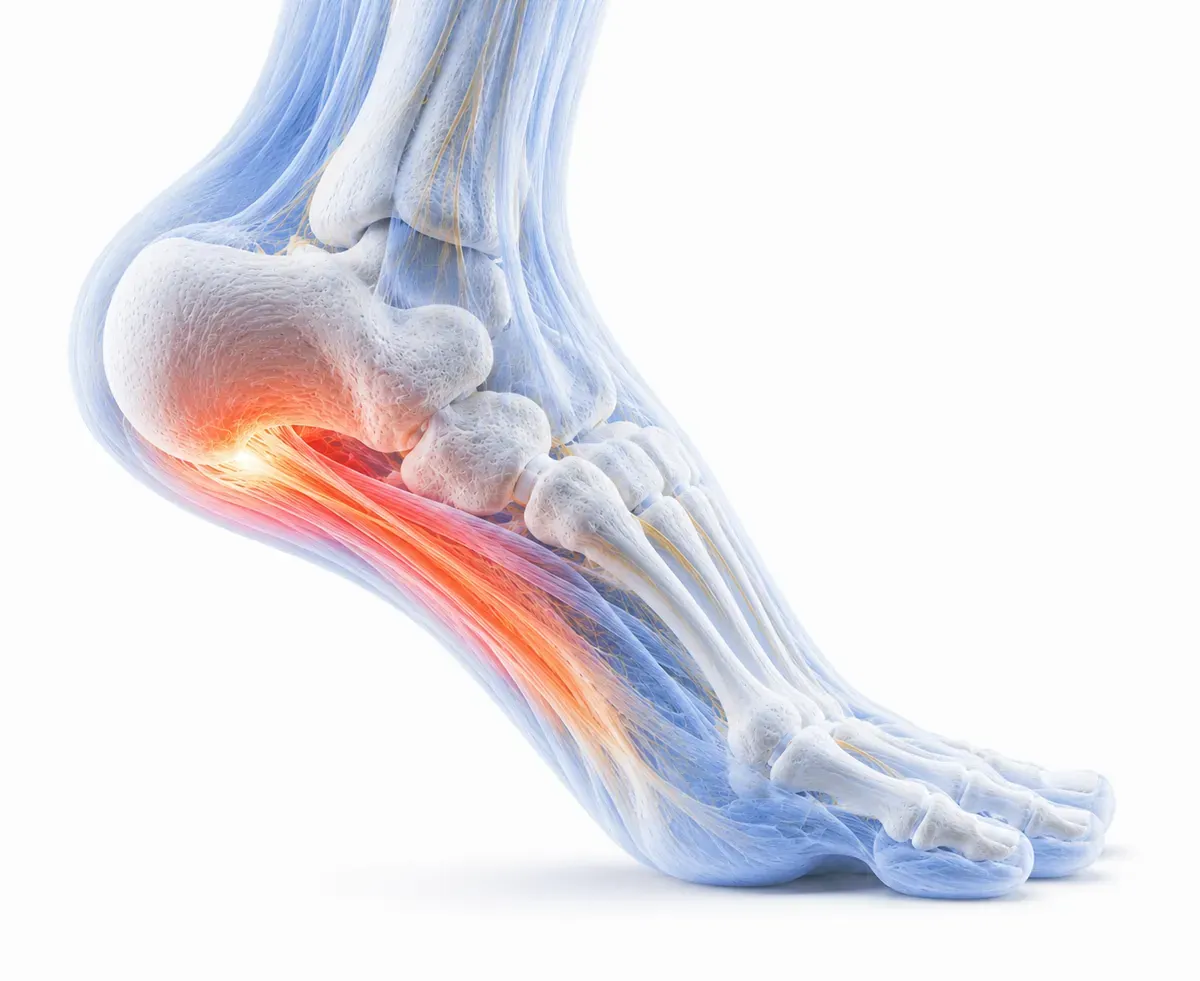
The plantar fascia is a thick band of connective tissue running along the bottom of your foot, from the heel to the base of the toes. Its job is to support the arch and store and release energy as you walk and run.
“Plantar fasciitis” is the older term for what’s now better understood as plantar fasciopathy: a degenerative load-related condition where the fascia (especially where it attaches to the heel) becomes overloaded, irritated, and slow to recover. Despite the “-itis” suffix, the inflammation is usually minor; the dominant pattern is tissue overload and impaired remodelling.
That distinction matters because the right treatment is different. Acute inflammation responds to rest and anti-inflammatories. A degenerative load problem responds to graduated load and tissue stimulation. Most plantar fasciitis is the second one.
Tip 1: get the load profile right (most important)
The single highest-leverage thing you can do is match the load you’re putting through the fascia to the tissue’s current tolerance. Too little load, and the tissue stays under-stimulated and doesn’t remodel. Too much, and you keep re-irritating it.
Practically:
- If high-impact activity (running, jumping, long walks) makes it markedly worse the next day, scale that activity back to a level that doesn’t trigger a 24-hour flare. That might be 50% of your previous volume, or it might be temporarily zero, depending on severity.
- Replace the volume with low-impact movement: cycling, swimming, walking on flat smooth ground, the elliptical. The goal is to keep aerobic fitness and circulation up without spiking fascia load.
- Don’t go to bed-rest. The tissue needs gentle daily load to heal; complete unloading often makes the pain worse when normal life resumes.
The 24-hour rule is the simplest test: if today’s activity makes tomorrow’s first steps noticeably worse, you overdid it.
Tip 2: build calf capacity (the most under-done piece)
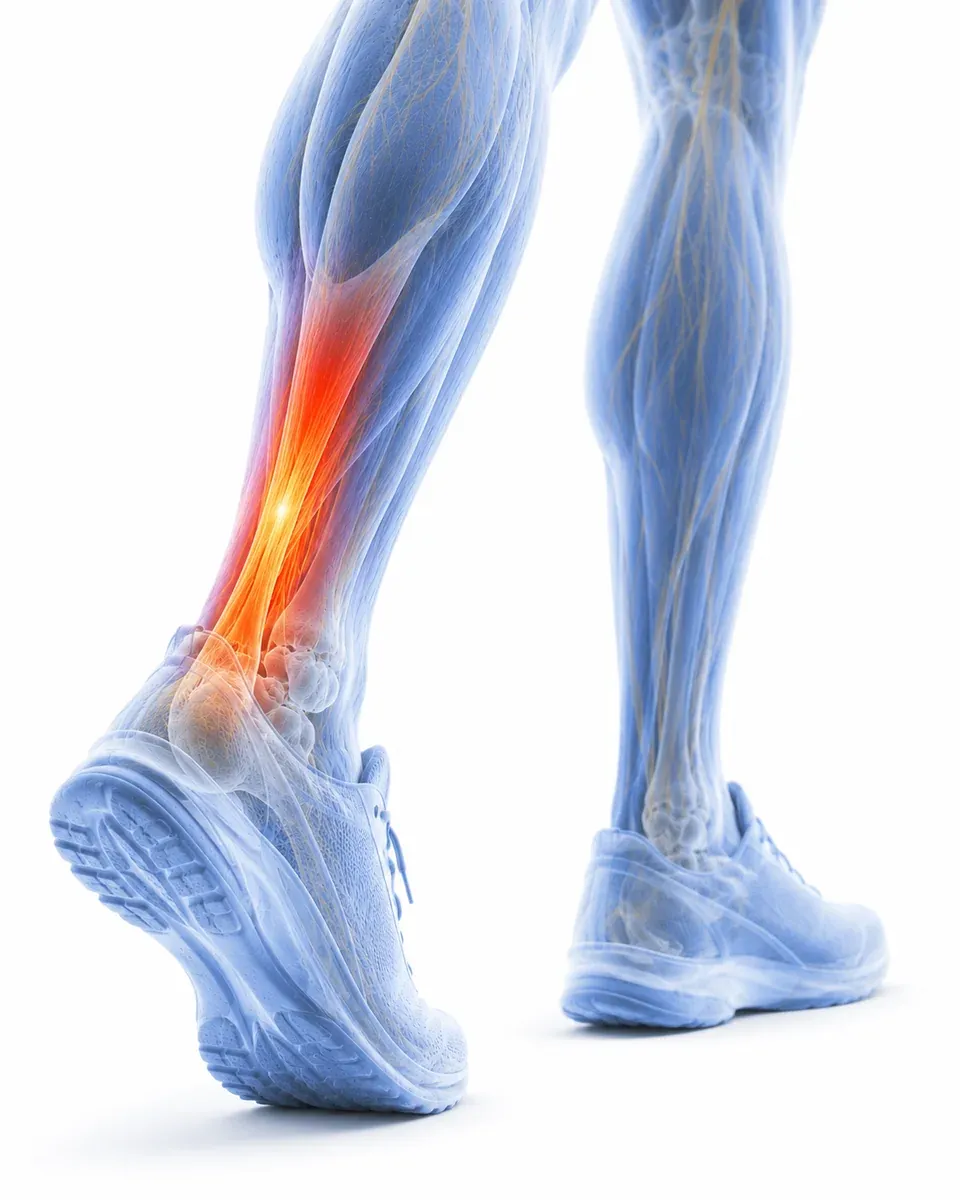
The calf complex (gastrocnemius and soleus) is the engine that propels you forward and absorbs landing forces. Weak or stiff calves shift load onto the plantar fascia. Building calf capacity is one of the most reliable interventions, supported by good evidence (Rathleff et al. 2015 showed heavy slow calf raises beat plantar-specific stretching for medium-term outcomes).
A simple progression:
- Two-leg calf raises off a step, slow tempo (3 seconds up, 1 second pause at the top, 3 seconds down). 3 sets of 12, every other day.
- When 3 sets of 12 feels easy, progress to single-leg calf raises off a step, same tempo.
- When 3 sets of 12 single-leg feels easy, add load: hold a backpack, dumbbells, or use a step-up box.
The first two weeks may make the foot feel slightly worse before it gets better. That’s normal as long as the pain doesn’t get sharply worse and doesn’t carry over more than 24 hours.
Tip 3: don’t skip the small foot muscles
The intrinsic muscles of the foot (the ones inside the foot itself, not crossing the ankle) help hold the arch and share load with the plantar fascia. Most people who develop plantar fasciitis have weakness here, especially if they wear supportive shoes most of the day.
Two simple exercises:
- Short foot: barefoot, sit or stand. Without curling the toes, gently pull the ball of the foot back toward the heel, raising the arch a small amount. Hold 5 seconds, release. 10 reps, twice a day.
- Toe yoga: lift the big toe while keeping the other four toes flat. Then reverse: the four small toes lift while the big toe stays flat. Both directions, 10 each, twice a day.
These look trivial. They’re not. They wake up muscles that have often been silent for years.
Tip 4: footwear matters, but the rules are different from what most people think
The advice you’ll often hear (“get supportive shoes, add an orthotic”) is partly right and mostly oversimplified. What the research actually supports:
- In the acute phase (sharp morning pain, foot tender to touch), supportive footwear with good cushioning can reduce day-to-day irritation and let the tissue settle. A heel cup or simple gel insert can help.
- As you recover, you generally want to gradually re-introduce variety: walking barefoot at home, transitioning to less supportive shoes over weeks, building tolerance for different surfaces.
- Long term, dependence on heavy support tends to keep the foot weak. The aim is feet that can handle a range of footwear, not feet that need a single pair of “magic” shoes.
For specific shoe recommendations, ask your osteopath at your appointment; the right pair depends on your foot shape and activity. Generic “best shoes for plantar fasciitis” lists online are usually padded with affiliate links and not particularly useful.
Tip 5: address the morning routine
Morning pain is the classic plantar fasciitis pattern because the fascia tightens overnight, and the first steps yank on already-irritated tissue. A simple morning routine can dramatically reduce the daily flare.
Before getting out of bed:
- Sit on the edge of the bed.
- Use a tennis ball or massage ball under the arch, rolling slowly from heel to toes. Two minutes per foot.
- Then a gentle calf stretch: extend the leg, loop a towel around the ball of the foot, pull the foot toward you, hold 30 seconds. Three rounds per side.
This warms the fascia and the calf complex before you ask them to do work. Patients who consistently do this often report 50 to 70% reduction in morning sharp pain within two weeks.
Tip 6: know when to bring in hands-on care
Self-management gets most plantar fasciitis cases moving, but some don’t respond, and some need a faster path. Worth booking in if:
- You’ve had it more than six weeks and the trend isn’t improving despite consistent self-care.
- The pain is changing pattern (now more in the arch, or the heel pain is now also in the calf).
- You’re compensating in ways that are starting to cause new issues (knee pain, hip pain, low-back tightness).
- You’re an athlete with a specific event you’re trying to keep training for.
- You’ve been told you “just have to live with it”. You usually don’t.
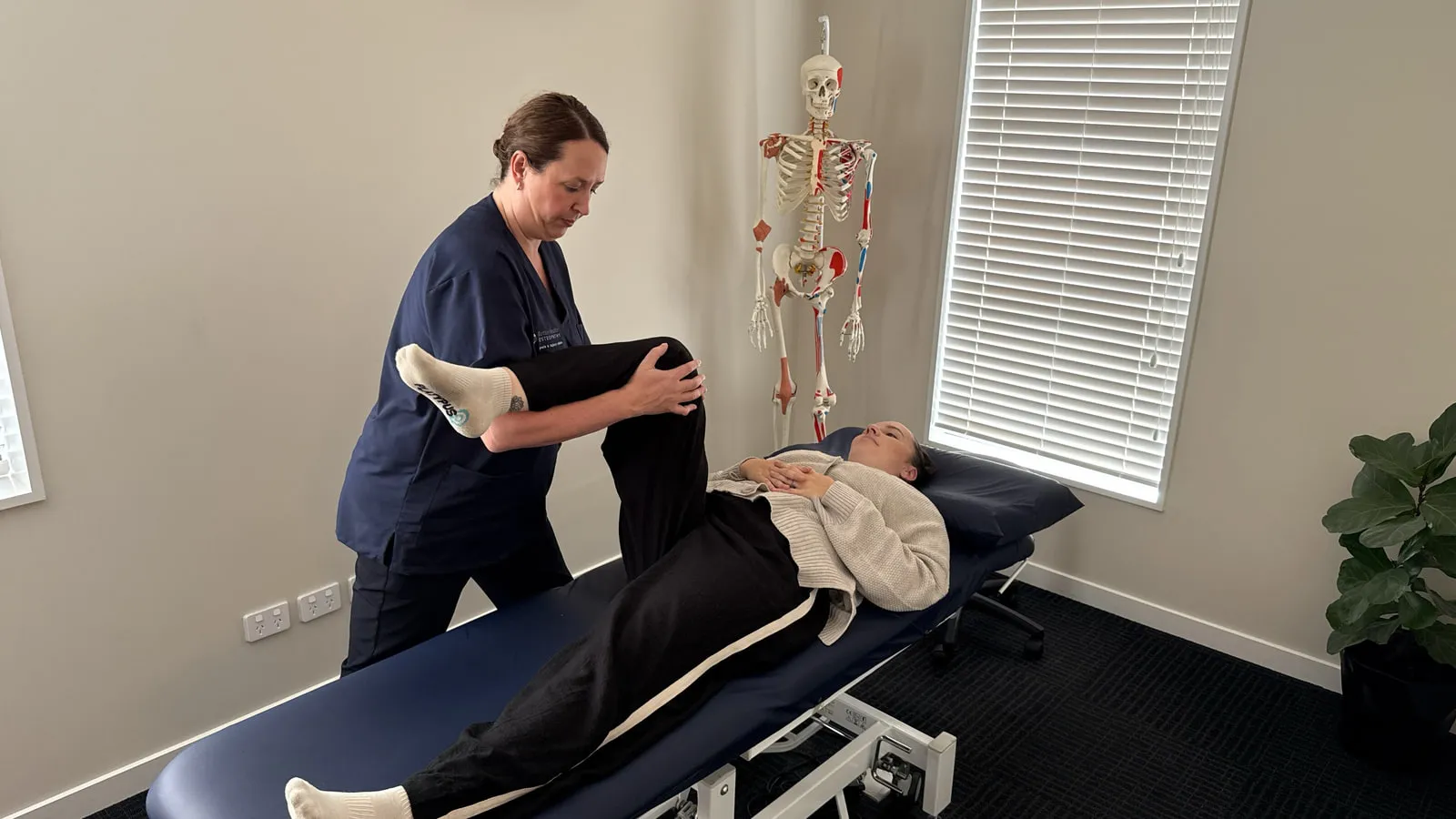
Osteopathic treatment for plantar fasciitis isn’t a magic fix; it’s targeted hands-on work to reduce calf and foot tightness, restore movement at the ankle and lower-leg joints, and guide the loading and exercise programme. Many cases that have stalled on self-care alone respond well to a few sessions plus a structured progression.
How long it takes
The honest answer: most plantar fasciitis cases meaningfully improve within 6 to 12 weeks of consistent management. A small minority take longer; a small minority resolve faster. The variable that most predicts speed of recovery is how consistently the load management and calf work are followed; quick fixes rarely beat a steady graded approach.
Be patient with the trend, not the day. Day-to-day pain wobbles are normal even in successful recovery. Look at how you’re doing across two-week windows.
ACC and plantar fasciitis
In New Zealand, plantar fasciitis is sometimes ACC-eligible if there’s a clear injury event (a sudden overload during sport or work, a fall, a workplace incident). Many cases are gradual-onset without a clear event and don’t fit the ACC pathway. For the full picture on how ACC works for Osteopathy treatment, see the ACC and Osteopathy guide.
If you’re not sure whether ACC applies to your case, mention it when you book and we can sort it out at your first visit.
Booking with us
If you’d like to bring in hands-on care, book online or call us on 0800 67 77 00. We’ll work through where the load is coming from, what’s missing in capacity, and what the right progression looks like for your foot, your activities, and your goals.
Related reading
- Plantar fasciitis condition page for the full clinical picture.
- Foot and ankle pain for related conditions and how they’re assessed.
- ACC and Osteopathy guide if your foot pain followed an injury.