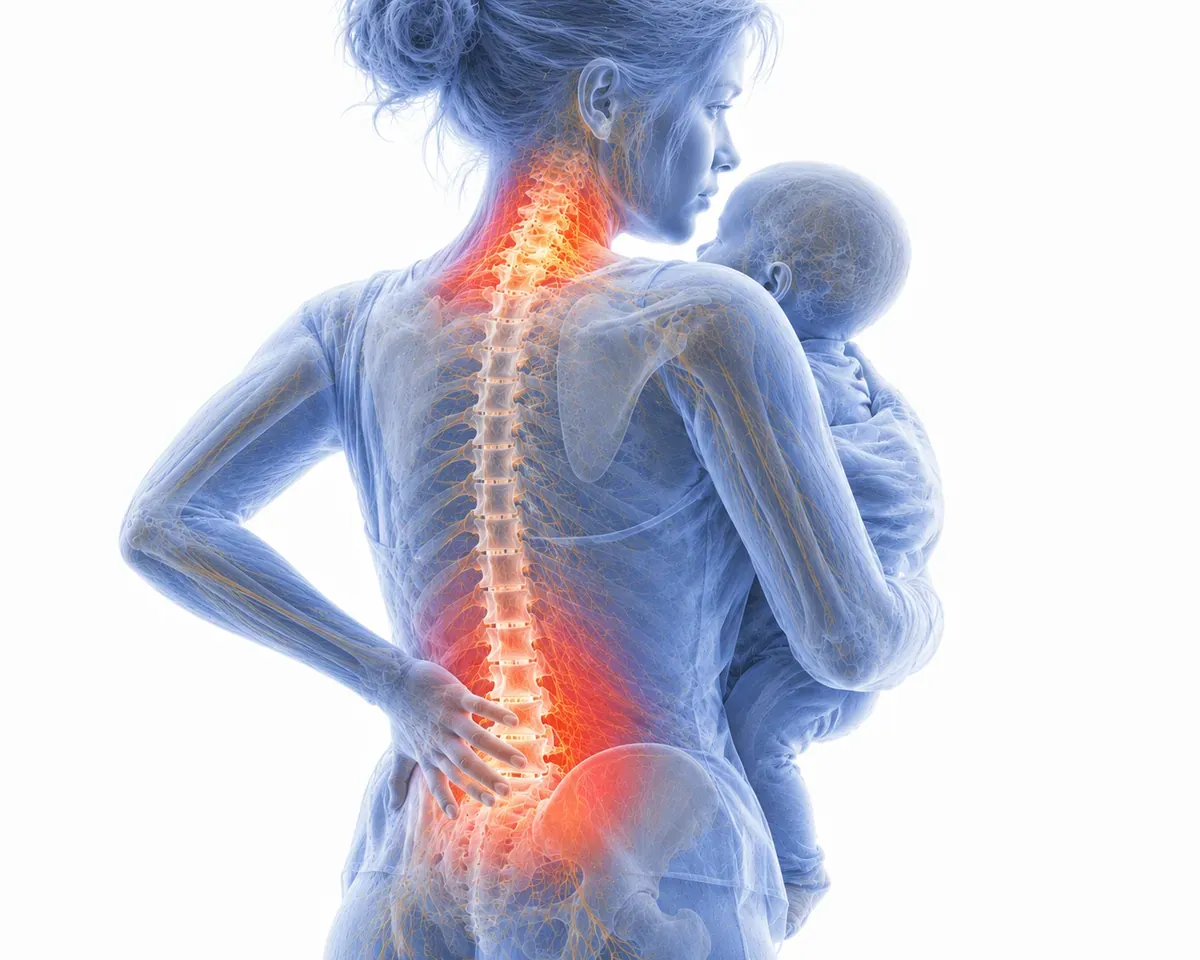

You’ve got a baby who cries inconsolably for hours, often at the same time of day, often in the late afternoon or evening. They pull their legs up, they look uncomfortable, they don’t settle no matter what you do. Someone has called it “colic”, and you’re trying to work out whether to ride it out, change the formula, see your GP, or try something else.
Colic is one of the hardest patterns to navigate as a new parent because the advice you get is so inconsistent. Some sources say it’s just developmental and will resolve on its own. Some sources point to feeding issues. Some point to gut bacteria. Some point to body mechanics. The honest answer is that colic is probably several different patterns lumped under one label, and the right approach depends on which pattern your baby fits.
This guide walks through what colic is, what the evidence says about osteopathic care for colicky babies, when Osteopathy fits, and the red flags that mean it’s something more.
What “colic” actually means
The clinical definition is the Rule of Threes: crying for more than 3 hours a day, more than 3 days a week, for more than 3 weeks, in an otherwise healthy baby. Onset is usually 2 to 4 weeks of age; resolution is usually around 3 to 4 months.
The honest version: “colic” is a label for a pattern, not an explanation. Saying a baby has colic is like saying an adult has “a headache”: it describes what’s happening but not why.
Possible drivers (often combined):
- Immature gut and digestive system, with feeding patterns that work for the baby’s specific tolerance.
- Mechanical patterns in the body: tightness in the head, neck, jaw, or torso that affects feeding mechanics, comfort lying down, and the ability to settle.
- Feeding mechanics: latch, milk supply, flow rate, swallowing patterns. Often related to mechanical patterns.
- Cow’s milk protein intolerance (less common but real). Affects 2 to 5% of formula-fed babies.
- Reflux (clinical reflux, not just “spitting up”). Affects a smaller subset; specific features identify it.
- Sensory and temperament factors. Some babies are simply more reactive to the world; this is a real thing.
- Maternal stress and exhaustion that influences how the baby is held, fed, and settled. Not a cause but a contributor.
Most colicky babies have several of these going on. Untangling which drivers fit your baby is what good assessment is for.
What the evidence says about osteopathic care for colic
The research on osteopathic care for colic is mixed but trending positive. The clearest finding from the better-quality studies: osteopathic treatment, in the context of comprehensive care (lactation support, parental reassurance, addressing underlying drivers), produces meaningful reductions in crying time and improvements in sleep duration, with no adverse effects in the studied populations.
What the evidence does not support:
- Osteopathy as a stand-alone “cure” for colic.
- Promises of overnight changes.
- Aggressive technique on babies (the contemporary clinical approach is very gentle).
What the evidence does support:
- Gentle osteopathic care as part of a wider plan.
- Real reductions in crying time when mechanical drivers are present.
- Better sleep and settling when neck, jaw, or torso tension is addressed.
The honest framing: Osteopathy isn’t magic, and it isn’t the right answer for every colicky baby. For babies whose colic has a mechanical or feeding-mechanics component (which is many but not all), it can make a real difference.
When Osteopathy fits
The babies most likely to respond to osteopathic care are the ones with mechanical patterns that contribute to or compound the colic picture. Look for:
- A preferred head-turning direction, or refusing to turn one way.
- Asymmetric feeding (much better on one breast or one bottle position than the other).
- A flat spot or asymmetry in the head shape.
- Stiffness or guarding when picked up, dressed, or laid on the changing table.
- Settling well only in specific positions (always upright, always on one side, never on their back).
- Worse symptoms after a difficult birth (long labour, ventouse or forceps delivery, C-section after a long labour).
- A reflux-and-feeding pattern without diagnosed clinical reflux.
If several of these are present, osteopathic assessment is reasonable.
When Osteopathy isn’t the right first call
- Concerns about weight gain or feeding sufficiency. Plunket, midwife, or GP first.
- Suspected cow’s milk protein intolerance (blood in stool, severe eczema, reflux with poor weight gain). GP first for assessment and possibly formula change.
- Suspected clinical reflux (severe arching, persistent feed refusal, weight loss). GP first.
- A baby who is settling, feeding, and gaining weight, but crying happens at predictable evening hours. This is the classic “evening fussing” pattern. Often resolves with time and good support; Osteopathy is unlikely to change much.
- Concerns about general health (lethargy, fever, unusual rashes, breathing changes). GP urgently.
What a session looks like
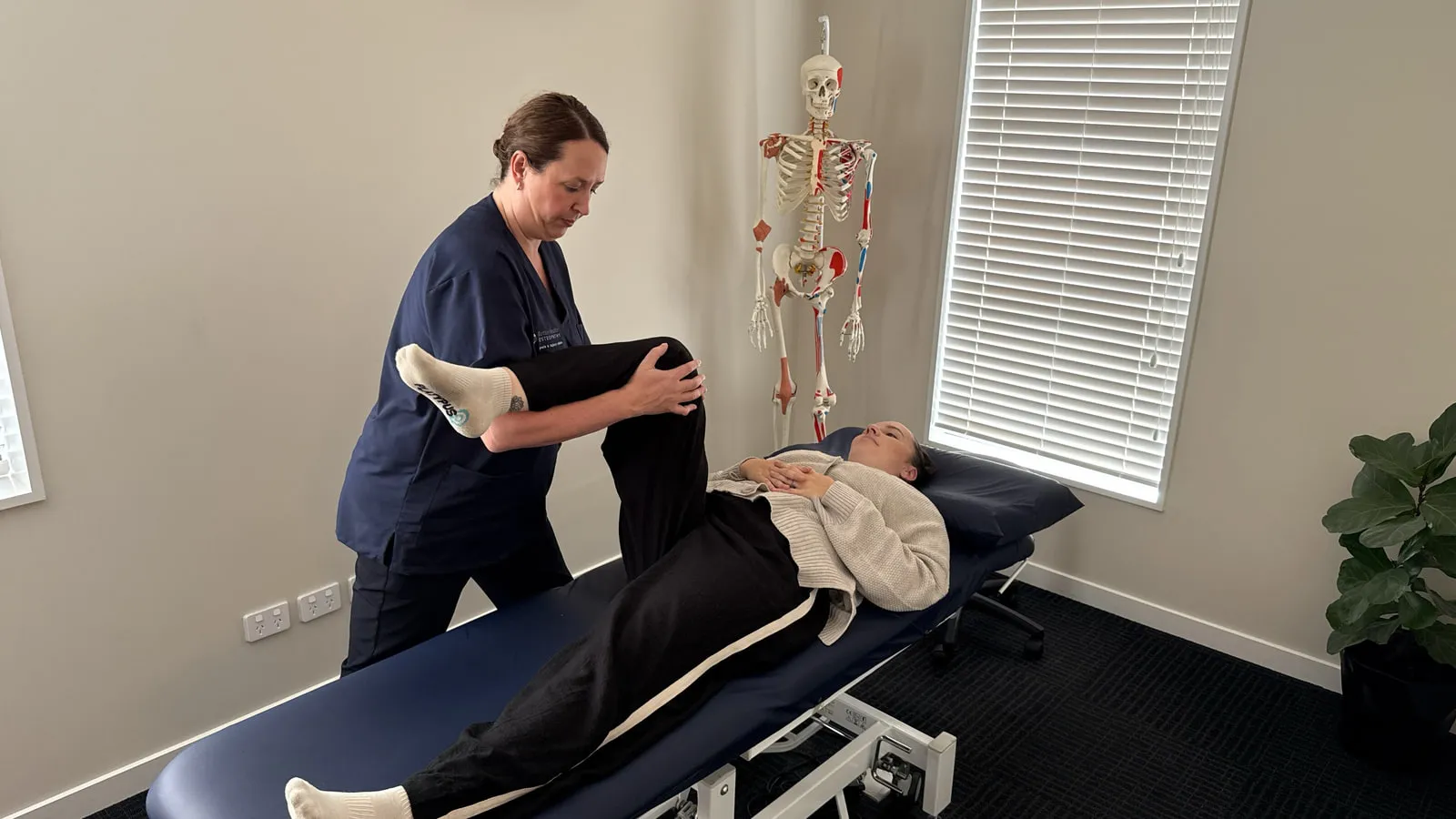
A first visit for a colicky baby takes 30 minutes. The baby usually doesn’t need to be undressed beyond removing layers; we work through clothing or gently against skin depending on the assessment.
What we look at:
- How the baby holds themselves at rest, when picked up, and during movement.
- Head and neck mobility: can they turn fully both ways, are there asymmetries.
- Torso, ribs, and pelvis: tension patterns, how easily they breathe.
- The jaw and palate: relevant if feeding is part of the picture.
- Feeding position and latch (if you can demonstrate during the session).
What treatment looks like:
- Very gentle hands-on work. Often barely perceptible to a watching parent.
- Light articulation through restricted areas.
- Soft tissue work where helpful.
- This is not the higher-velocity adjustment you might associate with adult Osteopathy; the technique on infants is qualitatively different and gentler.
What we send you home with:
- Specific positions and movements to use through the day.
- Tummy time progressions.
- Settling and feeding suggestions where relevant.
- A clear sense of what we’re hoping to see change, and over what timeframe.
How many sessions
Most babies who respond to osteopathic care show changes within 1 to 3 sessions. Some patterns resolve in a single visit; some need more.
If we’re not seeing changes after 3 to 4 visits, we’ll talk honestly about whether something else is going on and what the right next step is. Continuing to treat without progress is rarely the answer.
Many families come in once a week for 2 to 3 weeks, then space sessions out as the pattern improves.
Red flags: when colic is something more
Most colicky babies are otherwise well. A small minority of presentations need urgent assessment. See a GP or after-hours clinic urgently if:
- The baby is lethargic, unusually still, or hard to rouse.
- There’s a fever in a baby under 3 months.
- Persistent vomiting (not just spitting up), especially if green or blood-tinged.
- Blood in the stool.
- Refusing to feed repeatedly, or showing no interest in feeding.
- Difficulty breathing or unusual breathing patterns.
- A bulging fontanelle (the soft spot on the top of the head).
- A change in cry quality that’s higher-pitched or more distressed than usual.
These are uncommon with ordinary colic, but worth knowing.
What you can do at home
While you wait for an appointment or in addition to treatment:
For settling:
- Skin-to-skin time with mum or dad regularly, not just at feeding.
- Movement and motion: walking, baby-wearing, gentle bouncing on a yoga ball.
- White noise or rhythmic sounds that mimic the in-utero environment.
- The “fourth trimester” model: babies are still adapting to the outside world for the first 3 months. Holding, swaddling (within safe-sleep guidelines), and rocking aren’t “spoiling”; they’re appropriate developmental support.
For feeding mechanics:
- Frequent winding during and after feeds.
- Upright position for 15 to 20 minutes after feeds, especially if reflux symptoms are present.
- Vary feeding positions across the day.
For mum and dad:
- Take breaks when you can. Caring for a colicky baby is exhausting, and your wellbeing affects the baby.
- Talk to your midwife, Plunket nurse, or GP if you’re struggling. Postnatal depression and anxiety are common and treatable; raising it isn’t a failure.
Booking with us
If you’d like to book in, book online or call 0800 67 77 00. If you’d like a back-to-back appointment for mum and baby, let us know when booking; this is a common pattern and we’ll structure the time accordingly.
Related reading
- Babies and infants care for the broader picture of what we treat in the under-2s.
- Postnatal recovery for the mum-side picture.
- Breastfeeding pain if feeding is part of the colic pattern.