
Breastfeeding is supposed to be the natural option, the simple option, the bonding option. For many mums and babies, none of those words describe the actual experience, especially in the first few weeks. Pain on latching, a baby who can’t quite get the suck right, neck and shoulder pain in mum from hours of leaning, jaw tension in babies who feed only from one side: these patterns are common, and they’re often treatable.
This guide covers what’s actually going on when breastfeeding hurts (for either mum or baby), how osteopathic care can help, and when it’s worth booking in versus seeking a different kind of help.
The first thing to say
If breastfeeding is painful, it usually means something is fixable, not that you’re failing. The cultural narrative that “good mums” should be able to feed without trouble is unhelpful and often wrong. Most painful feeding is mechanical: a latch that isn’t quite right, a baby who can’t open the jaw fully, a mum whose neck and shoulder are bracing for hours a day.
Mechanical issues are mechanical fixes. The right help, early, often turns a struggling feed into a comfortable one within a couple of weeks.
This article covers the pain side. It does not replace the role of a lactation consultant (IBCLC) or your midwife or Plunket nurse, who have feeding-specific expertise we don’t. The pattern that often works best is lactation consultant for the latch and feeding plan, plus an osteopath for the body-mechanics side in both mum and baby.
What’s happening in mum
Breastfeeding-related pain in mum usually fits one of these patterns:
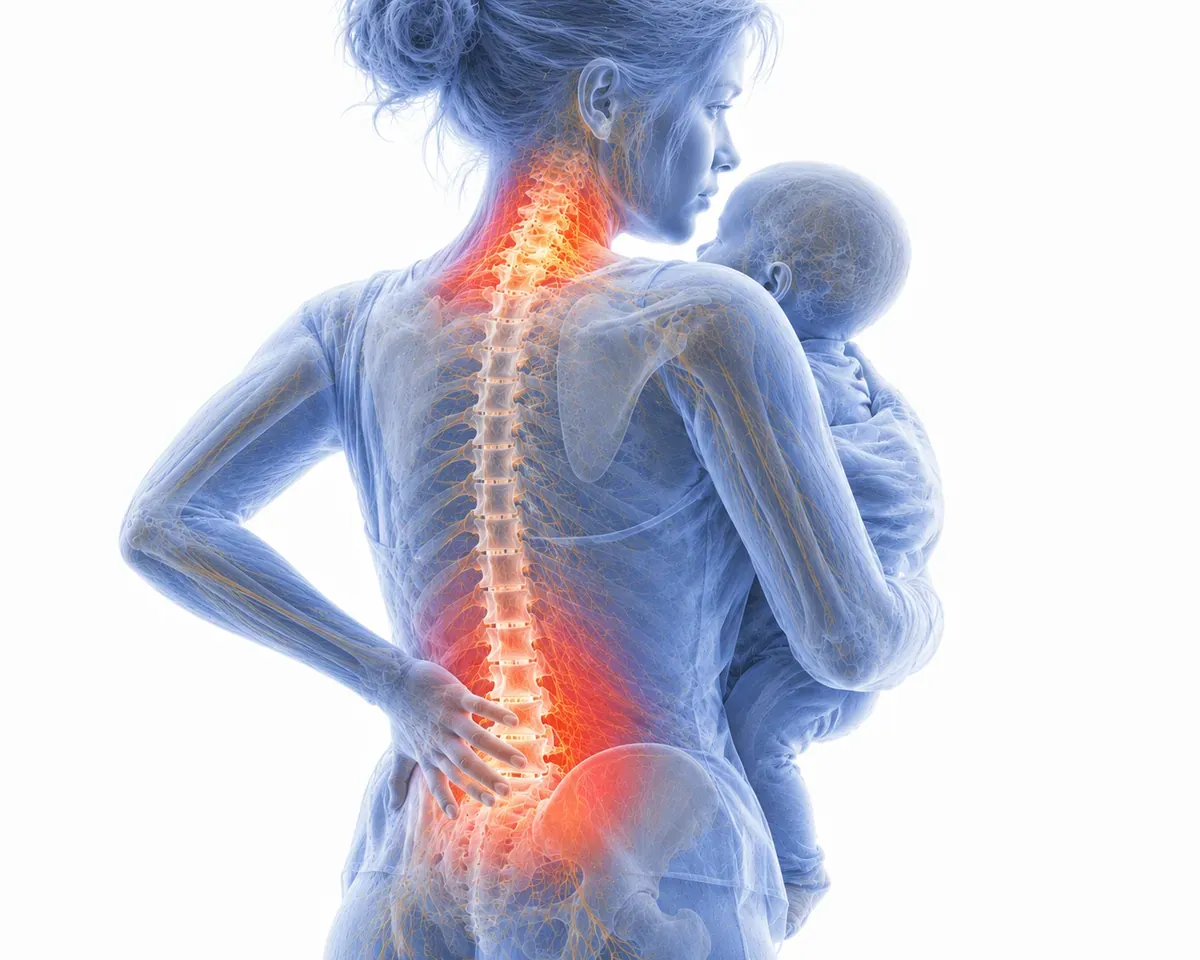
Neck and upper-back pain. The classic posture during feeding (head down, looking at the baby, shoulders rolled forward) loads the upper-back and neck muscles for hours a day. Within a few weeks, mums who didn’t have neck pain before suddenly have it constantly.
Mid-back tension between the shoulder blades, often described as a knot that won’t go away. Usually a combination of feeding posture plus the lifting and carrying that comes with a newborn.
Shoulder pain, often on the dominant side, from holding the baby in cradle position for long stretches.
Wrist and thumb pain (commonly called “mummy thumb” or De Quervain’s tenosynovitis). The repetitive lifting under the armpits, supporting the head, scooping the baby up, lifting the car seat: all loads the wrist and thumb tendons.
Jaw and headache patterns. Less obviously connected, but real. The clenched-jaw, sleep-deprived state of early parenting often shows up as tension headaches and TMJ pain.
Chest wall and rib pain. Particularly if the baby is on one side most of the time, or if a C-section is part of the recovery picture.
Pelvic and hip pain, especially if pelvic pain from pregnancy hasn’t fully resolved.
The connecting thread: mum’s body has been through pregnancy, birth, and now hours-a-day of feeding-and-carrying postures, with very little recovery time. The tissues are loaded but not rebuilding. Pain is the result.
What’s happening in baby
Some babies feed beautifully from day one. Many don’t, and the patterns we see most often:
Difficulty latching on one side. The baby feeds well on one breast and struggles on the other. Often the baby has a preferred head-turning direction (more comfortable looking one way than the other), which is sometimes related to infant torticollis: tightness in the neck muscles, sometimes from in-utero positioning or birth-related compression.
Clicking, slipping off, or short sucking. The jaw or palate isn’t working in coordination, the suck-swallow-breathe cycle isn’t smooth. Sometimes this is mechanical (jaw and head tension), sometimes it’s structural (tongue-tie, lip-tie), sometimes both.
Painful latch with otherwise normal mouth structure. The baby can latch but the latch is shallow or pinching. Often related to jaw mobility, palate shape, or the baby’s ability to open the mouth wide.
Reflux-type symptoms combined with feeding struggle. Spitting up, arching, fussing during or after feeds. Sometimes related to feeding mechanics, sometimes related to underlying gut issues, often both.
A “preferred side” for feeding, head turning, and sleeping. Usually a sign of asymmetric tightness somewhere in the head, neck, or upper back.
A first-visit osteopathic assessment of the baby is gentle and brief. We’re looking at how the baby moves, where the body holds tension, and whether any of the asymmetries are contributing to the feeding struggle.
How osteopathic care fits in
Osteopathic care for breastfeeding-related issues works at the body mechanics layer. We don’t manage the feeding plan (that’s the lactation consultant), and we don’t diagnose tongue-tie (that’s a paediatrician or specialised feeding clinician). What we do:
For mum:
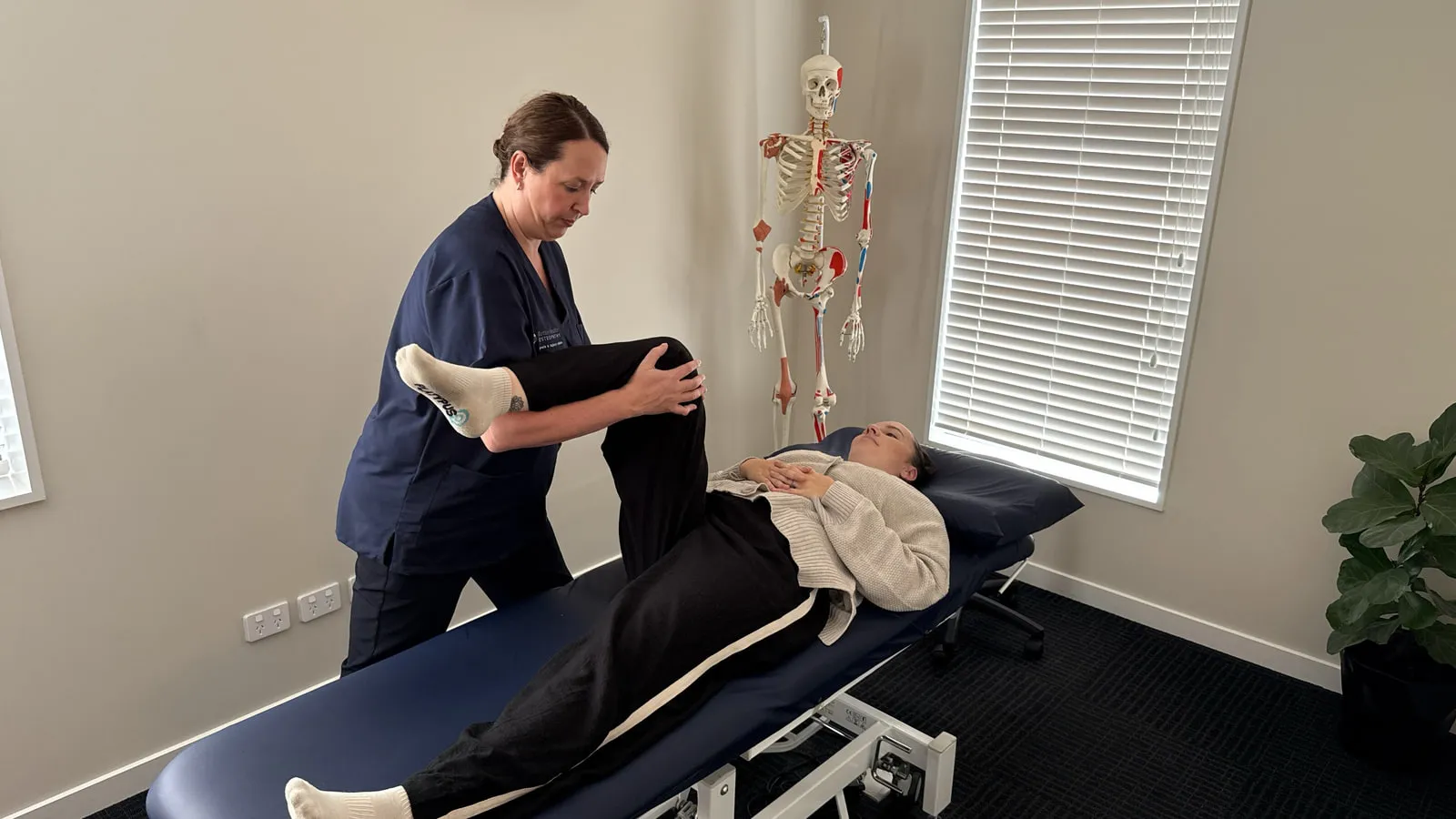
- Hands-on treatment for the neck, mid-back, shoulders, and arms.
- Specific work for “mummy thumb” and wrist patterns.
- Pelvis and core work where pregnancy or birth has left these areas under-recovered.
- Posture and feeding-position guidance: how to set up so feeding doesn’t load you.
- Coordination with your wider postnatal recovery plan.
For baby:
- Gentle assessment of head, neck, jaw, and torso movement.
- Soft, age-appropriate hands-on technique to ease asymmetries (this is not the higher-velocity adjustment you might associate with adult treatment; it’s much gentler, often barely-perceptible work).
- Suggestions for positioning and home techniques to support symmetric development.
- Feedback on whether anything we’re seeing warrants a referral to a different clinician (lactation consultant, paediatrician, specialised feeding team).
The principle: easing tension and asymmetry in either mum or baby (often both) makes the feeding mechanics easier. Pain often eases within a few visits when the body-mechanics layer is addressed alongside the feeding-plan layer.
When Osteopathy fits, and when it doesn’t
Osteopathy is a strong fit when:
- Mum has neck, back, shoulder, or wrist pain from feeding postures.
- Baby has a preferred head-turning direction or asymmetric feeding pattern.
- Feeding is painful but the latch looks reasonable on assessment.
- Tongue-tie has been ruled out or addressed, but feeding is still struggling.
- The body-mechanics side feels like it’s contributing.
Osteopathy is not the right first call when:
- The primary issue is feeding-plan related (latch technique, supply issues, weight gain concerns). Lactation consultant first.
- A tongue-tie or lip-tie is suspected. Paediatric assessment first.
- Mastitis or other acute infection is present. Midwife or GP first.
- Concerns about weight gain or general health. Plunket nurse, midwife, or GP first.
A useful pattern: Plunket or midwife does the general check, lactation consultant does the feeding plan, osteopath does the body-mechanics layer. They’re complementary, not alternatives.
What a session looks like
For mum: a normal 30 minute appointment. Bring the baby if you need to; we have space and you can feed during the session if it’s helpful. We’ll work on whatever is hurting.
For baby: usually 20 to 30 minutes. We watch the baby move, gently feel through the head and neck and torso, and use very light hands-on technique. Babies often fall asleep during the session; that’s a good sign. We’ll also show you positions and home techniques (tummy time, side-lying patterns, gentle movement work) that support what we’re treating.
Many parents come in for both mum and baby in the same visit; we can structure the appointment to cover both.
How many sessions?
For mum’s feeding-related pain: typically 3 to 5 visits over a few weeks, alongside getting your feeding setup sorted with the lactation consultant.
For baby’s feeding-related issues: often shorter. Many babies respond noticeably within 1 to 3 visits. Stubborn patterns (deep torticollis, complex feeding situations) sometimes need longer.
If we’re not seeing improvement after 3 to 4 visits, we’ll talk honestly about whether something else is going on and what the right next step is.
What you can do at home
For mum’s neck and shoulder pain:
- Vary feeding positions across the day: cradle, cross-cradle, rugby hold, side-lying. The same posture for hours is part of the problem.
- Pillows under the baby, not the baby in your arms. Bringing the baby up to you reduces the head-down posture.
- Take micro-breaks: shoulder rolls, gentle neck mobility, between feeds.
- Strengthen what’s deconditioned: postnatal core and back work, even just 10 minutes most days, helps the tissues rebuild capacity.
For baby’s preferred-side patterns:
- Encourage head-turning to the non-preferred side during play, feeding, and sleep positioning (within safe-sleep guidelines).
- Tummy time as soon as the baby tolerates it, several short sessions a day.
- Vary the side they’re carried on: if you always carry on one hip, the body adapts to that.
Booking with us
If you’d like to book in, book online or call 0800 67 77 00. We see mums and babies at our Fendalton clinic. If you’d like a back-to-back appointment for both, mention that when booking.
Related reading
- Postnatal care for the broader postnatal recovery picture.
- Babies and infants for what we treat in the under-2s.
- Neck pain and shoulder pain for the mum-side patterns.