
You’re a few months postnatal and you’ve developed a sharp pain at the base of your thumb on the side of your wrist. It hurts when you pick up the baby, when you pinch, when you twist a jar lid. It’s there in the morning. It’s there at the end of the day. Some days it’s so sharp you can barely lift the carseat.
What you’ve likely got is De Quervain’s tenosynovitis, more commonly called “mummy thumb” or “mommy thumb”. It’s not a baby-name brand of injury; the name reflects the pattern. It peaks postnatally because of the specific repetitive loads of caring for a baby, and it’s one of the most common wrist injuries we see in postnatal mums.
The good news: it responds well to the right management. The bad news: ignoring it usually makes it worse, because the load that caused it doesn’t go anywhere.
What’s actually happening
De Quervain’s involves two tendons that run along the thumb side of your wrist:
- Abductor pollicis longus (pulls the thumb away from the palm)
- Extensor pollicis brevis (extends the thumb back)
Both tendons run together through a tunnel (the first dorsal compartment) on the radial side of the wrist. Repetitive loading and the hormonal changes of pregnancy and breastfeeding cause the tendons and their sheath to swell. The tendons then catch and irritate as they slide through the now-narrowed tunnel.
The pain is sharp, localised to the wrist on the thumb side, and reliably triggered by:
- Pinching and gripping with the thumb
- Lifting under the armpits (the classic baby-pickup grip)
- Wrist deviation away from the thumb side
- Bending the wrist toward the palm while gripping
A useful self-test: put your thumb in your palm and close your fingers around it (a fist with the thumb tucked in). Then bend the wrist toward your little-finger side. If this reproduces sharp pain on the thumb side of your wrist, that’s a positive Finkelstein’s test, suggestive of De Quervain’s.
Why it peaks postnatally
The combination is specific:
1. The lifting pattern. New parents lift babies, carseats, and prams a hundred times a day. The grip pattern (thumb pinched against fingers, wrist often bent) is exactly the position that loads these tendons.
2. Hormonal changes. Pregnancy and breastfeeding involve hormonal shifts (relaxin, prolactin, etc.) that affect connective tissue properties. Tendons and sheaths can become more reactive to load.
3. Sleep deprivation. Tissue recovery happens in sleep. Sleep deprivation affects how well tissues repair the daily load.
4. Fluid retention. Particularly common in the immediate postnatal weeks. Adds to the tunnel narrowing.
5. The compensations. New parents lift one-handed, often with the wrist bent, often while holding something else with the other hand. The biomechanics aren’t kind.
This is also why mummy thumb is essentially the same condition as workplace De Quervain’s in someone whose job involves repetitive thumb-and-wrist loading (typists, hairdressers, mechanics). The driver is the load pattern; the postnatal context just provides the load.
The recovery arc
Honest numbers:
- Caught early (in the first few weeks of symptoms): often settles in 4 to 8 weeks with good management.
- Established (months of pain before treatment): typically 8 to 16 weeks. The longer it’s been, the longer it takes.
- Stubborn or recurring: sometimes needs a more focused intervention (corticosteroid injection, in some cases hand-surgeon input). Rare for postnatal cases caught reasonably early.
The challenge is that the load that caused it doesn’t go away. You’re still lifting the baby; the baby is getting heavier. So management isn’t “rest until it heals”. It’s “modify how you lift, settle the inflammation, build tendon capacity”.
What helps
1. Reduce the irritating load.
The biggest change: stop lifting under the armpits with thumbs pinched in. Instead:
- Scoop with both hands, palms broadly under the baby’s torso, thumbs not pinched.
- Lift from a closer position: bring the baby toward you before lifting, not lift-then-bring.
- Use the trunk and core, not the wrists: the strength comes from your body, not your hands.
- For the carseat and pram: use both hands. Yes, it’s more awkward. It’s also kinder to your wrists.
This single change often produces noticeable easing within 2 weeks if the pattern was the main driver.
2. Splinting in the early weeks.
A thumb spica splint that immobilises the thumb and wrist in a neutral position, worn most of the day, settles the tendons by removing the loads that flare them. They’re inexpensive, available from pharmacies and physiotherapy supply shops, and can make a meaningful difference in the early weeks.
The downside is that they make practical baby-care harder, so most parents wear them for sleeping plus rest periods rather than 24/7. Some people find a soft compression sleeve (less restrictive) is a useful middle ground.
3. Anti-inflammatory measures.
- Ice on the wrist for 10 to 15 minutes after particularly load-heavy periods (e.g., after a long carseat-lifting morning).
- Topical NSAIDs (Voltaren gel, etc.) over the painful area twice a day. Generally safe in breastfeeding (check with pharmacist for current advice).
- Oral ibuprofen at standard doses if topical isn’t enough. Generally considered safe in breastfeeding (again, confirm with your pharmacist).
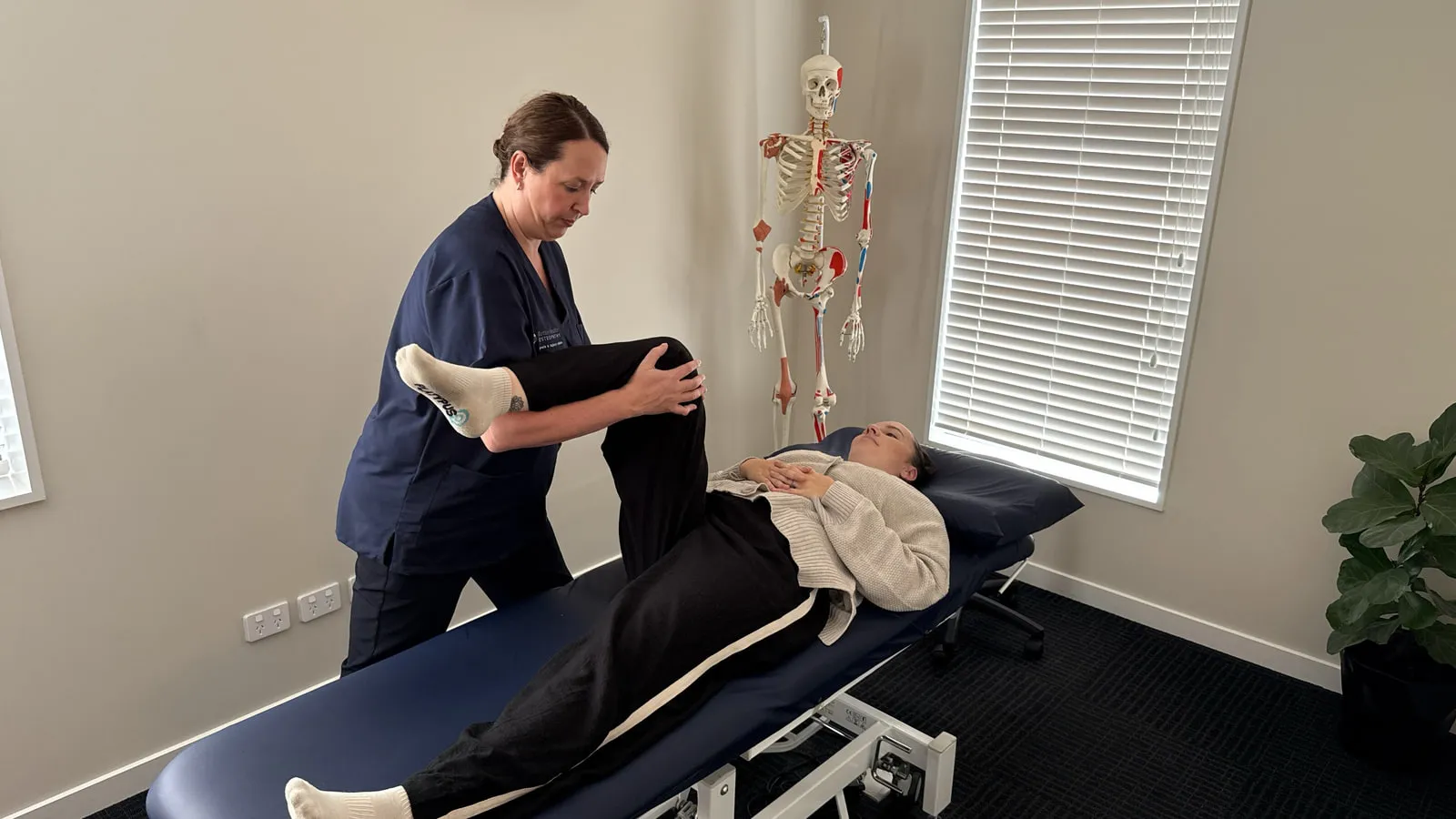
4. Hands-on osteopathic care.
What we contribute:
- Soft tissue work for the forearm muscles that drive the thumb and wrist tendons
- Joint mobility work for the small wrist and thumb joints
- Treatment of the wider chain: shoulder, neck, and upper back tension that compounds the wrist load
- Specific exercise prescription: tendon-loading work appropriate to the stage of recovery
For postnatal-specific cases, treatment usually includes the wider postnatal recovery picture: addressing pelvic, back, and shoulder issues that often coexist.
5. Tendon strengthening, once symptoms ease.
Once the sharpest pain is gone, gradually loaded thumb and wrist exercises rebuild tendon capacity so the daily load doesn’t reflare it. This is the rebuild phase that prevents recurrence. Most people need 6 to 12 weeks of progressive exercise to fully rehabilitate the tendons. Skipping this phase is the main reason cases come back.
6. When to consider a corticosteroid injection.
For stubborn cases that haven’t settled after 6 to 8 weeks of conservative management, an injection of corticosteroid into the tendon sheath is often very effective. Your GP or a hand specialist can administer; success rates are around 80% for substantial improvement.
The injection isn’t a fix on its own; the rehab still matters. But it can break a stuck pattern and let the rehab work.
What we’d suggest at a first appointment
A first visit takes 30 minutes. We:
- Take a careful history: when it started, what specifically flares it, how postnatal life is loading the wrist.
- Examine the wrist, forearm, elbow, shoulder, and neck. Confirm the De Quervain’s pattern; rule out other wrist conditions (scaphoid issue, basal thumb arthritis, intersection syndrome).
- Treat with hands-on care for the immediate pain.
- Plan the recovery: load modification, splinting if appropriate, home exercises, expected arc.
- Coordinate with your wider postnatal recovery if neck, back, or shoulder issues are part of the picture.
Many parents find that a session that addresses both the wrist AND the neck/shoulder/upper-back tension from feeding postures makes a bigger difference than just the wrist alone. They’re related; treating one without the other leaves the picture incomplete.
ACC and De Quervain’s
Postnatal De Quervain’s may or may not be ACC-eligible depending on the cause:
- Workplace gradual-onset: covered as a gradual-process injury if your job involves repetitive loading.
- Postnatal “from baby care”: often not covered as ACC, because it’s not a workplace injury. Some cases involving a specific event (a sharp wrench while lifting) can be lodged as acute injuries.
The honest answer: most postnatal mummy thumb is private-pay. The first visit can confirm whether your case fits an ACC pathway.
What you can start today
While you book in:
- Audit your lifting. For the rest of the day, every time you pick up the baby, notice whether your thumbs are pinched and your wrists bent. Try the both-hands scoop instead.
- Use both hands for the carseat. Always.
- Apply ice for 10 minutes after the worst-load periods of the day.
- Topical anti-inflammatory twice a day if you’re not breastfeeding-restricted from it.
Even before treatment starts, these alone often produce noticeable easing within a few days.
Booking with us
If you’d like to book in, book online or call 0800 67 77 00. If you’d like a longer appointment that covers both the wrist and the broader postnatal picture (neck, back, shoulders from feeding postures, pelvic recovery), mention it when booking; we can structure the time to cover both.
Related reading
- Hand and wrist pain for the broader hand/wrist condition picture.
- Postnatal recovery for the wider postnatal context.
- Breastfeeding pain for the related neck-shoulder-upper-back patterns common in new parents.