
If your jaw is sore in the mornings, clicks when you eat, locks briefly, or feels tight after stressful days, you’re dealing with the temporomandibular joint (TMJ): the small, hard-working joint just in front of your ear that opens and closes your mouth thousands of times a day. Jaw issues are one of the most-overlooked sources of head, neck, and face pain, and they’re often more responsive to self-care than people realise.
This article is a practical self-care guide. For the broader clinical picture and when to book in, see the jaw pain condition page.
What’s actually going on
The TMJ is a hinge-and-glide joint with a small disc inside it. Pain and dysfunction here usually involve some combination of:
- Muscle tension in the muscles that close the jaw (especially the masseter and temporalis), often driven by clenching, grinding, or stress
- Joint mechanics changing slightly so the disc inside the joint catches or clicks during movement
- Nervous-system sensitisation, where the area becomes sore from chronic low-grade load
- Postural drivers from the neck and upper back that change how the jaw sits at rest
- Bite-related factors that occasionally play a role (more often referenced than relevant clinically)
Most TMJ pain is muscular and mechanical, not structural. That’s good news: muscular and mechanical patterns respond to load management, posture work, and targeted release.
Self-care that actually works
The patterns below are what we recommend most often clinically. Done consistently for 2 to 4 weeks, most people see meaningful change.
1. Reduce the clenching load
Most jaw pain is at least partly driven by clenching, often unconsciously, often during the day rather than just at night. Awareness is the first move:
- Notice your jaw position right now. Are your teeth touching? Most of the time, they shouldn’t be. The resting position is teeth slightly apart, lips relaxed, tongue gently against the roof of the mouth.
- Set a phone reminder every 1 to 2 hours during the day for a week. When it pings, check: are you clenching? Relax it.
- Identify your triggers: stressful emails, driving, concentrating, exercising. Once you spot the pattern, the clenching often eases just from awareness.
2. Heat and gentle massage
For sore jaw muscles:
- Warm compress on the masseter (the muscle along the angle of the jaw): 10 to 15 minutes, twice a day. Boosts blood flow and reduces protective tightness.
- Self-massage the masseter: place two fingers on the muscle along the angle of your jaw, find a tender spot, hold gentle pressure for 30 to 60 seconds. Don’t dig hard; the muscle is sensitive.
- Massage the temples (the temporalis muscle that runs above and behind the ear): small circular pressure for a minute or two. Often eases tension headaches alongside jaw pain.
3. Specific gentle exercises
A few exercises that consistently help:
Controlled mouth opening:
- Place your tongue against the roof of your mouth, behind your front teeth.
- Slowly open your mouth as wide as you can without losing tongue contact and without pain.
- Hold for 3 seconds, then close.
- Repeat 5 to 10 times, twice a day.
This works on coordinated jaw movement and reduces the catching that produces clicking.
Resisted opening (for muscle balance):
- Place a thumb under your chin.
- Gently press your chin down against your thumb’s resistance, opening your mouth slightly.
- Hold for 3 to 5 seconds, then relax.
- Repeat 5 times, twice a day.
Resisted closing:
- Place your fingers on your front teeth (yes, on the teeth).
- Gently close your mouth against the resistance.
- Hold for 3 to 5 seconds, then relax.
- Repeat 5 times, twice a day.
Gentle is the key word. None of these should provoke sharp pain. If something flares the symptoms, ease back.
4. Posture and neck work
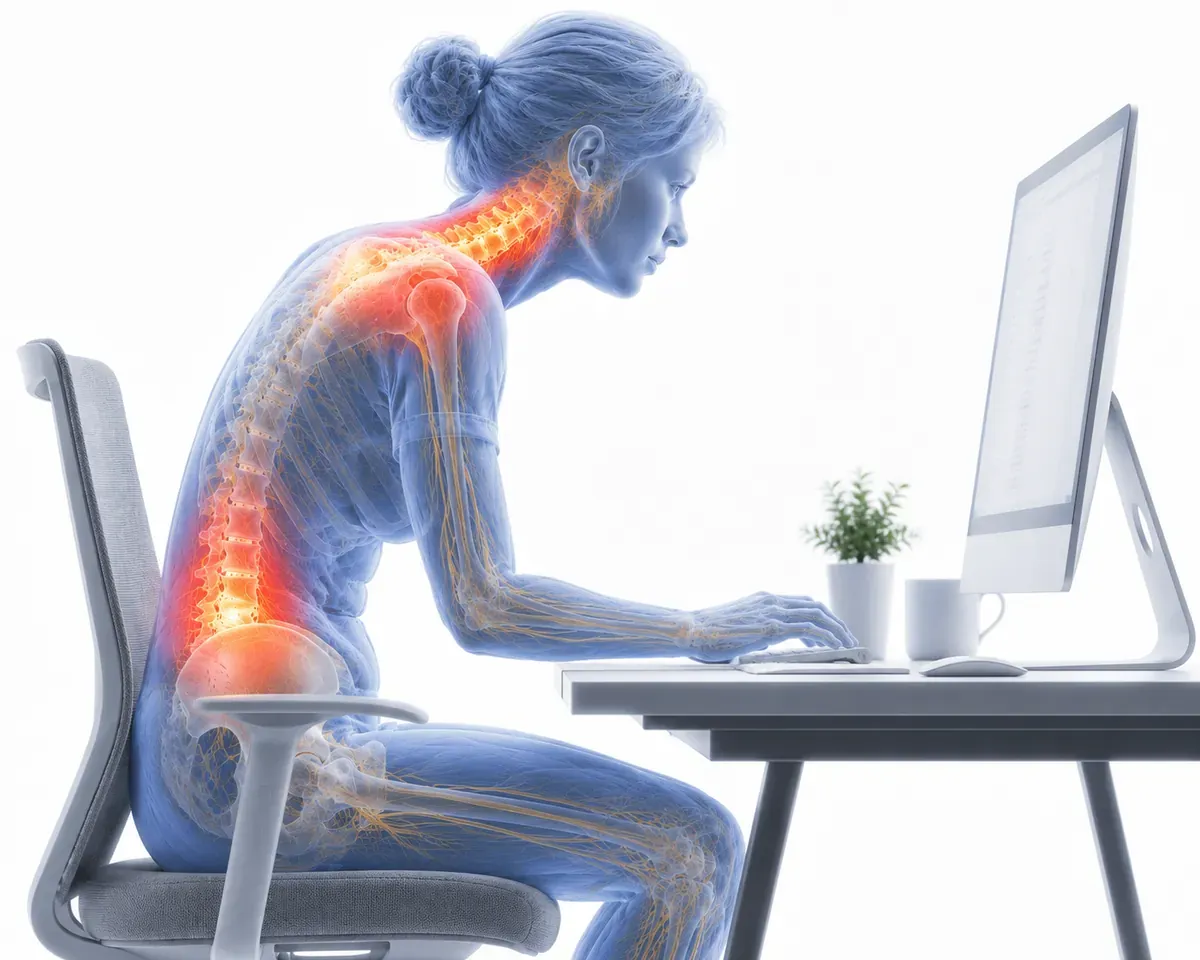
The jaw sits on top of the neck. A forward-head posture changes how the jaw’s at-rest position loads, often increasing the tension. Working on the neck and upper back often eases the jaw:
- Chin tucks throughout the day: gentle backward-and-down chin movements, 10 to 15 reps a few times daily.
- Upper-back mobility: a few minutes of thoracic mobility work each day (rotations, foam roller if you have one).
- Desk setup: top of screen at eye level, keyboard close to body, frequent breaks.
5. Sleep position adjustments
If you wake up with jaw pain:
- Avoid sleeping on your front with the jaw pressed into the pillow. This is the highest-load position for the TMJ overnight.
- Side-sleeping is fine but don’t bury your jaw into the pillow; the pillow should support the side of your face evenly.
- Back-sleeping is the lowest-load option for the jaw if you can manage it.
6. Address night clenching/grinding (bruxism)
If you’re confident you’re grinding or clenching at night (your partner has heard it, you wake up with sore jaw, your dentist has spotted tooth wear):
- Stress and sleep optimisation is the first lever. Most night bruxism correlates with daytime stress and poor sleep quality.
- Reduce evening stimulants (caffeine after 2pm, alcohol close to bed both increase bruxism).
- A custom-fitted night guard (occlusal splint) made by a dentist is the standard intervention if the clenching is significant. This protects your teeth and reduces the load on the jaw muscles. It doesn’t fix the cause but breaks the cycle while other work happens.
Note: over-the-counter “boil-and-bite” night guards are usually too soft to help meaningfully and can sometimes make grinding worse. Get a proper one made.
7. Reduce specific aggravations
Things that flare TMJ pain:
- Chewing gum (sustained low-grade chewing keeps the muscles working)
- Tough or chewy foods during a flare (steak, tough bread, raw vegetables)
- Wide opening for things like big sandwiches, dental visits, yelling, prolonged talking
- Resting your chin on your hand (pressure on the joint)
For 1 to 2 weeks during a flare, switch to softer foods and avoid the big-opening movements. You can return to normal as the pain settles.
What doesn’t usually help
A few things commonly tried that have limited evidence:
- Aggressive stretching of the jaw (forcing wide opening past pain). Often makes things worse.
- Daily NSAIDs for weeks. Short-term ibuprofen at flares is fine; chronic daily use risks medication-overuse headache and other issues.
- Buying a TMJ-specific gadget online without an assessment first. Many are well-marketed but ineffective for individual cases.
- Bite adjustments by a dentist without other clinical input. Bite is sometimes a contributor but usually not the dominant driver; permanent dental work for jaw pain should be a last resort.
When to book in (and what we’d do)
Self-care alone resolves many jaw issues within 2 to 4 weeks. If it doesn’t, or if the pattern is more entrenched, osteopathic care can accelerate things.
Book in if:
- Self-care for 2 to 4 weeks hasn’t shifted the pain meaningfully
- The jaw is locking (briefly catching open or closed)
- Pain is significantly affecting eating, sleeping, or work
- Headaches, neck pain, or face pain are part of the picture
- You’re getting recurring flares despite good self-care
At a first visit, we’d:
- Take a careful history including stress, sleep, dental work, posture, and prior trauma.
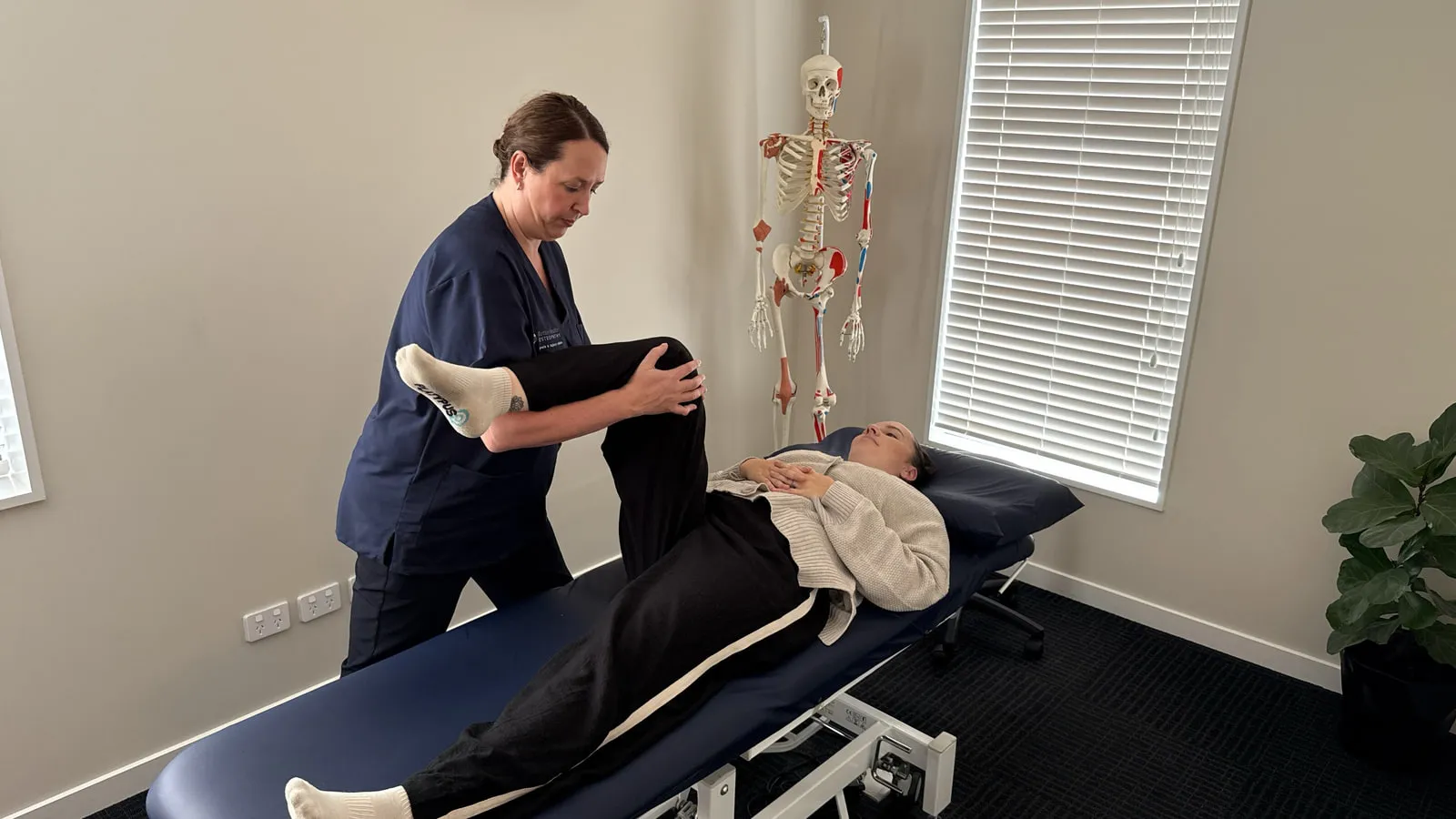
- Examine the jaw, neck, upper back, and the muscles that drive the jaw (including direct muscle work where appropriate, with consent).
- Identify the dominant pattern (muscle vs joint vs posture-driven).
- Treat with hands-on work for the masseter, temporalis, and surrounding tissues, plus the connecting neck and upper back.
- Adjust your home plan so the right exercises are emphasised.
- Refer for further input if the picture suggests it (e.g., dental review for bite, GP for pain medication if needed, specialist for stubborn cases).
Most patterns respond within 3 to 6 visits over 4 to 8 weeks.
Red flags
Most jaw pain is benign and self-limiting. See your GP or dentist promptly if:
- The jaw is locked open or closed and won’t move
- You have severe pain not responding to over-the-counter pain relief
- Numbness in the face alongside the pain
- Significant swelling, redness, or fever (possible infection)
- Trauma to the jaw with possible fracture
- A new lump or asymmetric swelling that wasn’t there before
These are uncommon but worth knowing.
Booking with us
If you’d like an osteopathic assessment, book online or call 0800 67 77 00. Same-week appointments are usually available.
Related reading
- Jaw pain: full condition guide for the broader clinical picture.
- Cervicogenic headache if jaw issues come with neck-driven headaches.
- Neck pain for the related neck patterns that often coexist with TMJ pain.