
This is a careful article. Childhood anxiety is a real and complex mental health concern, and the right care almost always involves mental health professionals (GPs, paediatricians, psychologists, counsellors) as the lead clinicians. Breathing retraining is an adjunct to that care, not a replacement.
But it’s a useful adjunct. There’s a genuine physiological link between breathing patterns and anxiety symptoms, and addressing dysfunctional breathing patterns can meaningfully reduce the physical experience of anxiety. The article explains what that link is, what’s worth knowing as a parent, and where breathing retraining fits.
Important framing. If your child is experiencing significant anxiety affecting daily functioning, the right first call is your GP or a paediatrician. They can assess the broader picture, refer to specialist mental health services, and coordinate care. Breathing retraining is one piece of a multi-piece picture; if you’re starting from scratch with childhood anxiety concerns, start with a GP referral, not with Osteopathy.
The breathing-anxiety link
Breathing and anxiety are bidirectionally linked through the autonomic nervous system. When anxiety rises, breathing rate and pattern change: faster, shallower, more upper-chest, sometimes with breath-holding or sighing. When breathing pattern is disrupted (faster than physiological need, shallow, upper-chest dominant), it can drive or maintain anxiety symptoms.
The mechanism is well-understood:
Hyperventilation effects. Breathing faster than the body’s actual oxygen needs blows off carbon dioxide, raising blood pH. The blood becomes slightly alkaline. Effects include:
- Lightheadedness, dizziness, faintness.
- Tingling around the lips, in fingers, in toes.
- Chest tightness, heart racing.
- A sense of breathlessness despite breathing more than enough.
- Difficulty concentrating, “fuzzy head”.
These are physiologically distressing. They feel like anxiety. They often ARE the bulk of what anxiety feels like.
The vicious cycle. Anxiety → faster breathing → hyperventilation effects → “I feel awful, something must be wrong” → more anxiety → even faster breathing → and so on. This cycle is a major part of why anxiety attacks happen, and why they escalate.
Breaking the cycle through breathing. Slow, controlled, diaphragmatic breathing reverses the hyperventilation. Carbon dioxide levels normalise. The physical symptoms reduce. The “I feel awful” loop is interrupted at the physiological level, which often allows the psychological piece to settle.
This is the foundation of breathing retraining as a tool for anxiety.
What dysfunctional breathing in anxious kids looks like
Children with anxiety often show specific breathing patterns:
- Upper-chest dominant breathing: shoulders rise with each breath; the belly doesn’t move much.
- Mouth breathing rather than nose breathing: at rest, during play, during sleep.
- Faster baseline breathing rate than typical for their age.
- Frequent sighing or unconscious breath-holding.
- Shallow breathing during stress instead of slowing down.
- Throat tightness or “lump in throat” sensation when anxious.
Many of these patterns develop early and become habitual. The child isn’t aware of breathing in a particular way; it’s just how their breathing works now. Habits learned at 6 can persist into adulthood without intervention.
What breathing retraining actually involves
Breathing retraining is the deliberate practice of changing breathing patterns through awareness, education, and structured exercises. The core elements:
Education about the breathing-anxiety link. For older children and teens, understanding the mechanism is itself part of the treatment (“this is why I feel like this; it’s not because something terrible is happening”).
Diaphragmatic breathing practice. Learning to breathe so the belly rises before the chest. Hand on belly, hand on chest; aim for the belly hand to move first. Done in calm moments first, then practised during mild anxiety, eventually used as a tool during peak anxiety.
Nose breathing as default. Closing the mouth at rest, during sleep, during light activity. The nose adds resistance, slows the breath, filters and warms the air, and supports better gas exchange.
Slow exhale practice. Specifically, exhales slightly longer than inhales (e.g. 4 seconds in, 6 seconds out). This pattern engages the parasympathetic nervous system and physiologically calms the body.
Awareness of breath-holding and sighing. Recognising when these are happening; replacing with slower, smoother breathing.
Using breathing as a self-management tool. Once the basics are practised, breathing exercises become something the child can use in moments of distress. “When you feel that tight chest at school, try the slow breathing” becomes a real tool, not abstract advice.
The work is usually structured over weeks. Daily practice when not anxious builds the skill; the child can then deploy it when needed.
Where Osteopathy fits
The osteopathic role is somewhat narrow but real:
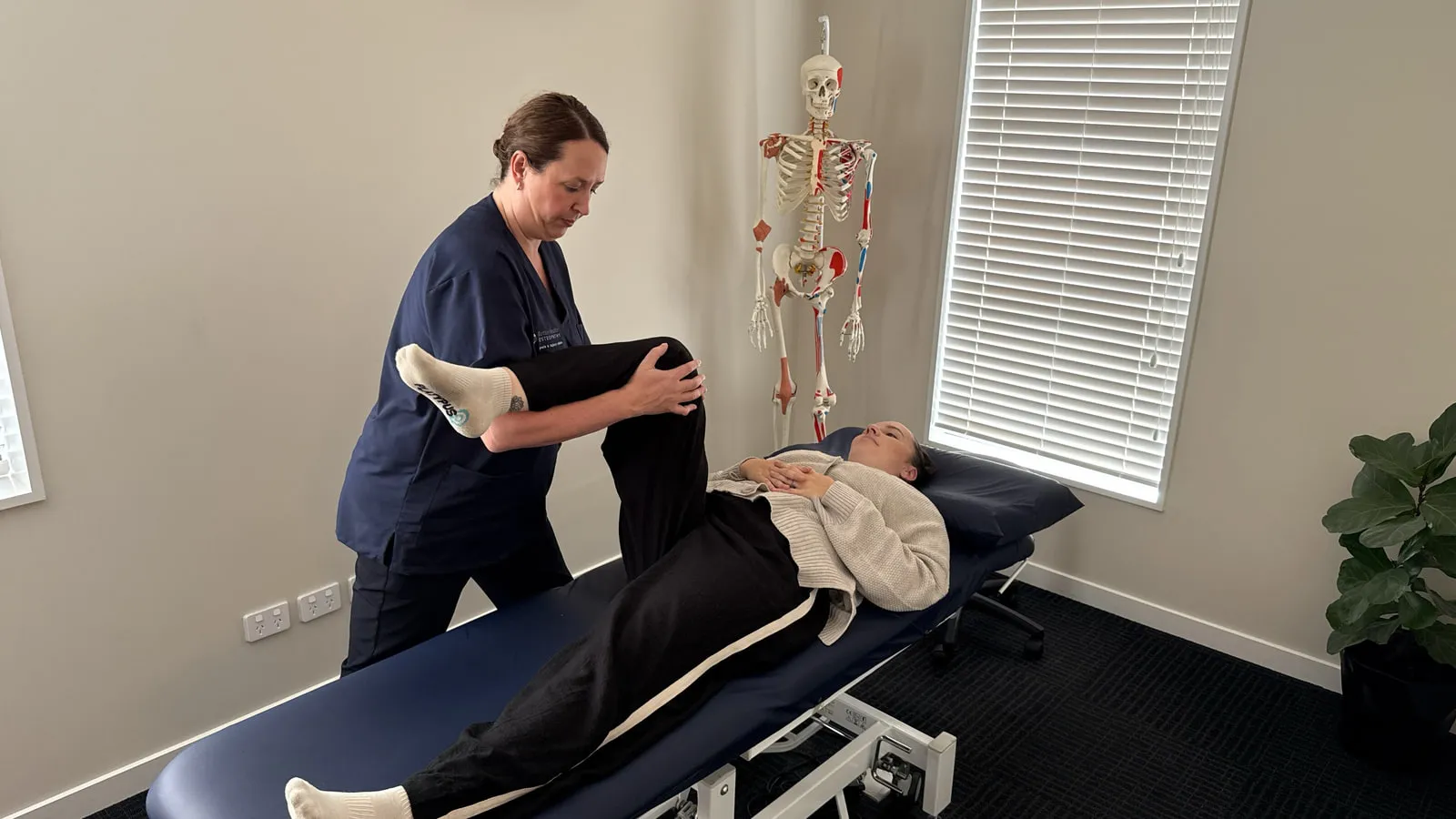
Assessment and treatment of physical breathing pattern. Osteopaths can assess how the diaphragm, ribs, neck, and upper chest are moving during breathing. Tightness in these structures can keep upper-chest breathing patterns locked in even when the child is consciously trying to breathe better. Hands-on work to free up these structures often makes the breathing exercises more accessible.
Education and coaching. Demonstrating diaphragmatic breathing, providing structured practice exercises, monitoring progress over sessions.
Working alongside mental health care. Communicating with the child’s GP, psychologist, or counsellor. Making clear what we’re doing and what we’re not.
What we don’t do:
- Diagnose or treat anxiety as a primary condition.
- Replace mental health treatment.
- Claim that breathing retraining “cures anxiety” (it doesn’t; it’s a useful tool within a broader picture).
When breathing retraining is worth pursuing
Worth considering as an adjunct if your child:
- Has been seen by a GP or psychologist for anxiety and a multi-modal treatment plan is being built.
- Experiences clear physical symptoms during anxiety (chest tightness, breathlessness, dizziness, tingling).
- Hyperventilates audibly during distress.
- Has been told they have “hyperventilation syndrome” or similar.
- Has childhood asthma alongside anxiety (the breathing patterns interact).
- Is old enough to engage with structured practice (typically 7+; younger children can sometimes do simplified versions).
Less worth pursuing as a primary intervention if:
- Your child hasn’t had any mental health assessment yet (start there first).
- The anxiety is severe enough to require crisis or specialist intervention.
- Breathing isn’t visibly disrupted during anxiety.
- The child can’t engage with structured practice (too young, too distressed).
What to expect from an assessment
A first session for breathing retraining typically involves:
- Detailed history with the parent (and the child, depending on age): what does the anxiety look like, what does the breathing look like during it, what’s been tried, what’s the broader care picture (GP, psychologist).
- Observation of breathing pattern at rest and during a mild stressor.
- Hands-on assessment of diaphragm, ribs, neck, and upper chest movement.
- Education in age-appropriate language about what’s going on.
- Initial breathing exercise: usually a simple diaphragmatic-breath practice.
- A take-home plan: 5-10 minutes daily practice, often with a parent present initially.
Subsequent sessions build on the foundation: progressing exercises, addressing physical limitations, troubleshooting what’s working and what isn’t.
A typical course is 4-8 sessions over 2-3 months, with a tapering frequency as the child becomes self-sufficient.
Honest expectations
What breathing retraining typically achieves:
- Reduced intensity and duration of anxiety episodes.
- A self-management tool the child can deploy independently.
- Improved sense of agency: “I can do something when this happens”.
- Often, reduced frequency of episodes as the cycle is interrupted reliably.
What breathing retraining doesn’t typically achieve alone:
- “Curing” anxiety as a condition.
- Replacing the role of psychotherapy, medication (where appropriate), or specialist mental health care.
- Working in cases where the anxiety is severe and untreated by any other modality.
It’s a real tool, not a magic one.
Booking with us
If breathing retraining sounds like a useful piece of your child’s anxiety-care picture, book online or call us on 0800 67 77 00. Mention when you book that you’re interested in breathing-related work for childhood anxiety; we’ll match the appointment to a practitioner with relevant experience and ensure the framing is right (multi-modal, alongside other care, not replacing it).
Related reading
- Health effects of hyperventilation syndrome for the broader hyperventilation picture in children and young adults.
- Care for children and teens for the broader paediatric care page.