
If you’ve ended up on this page, you’re probably trying to make sense of symptoms that don’t quite fit anywhere: chest tightness, dizziness, tingling in the hands or face, breathlessness that comes and goes, a sense of being unable to take a full breath. You may have had cardiac investigations come back clear. You may have been told it’s anxiety, or that nothing is wrong, or that you “just need to relax”. And you’re still dealing with the symptoms.
Hyperventilation syndrome (also called breathing-pattern dysfunction in current clinical literature) is a real, common, often-missed pattern. It’s not “all in your head”, and it’s not just anxiety in disguise. It’s a learned breathing pattern that produces real physical symptoms, and it’s treatable.
This guide walks through what it is, what causes it, what the symptoms actually are, and what helps.
What hyperventilation syndrome is
The word “hyperventilation” suggests rapid, panicky breathing. That’s one form of it. But the more common pattern, and the one most often missed, is chronic over-breathing: subtly elevated breathing rate, breathing predominantly through the upper chest rather than the diaphragm, frequent sighs and yawns, and small periodic gasps. Often the person doesn’t notice they’re doing it.
The physiological consequence is a chronically lowered carbon dioxide level in the blood. This shifts the body’s chemistry in ways that produce a wide range of symptoms.
The current clinical name in respiratory medicine is breathing-pattern dysfunction or dysfunctional breathing. “Hyperventilation syndrome” is the older term, still widely used. Both refer to essentially the same thing.
The symptoms
Hyperventilation syndrome can produce a large and seemingly unrelated set of symptoms. The wide range is part of why it’s often missed:
Respiratory:
- A sense of not being able to take a full breath, or “air hunger”
- Frequent sighing or yawning
- Chest tightness
- Throat tightness or feeling like the airway is constricted
- Shortness of breath that doesn’t fit a clear pattern (not exertional, not allergic)
Cardiovascular:
- Heart palpitations or awareness of the heartbeat
- Chest pain, often described as sharp or stabbing
- A sense of pressure in the chest
Neurological:
- Light-headedness, dizziness, or feeling spaced-out
- Tingling or numbness in the hands, feet, or around the mouth
- Visual disturbance (blurred vision, light sensitivity)
- Headache, particularly tension-type
- Fatigue, brain fog, poor concentration
Musculoskeletal:
- Neck and shoulder tension, especially in the upper trapezius and scalene muscles
- Mid-back tightness
- Jaw tension and morning soreness
- Generalised muscle tension or twitching
Gastrointestinal:
- Bloating, belching
- Reflux-type symptoms
- Nausea
Cognitive and emotional:
- Anxiety symptoms (often interpreted as the cause when they’re partly the consequence)
- Feeling unreal or detached (depersonalisation, derealisation)
- Difficulty concentrating
The pattern is often periods of significant symptoms with periods of relative ease, triggered by stress, fatigue, illness, or specific situations.
Why so many symptoms from a breathing pattern?
The chemistry: when you over-breathe relative to your metabolic demand, you blow off carbon dioxide faster than your body produces it. This drops the blood CO₂ level, which:
- Constricts blood vessels (especially in the brain), causing dizziness and headache
- Shifts blood pH, causing nerve excitability that produces tingling
- Reduces oxygen delivery to tissues (counter-intuitively, low CO₂ makes oxygen bind more tightly to red blood cells, so less is released to the body), causing fatigue and air-hunger
- Triggers protective responses in the autonomic nervous system, causing the heart rate, blood pressure, and chest-tightness symptoms
So the symptoms aren’t imagined and aren’t anxiety. They’re physiological consequences of a breathing pattern that’s pushing chemistry in the wrong direction.
What causes it
Hyperventilation syndrome usually develops as a learned pattern, often layered onto a triggering event:
- A panic attack or acute illness that involved real over-breathing, after which the pattern persists.
- Long-term stress, anxiety, or trauma that primes the body for “alarm-state” breathing.
- Asthma or another respiratory condition that has fostered chronic upper-chest breathing patterns.
- Long Covid or post-viral syndromes in which breathing dysfunction is now well-recognised as a frequent component.
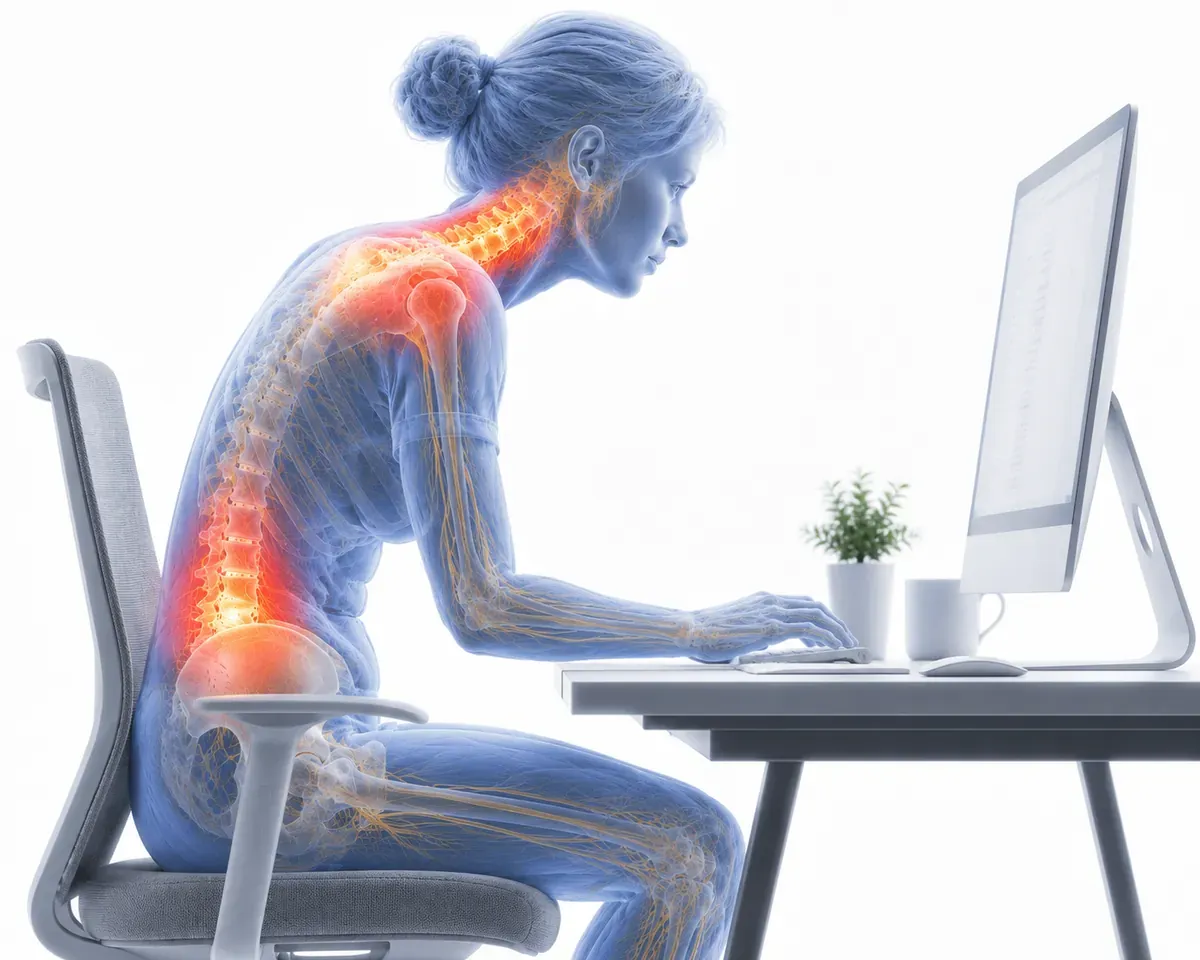
- Postural patterns: chronic upper-chest, slumped, neck-forward postures that mechanically discourage diaphragmatic breathing.
- Prolonged mouth-breathing (sleep, allergic rhinitis, adenoid issues) that maintains a less-efficient breathing pattern.
- Speech patterns: occupations involving sustained talking with poor breath support (teachers, lawyers, presenters, singers without training).
For many people, the answer is a combination of these. Identifying the original trigger is sometimes useful but not always necessary; the treatment focuses on the current pattern, not the history.
How it gets diagnosed
Hyperventilation syndrome is mostly a clinical diagnosis. Tests can support it, but the assessment is largely about the pattern of symptoms and breathing observation.
Tests sometimes used:
- Nijmegen Questionnaire: a validated screening tool with 16 symptoms scored 0 to 4. A score above 23 strongly suggests breathing-pattern dysfunction.
- End-tidal CO₂ measurement (capnography): measures CO₂ at the end of an exhalation. Values below 35 mmHg consistent with chronic over-breathing.
- Hyperventilation provocation test: you deliberately over-breathe for 3 minutes; if your usual symptoms reproduce, that’s diagnostic.
What’s worth ruling out first:
- Cardiac causes of chest pain or palpitations (ECG, echo if relevant)
- Asthma or other respiratory conditions (spirometry)
- Anaemia (blood test)
- Thyroid dysfunction (blood test)
- Vitamin B12 deficiency (blood test)
Most people benefit from a GP visit ruling these out before pursuing breathing-pattern treatment, especially if the symptoms are new or severe.
What helps
The strongest evidence is for breathing retraining combined with addressing contributing factors.
Breathing retraining typically involves:
- Diaphragmatic breathing practice: relearning to breathe with the belly and lower ribs, not the upper chest.
- Reducing breathing rate: gentle slowing of the breath, often to 6 to 10 breaths per minute during practice.
- Nasal breathing: shifting from mouth to nasal breathing, which naturally slows the rate and improves CO₂ retention.
- Buteyko-style work: some people benefit from techniques that involve brief breath holds and reduced breathing volumes. The evidence is mixed but the methodology has helped many people.
- Capnometry biofeedback in some clinics: measuring CO₂ in real-time as you practise.
Osteopathic care contributes by addressing the mechanical drivers:
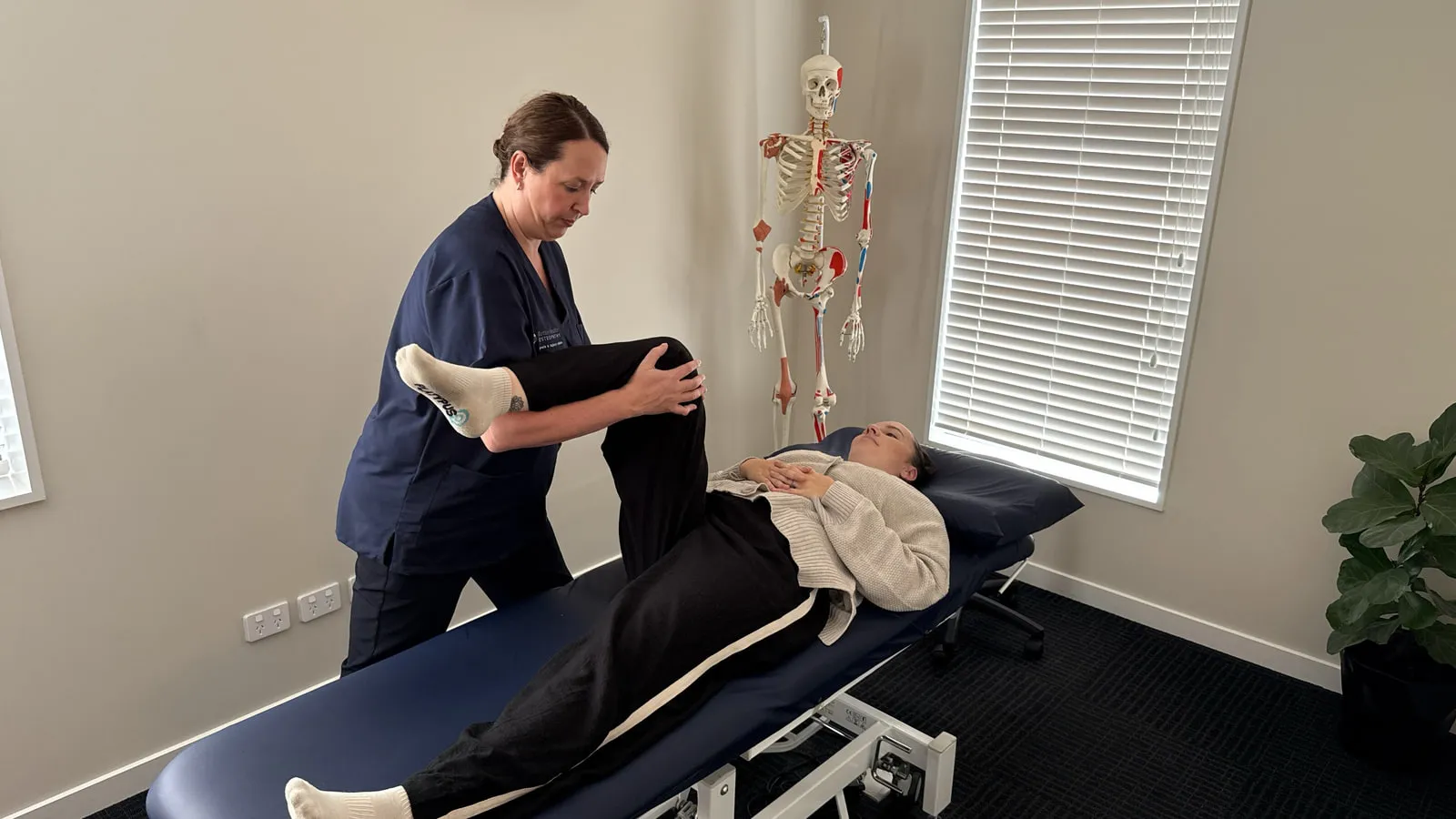
- Rib mobility: chronic upper-chest breathing leaves the ribs locked into an inhalation pattern. Manual mobilisation restores movement.
- Diaphragm release: hands-on work to free up diaphragm function.
- Neck and upper-trap release: the accessory breathing muscles in the neck become overworked; releasing them allows the diaphragm to take over.
- Posture work: chronic upper-chest breathing both causes and is caused by certain postural patterns. Addressing both speeds recovery.
Other useful inputs:
- Stress and anxiety management: CBT, mindfulness, or other approaches if these are contributing.
- Sleep optimisation: poor sleep keeps the body in alarm-state breathing.
- Address allergic rhinitis or sinus issues that drive mouth-breathing.
- Specialist physiotherapy for breathing-pattern dysfunction is a strong fit and a useful complement to osteopathic care.
How long does recovery take?
Honest numbers: most people see meaningful improvement within 4 to 8 weeks of consistent breathing-retraining practice plus mechanical work. Full resolution often takes 3 to 6 months, especially if the pattern has been entrenched for years.
The pattern we see most often:
- Weeks 1 to 2: symptoms ease in intensity but still present.
- Weeks 3 to 6: noticeable reduction in baseline symptoms, with breakthrough episodes when stress or fatigue spike.
- Months 2 to 6: pattern shifts toward “mostly settled, occasional flares” rather than constant symptoms.
- Beyond 6 months: maintenance work to keep the new pattern in place.
The biggest predictor of recovery is consistent practice of the breathing work. Treatment without practice is much less effective than the other way around. Many people see most of their improvement come from the home practice, with the in-clinic work supporting and accelerating it.
What to expect at your first visit
A first visit takes 45 to 60 minutes (longer than a standard Osteopathy appointment because the assessment is detailed). We:
- Take a careful history of symptoms, triggers, prior investigations, current medications, stress and sleep patterns.
- Run the Nijmegen Questionnaire to quantify the pattern.
- Observe your breathing at rest and through some simple tasks. Often the pattern is visible immediately.
- Examine the rib cage, diaphragm, neck, and posture for the mechanical drivers.
- Treat with hands-on work to ease the mechanical side.
- Begin breathing retraining: introduce the basic diaphragmatic pattern and the principles of slow, low-volume nasal breathing.
- Plan the home practice and the next few visits.
You leave with a clear understanding of what’s going on, a daily home practice, and a sense of the recovery arc.
Booking with us
If you’d like to book in, book online or call 0800 67 77 00. Mention that you’re booking for breathing or hyperventilation pattern when calling so we can allow the longer first appointment.
If your symptoms are severe, sudden-onset, or include features that suggest a cardiac or respiratory cause, please see your GP first to rule those out.
Related reading
- Neck pain for the neck and upper-trap pattern that often accompanies breathing-pattern dysfunction.
- Headache and migraine for the headache pattern often associated.