
Your child wakes you up crying with leg pain. They were fine all day. Their legs were fine when they went to bed. Now they’re saying it hurts deep in the calves or behind the knees, and you’re holding them and rubbing it and trying to work out whether to give them paracetamol, take them to a doctor, or just sit it out.
If this is a recurring pattern, it’s probably what’s called growing pains. They’re common (affecting around 25% to 40% of children at some point), almost always benign, and the family-side experience is far worse than the underlying clinical picture. But “almost always” isn’t “always”, and there are specific patterns that warrant a closer look.
This guide walks through what growing pains actually are, the patterns that fit them, the patterns that don’t, and what helps.
What growing pains are (and aren’t)
The honest answer: we don’t fully know. Despite the name, the pain doesn’t actually correlate with bone growth rates; growth is fastest in babies and teenagers, but the classic growing-pains pattern peaks at ages 3 to 12.
What we do know:
- The pain is real, not imagined.
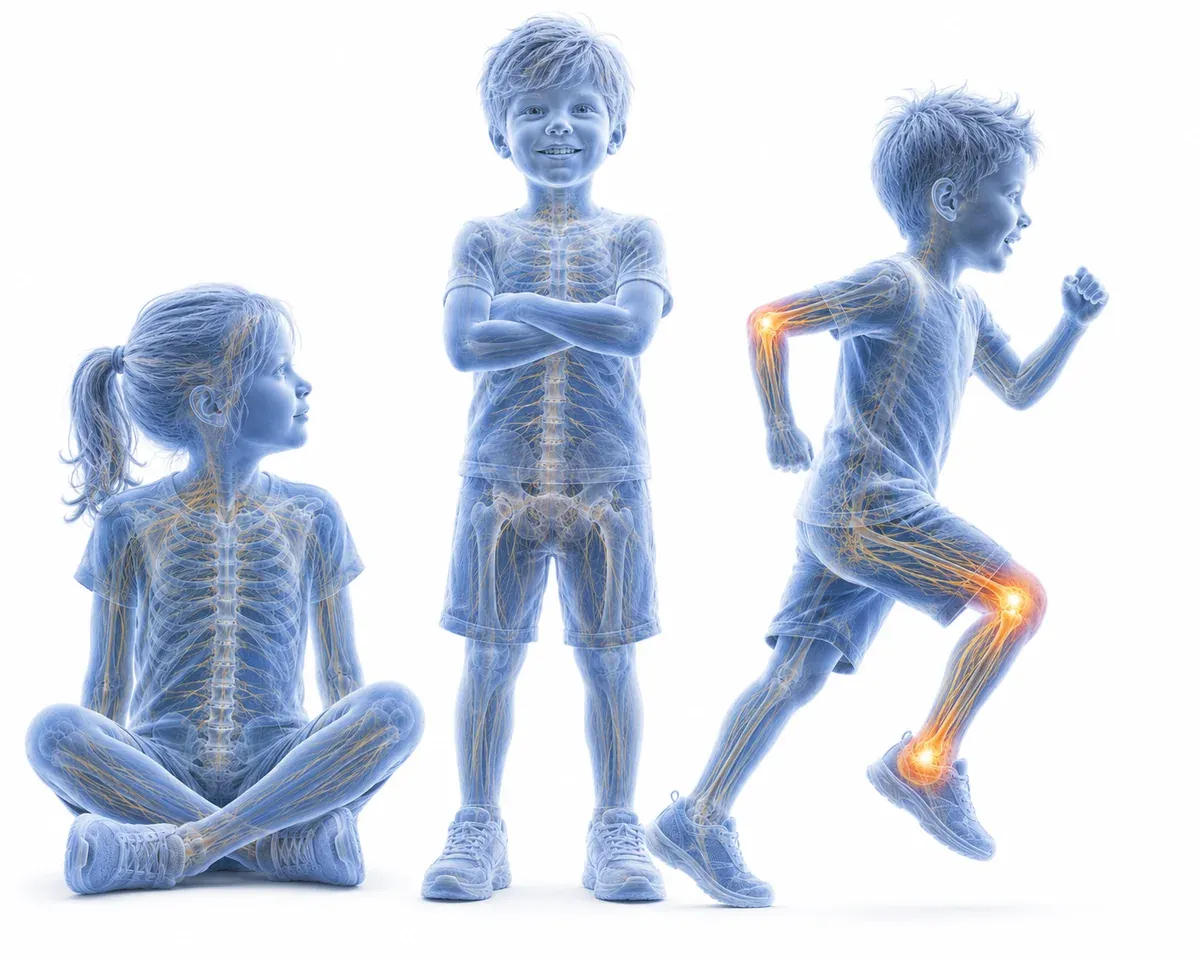
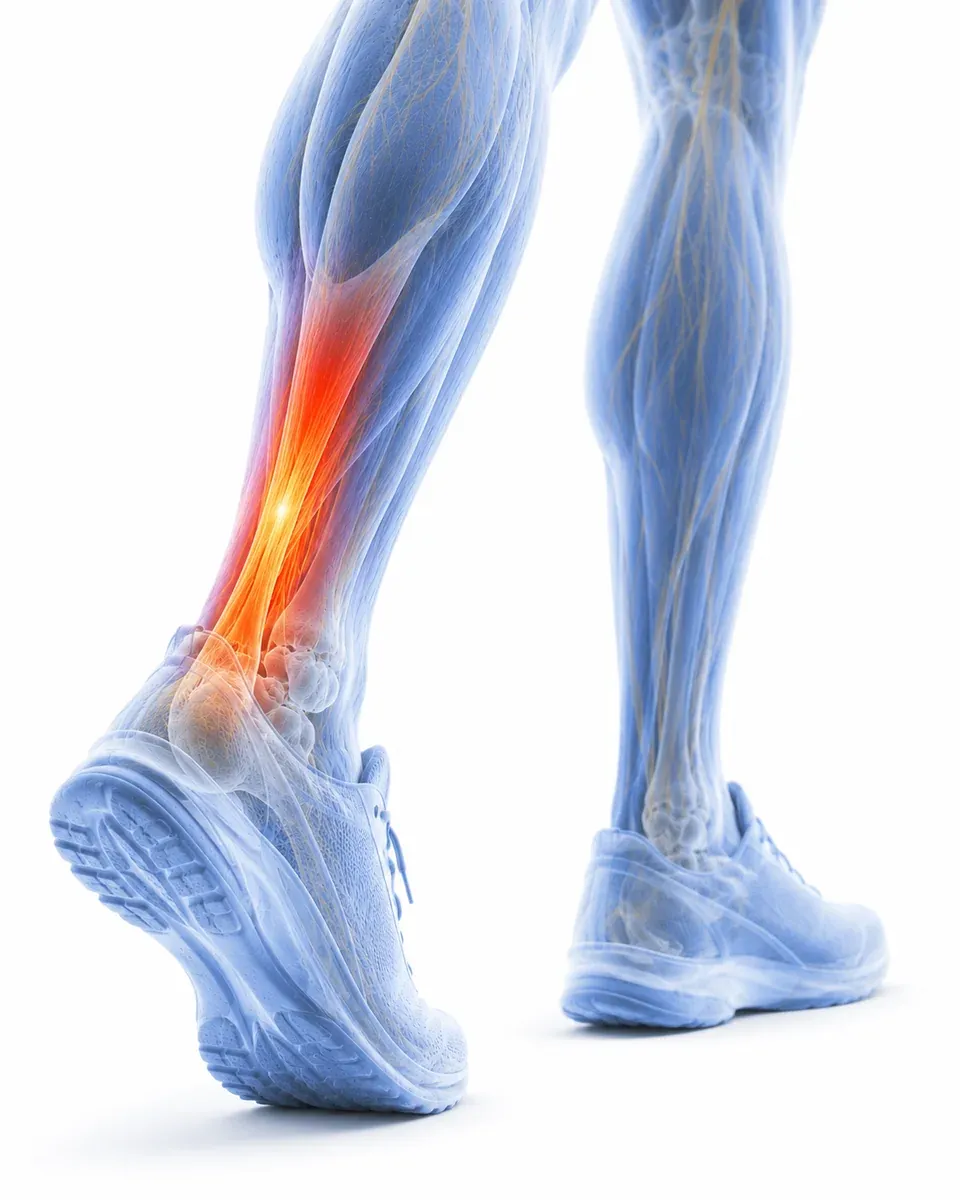
- It typically affects the calves, behind the knees, or the front of the thighs (rarely the joints themselves).
- It’s almost always bilateral (both legs), although it may be worse on one side.
- It happens late in the day or at night, often waking the child from sleep.
- It resolves by morning: the child wakes up fine, runs around, plays normally.
- It comes and goes, often clustered in periods of weeks or months.
Current theory points toward a combination of:
- Activity-related muscle fatigue in children with high running and play volumes.
- Lower pain thresholds in some children temperamentally.
- A mild musculoskeletal pattern related to flexibility, foot mechanics, or growth-period changes.
- Possibly a vitamin D component in some cases (this is debated but worth knowing).
The reassuring framing: growing pains are a benign, self-limiting pattern, not a disease, not a sign of damage, and not a precursor to anything else.
What growing pains usually look like
The classic pattern:
- Child aged 3 to 12
- Pain in both legs (calves, behind the knees, or front of thighs)
- Late evening or night-time onset
- Resolves with sleep, gone by morning
- Can be eased by rubbing, heat, paracetamol
- No swelling, redness, warmth, or limp during the day
- Recurs in clusters: a few episodes over 1 to 2 weeks, then a settled period
- The child is otherwise well: eating, growing, running around normally
If your child’s pain fits this pattern, growing pains is the likely explanation.
Red flags: when it’s not growing pains
A small minority of presentations need closer assessment. See your GP if any of these apply:
- Pain in only one leg consistently (growing pains are bilateral; one-sided pain warrants assessment)
- Pain near a joint specifically (knee, hip, ankle), especially with swelling or warmth
- Pain that persists into the morning
- A limp or refusal to weight-bear
- Fever, weight loss, or feeling generally unwell alongside the pain
- Skin changes (rash, bruising, redness) over the painful area
- Rapidly worsening pain over days, rather than the typical come-and-go pattern
- Pain after a specific injury that hasn’t settled
- Family history of inflammatory joint conditions plus joint-specific pain
These don’t necessarily mean something serious, but they need a different assessment than “it’s growing pains”.
Conditions that can mimic growing pains in this age group:
- Juvenile idiopathic arthritis (joint-specific, often morning stiffness, sometimes systemic features)
- Osgood-Schlatter in older children/early teens (knee-front pain, single-sided, sport-loaded)
- Sever’s disease (heel pain in active children, single-sided usually)
- Stress reactions in bone in active children with high running loads
- Hip pathology (slipped capital femoral epiphysis, Perthes disease) presenting as knee pain
- Restless legs syndrome (more about discomfort/movement urge than pain)
- Vitamin D deficiency in some cases
A GP visit can rule these out with an examination and, if needed, simple blood tests.
What helps in the moment
For the typical growing-pain episode:
- Massage the painful area firmly. This often helps more than anything else.
- Heat: a warm compress, hot water bottle (well-wrapped), or warm bath.
- Pain relief if needed: paracetamol at the recommended paediatric dose. Generally safe; check the dosing guide on the bottle for your child’s weight.
- Reassurance: sitting with the child, calm voice, “this is normal and it will go in a little while”.
- Gentle stretching of the calves and quads if the child is okay with it.
- Hydration: a small drink of water sometimes helps; some children present better-hydrated.
The episode usually passes within 30 to 60 minutes.
What helps over the longer arc
If the episodes are recurring frequently:
- Daytime calf and quad mobility work: a few minutes of gentle stretching most days.
- Don’t reduce daytime activity: the pattern isn’t from too much movement, and reducing play doesn’t reduce the episodes.
- Comfortable footwear: properly-fitting shoes, especially during active play.
- Vitamin D status: if your child has low sun exposure, particularly through winter, ask your GP about checking vitamin D levels. There’s tentative evidence that vitamin D supplementation reduces growing pain frequency in children with low levels.
- Address sleep: tired children seem to have more episodes. A consistent bedtime helps.
- Magnesium: anecdotally helps some children, particularly with restless-legs-type patterns. Talk to your pharmacist or GP about appropriate dosing.
When Osteopathy fits
For most growing pains, Osteopathy isn’t needed; the pattern resolves with time and the home strategies above. There are specific scenarios where it can help:
Reasonable to consider Osteopathy when:
- Episodes are very frequent and disruptive to sleep.
- There are foot mechanics issues (flat feet, in-toeing, walking on toes) that may be loading the legs unhelpfully.
- The child has been very sedentary then very active (school holiday spikes) and pain pattern correlates.
- The child has had previous foot or leg injuries that may have left compensations.
- Stress, anxiety, or sleep difficulty seems to amplify the pattern.
- You’d like a thorough assessment to confirm it’s growing pains and not something else.
What we’d do at a session:
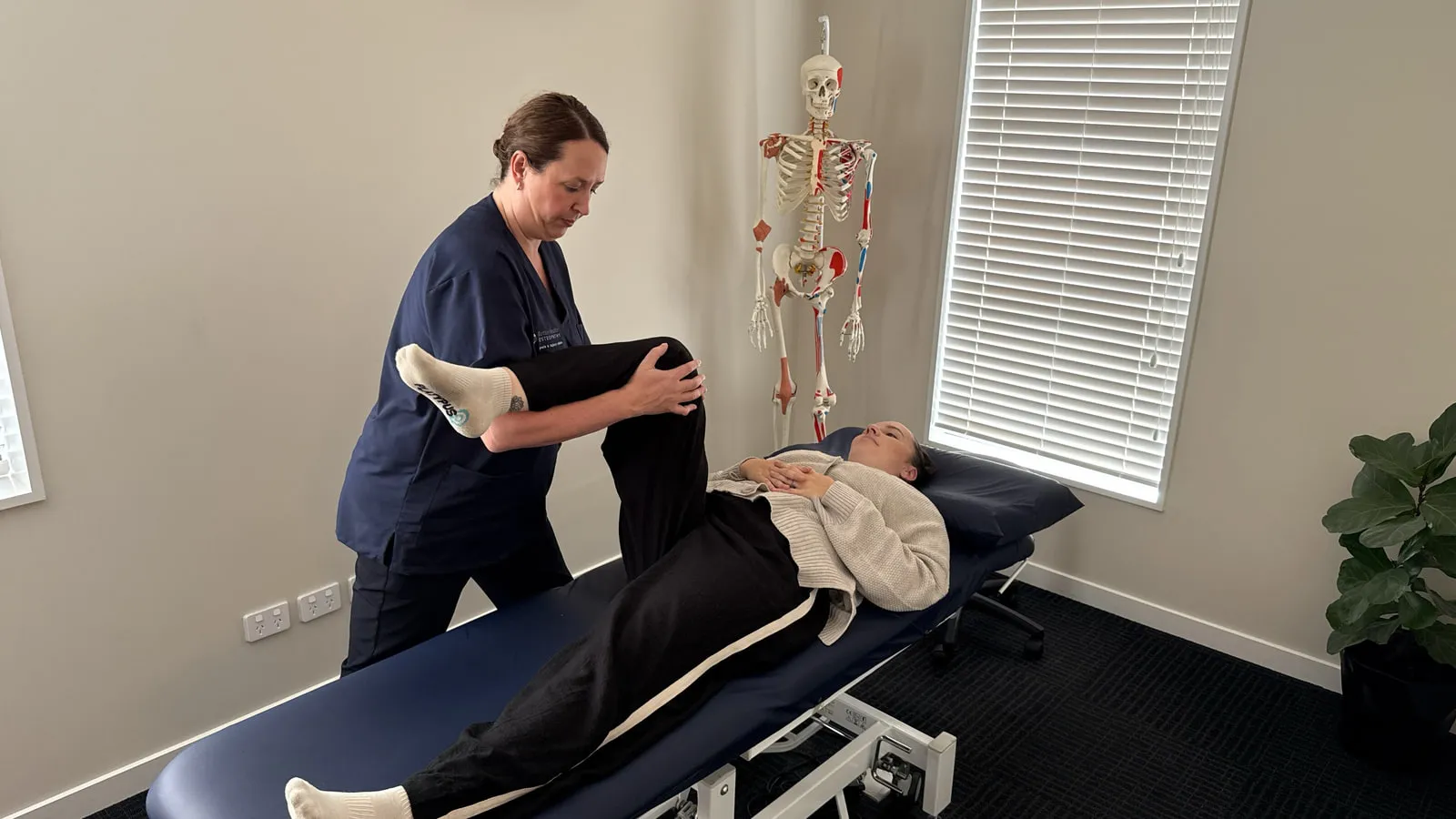
- Take a clear history and examine the legs, hips, and feet.
- Screen for the patterns that mimic growing pains (above).
- Gentle hands-on work for any tightness or asymmetry we identify.
- Show parents some specific techniques (massage, stretches) to use during episodes.
- Talk through the longer-arc strategies.
We don’t see this as ongoing treatment; usually 1 to 3 visits is enough to assess, address what we find, and equip parents.
When Osteopathy isn’t needed
Most growing pains don’t need professional treatment. If:
- The pattern fits the classic picture above
- Your child is otherwise well and growing normally
- The episodes are manageable with massage, heat, and reassurance
- They’re not happening every night
…the right answer is usually time, supportive home strategies, and not worrying. The pattern resolves on its own as children move through this developmental window.
A note on parents and worry
Watching your child in pain is one of the harder parts of parenting, and the night-time-out-of-nowhere quality of growing pains makes them especially distressing. The fact that you’re worried doesn’t mean something is wrong.
If a GP or Osteopathy assessment confirms growing pains, the most useful thing you can do for your child is be calm and reassuring during episodes. Children pick up on parental anxiety; staying matter-of-fact (“legs are sore again, that’s okay, let’s rub them and it’ll pass”) helps them learn that this is a normal, manageable pattern rather than something to fear.
Booking with us
If you’d like an assessment to either confirm growing pains or rule out anything else, book online or call 0800 67 77 00. Most children find the appointment relaxed and short; they don’t need to be undressed beyond removing shoes and we work in whatever way they’re comfortable with.
If your child has any of the red-flag features above, see your GP first.
Related reading
- Children and teens care for the broader picture of what we treat in this age group.
- Knee pain if the pain is consistently knee-focused.
- Foot and ankle pain if there’s a foot-mechanics question.