
If you’ve been told you have “shoulder bursitis”, you may have been left wondering exactly what that means and why your shoulder is so painful when nothing dramatic seems to have happened. Bursitis is one of the most-named shoulder diagnoses, but it’s also one of the most-mistaken. Often what’s labelled bursitis is part of a wider picture, and treating just the bursa rarely fixes the bigger pattern.
This guide covers what shoulder bursitis actually is, how it relates to the rotator-cuff issues it often coexists with, what we tend to find clinically, and what helps.
This article focuses on bursitis specifically. For the broader shoulder-pain picture, see the shoulder pain condition page.
What shoulder bursitis is
A bursa is a small fluid-filled sac that sits between two structures that move against each other, reducing friction. The shoulder has several bursae; the one most often involved in shoulder pain is the subacromial bursa, which sits between the top of the rotator-cuff tendons and the underside of the bony arch above the shoulder (the acromion).
When the bursa gets irritated and inflamed, it’s called subacromial bursitis. The bursa swells, becomes more sensitive, and starts to flare with movements that pinch it (most often, lifting the arm out to the side or above shoulder height).
What’s important: bursitis rarely happens in isolation. The bursa usually gets irritated because something else is going on:
- The rotator-cuff tendons are tendinopathic and the bursa gets caught in the inflammatory environment
- The shoulder mechanics have changed (e.g., posture, weakness, joint stiffness) so the bursa is being compressed in positions it normally wouldn’t be
- A specific event has bruised or compressed the bursa directly (a fall onto the shoulder, a lifting strain)
So when we hear “bursitis”, we’re usually thinking: what’s the wider shoulder pattern, of which the bursitis is part?
How bursitis differs from rotator-cuff issues
Patients often ask: is this bursitis or a rotator-cuff problem? The honest answer is that the two often coexist, but here’s how they typically differ in presentation:
Subacromial bursitis usually:
- Has a sharper, more localised pain feeling
- Hurts most with the painful arc (raising the arm out to the side; pain typically appears between 60° and 120° of elevation)
- Eases noticeably with rest from the aggravating movements
- Responds well to anti-inflammatory measures (ice, NSAIDs)
- Is often time-limited if the underlying cause is addressed
Rotator-cuff tendinopathy usually:
- Has a deeper, achier feeling
- Hurts with active resistance (lifting against load) more than passive movement
- Can be irritable at night, especially lying on the affected side
- Builds up over weeks or months rather than appearing acutely
- Needs progressive strengthening to fully recover
A torn rotator-cuff is a separate question. Tears can be partial (the more common scenario) or full-thickness. They often present with weakness on specific tests; some need surgical repair, many don’t. We screen for these patterns at first visit and refer for imaging if the picture suggests a tear.
In real life, many patients have all three going on at once: irritated bursa + tendinopathic cuff + early degenerative changes. Treatment looks at the whole pattern.
What causes shoulder bursitis
Common drivers in our clinic:
Overload and repetitive use:
- A new lifting load (moving house, painting a ceiling, intensive gardening)
- A new sport or training spike (overhead sports, swimming, gym pressing)
- A workplace pattern that involves repeated overhead reaching
Postural and mechanical patterns:
- Forward-rounded shoulders compressing the subacromial space
- Reduced thoracic spine mobility forcing the shoulder to compensate
- Weak scapular stabilisers letting the shoulder blade rotate poorly
Trauma:
- A fall onto the shoulder
- A direct knock (sport contact, a slip and grab)
- Sudden heavy lifting strain
Systemic factors:
- Inflammatory conditions (rheumatoid arthritis, polymyalgia rheumatica)
- Diabetes (associated with several shoulder conditions including frozen shoulder)
- Recent illness or fever, in which case the bursa might be infected (rare; needs urgent assessment)
Identifying the driver matters because treatment differs. Posture-driven bursitis responds to mechanical changes. Overload bursitis responds to load management. Inflammatory or infective bursitis needs different input (GP, sometimes specialist).
What helps
The pattern that works for most cases of subacromial bursitis:
Phase 1: settle the irritation (1 to 2 weeks)
- Reduce the aggravating movements: pause overhead work, lifting overhead, the specific activity that triggered it.
- Anti-inflammatory measures: ice for 10 to 15 minutes after aggravating activities; NSAIDs (ibuprofen, etc.) at standard doses if not contraindicated.
- Sleep position: avoid sleeping on the affected side; a small pillow tucked under the affected arm while back-sleeping often helps.
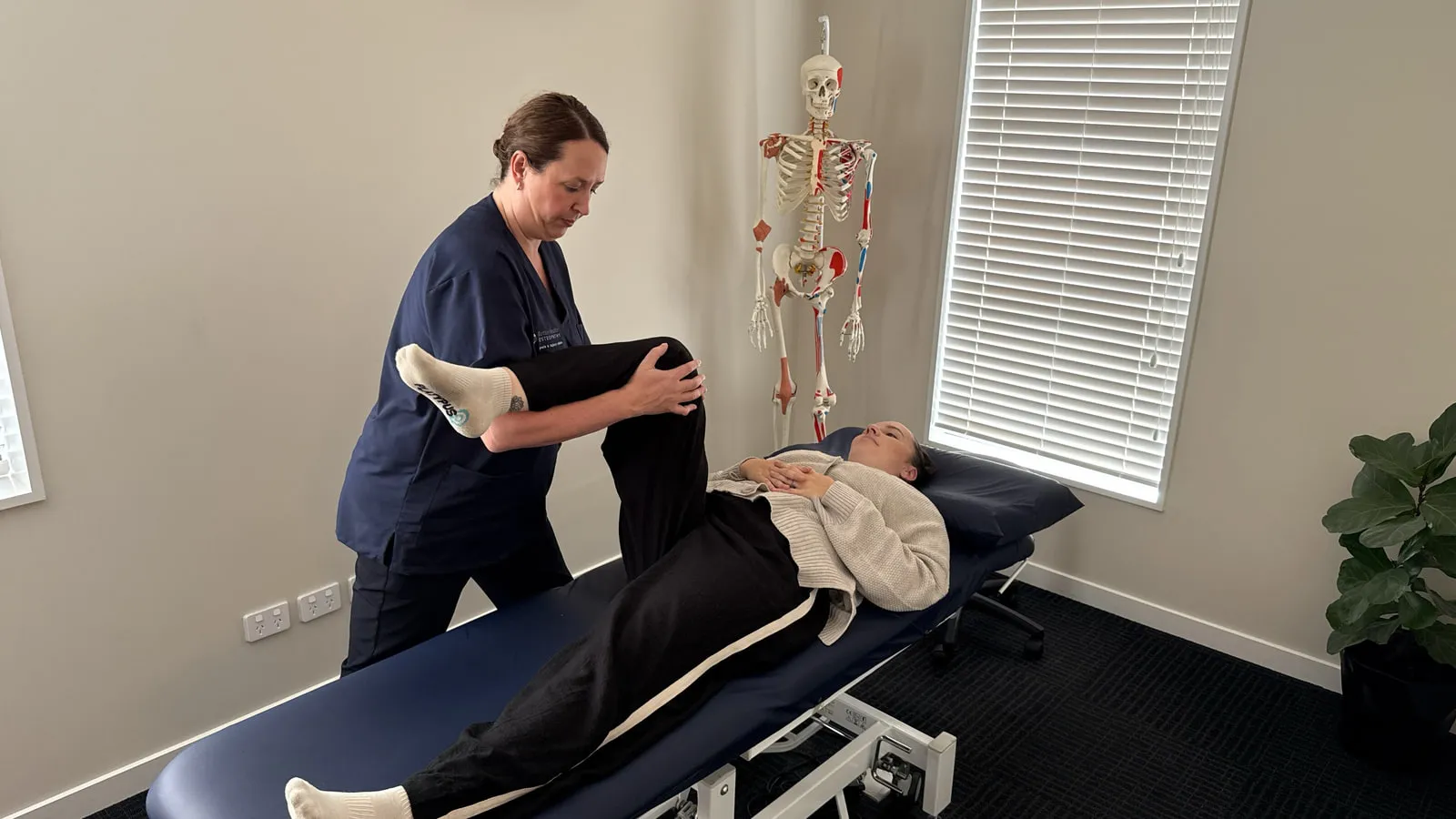
- Hands-on osteopathic treatment: easing soft-tissue tightness around the shoulder, restoring joint mobility in the upper back, and reducing the protective muscle guarding that accompanies acute pain.
Phase 2: rebuild capacity (3 to 8 weeks)
- Specific scapular strengthening: the small muscles around the shoulder blade often need re-engagement. A few simple exercises, done daily, make a meaningful difference.
- Rotator-cuff strengthening: progressive resistance work for the small muscles that hold the shoulder centred in its socket. This is the rebuild phase that prevents recurrence.
- Posture and habit changes: better setup at desks, improved overhead-reaching technique, gradual return to the activity that triggered it.
- Continued hands-on as needed: less frequent now, focused on areas that don’t release with exercise alone.
Phase 3: durable recovery (ongoing maintenance)
- Continued strengthening even after symptoms resolve (this is the difference between people who recover and people who keep flaring)
- Awareness of the early signs of a flare so you can pull back load before it gets bad
For most cases, expect noticeable improvement within 2 to 3 weeks of starting the right plan, and full recovery within 8 to 12 weeks. Stubborn cases or those with significant rotator-cuff involvement can take longer.
When imaging is worth getting
For most subacromial bursitis cases, imaging doesn’t change the management. Imaging is useful when:
- Pain isn’t responding to 6 to 8 weeks of good conservative care
- Weakness is the dominant feature (suggests a possible tear)
- The pattern doesn’t fit typical bursitis
- Surgical input is being considered
- The case is ACC-funded and the clinical picture suggests imaging is the right next step
Ultrasound is often the most useful first imaging modality for shoulder bursitis. It shows the bursa thickness, fluid, and rotator-cuff tendons clearly, can be done same-day, and is much cheaper than MRI. MRI is reserved for cases where ultrasound isn’t conclusive or where surgery is being considered.
The osteopath at your first visit can guide you on whether imaging is likely to change the plan and what the right pathway is.
When a corticosteroid injection is worth considering
For stubborn bursitis that hasn’t settled with 6 to 8 weeks of good conservative care, a corticosteroid injection into the subacromial bursa is often very effective short-term. Ultrasound-guided injection has high accuracy and is the standard. Effects typically last 3 to 6 months.
Important nuance: the injection settles the inflammation but doesn’t fix the underlying mechanical pattern. If you have an injection without doing the rebuild work, the bursitis often returns within 6 to 12 months. The injection is a window of pain relief during which the mechanical work has to happen.
We don’t perform injections; we coordinate with your GP or a sports medicine specialist when this is the right step.
ACC and shoulder bursitis
Whether bursitis is ACC-eligible depends on the cause:
- Acute injury (a fall, a specific lifting strain, a sport contact): generally ACC-eligible.
- Workplace gradual-process (job involves repetitive overhead loading): may be eligible under the gradual-process injury pathway.
- Posture-driven, no specific event: usually not ACC-eligible; private-pay.
- Inflammatory or systemic: not ACC.
Your osteopath can tell you on day one whether your case fits the ACC pathway. See our ACC and Osteopathy guide for the full picture.
Red flags
Most shoulder bursitis is mechanical and responds well to conservative care. Get medical assessment promptly if:
- The shoulder is hot, red, and swollen with fever or feeling acutely unwell (possible septic bursitis or infection)
- You’ve had a significant fall or impact with severe pain and inability to move the arm (possible fracture)
- Sudden weakness in the arm without proportional pain (possible nerve or full-thickness tear)
- Numbness or tingling down the arm (possible cervical nerve involvement)
- Night pain that’s getting steadily worse rather than easing
These are uncommon but worth knowing.
What you can do today
While you book in:
- Reduce the aggravating movements for a week or two. Avoid overhead lifting, heavy carrying, and reaching behind your back.
- Ice for 10 to 15 minutes after the worst-load periods of the day.
- Sleep on your back or the unaffected side, with a small pillow under the affected arm if helpful.
- NSAIDs at standard doses (talk to your pharmacist if unsure).
- Don’t completely immobilise the shoulder. Gentle daily range-of-motion work prevents stiffness compounding the issue.
Booking with us
If you’d like to book in, book online or call 0800 67 77 00. Same-week appointments are usually available; same-day appointments for acute pain are often possible if you call early. If the case is from an injury event, we’ll lodge the ACC claim at your first visit.
Related reading
- Shoulder pain: full condition guide for the broader shoulder-pain picture.
- Sports injuries if your bursitis came from sport.
- ACC and Osteopathy for the funded-care side.